Loading article
Back to Health Guides
After-Hours Telehealth: When Your GP Is Closed
Healthcare options when you need a doctor outside business hours - what telehealth covers, what it doesn't, and when to go to emergency.
8 min read
·Updated 11 June 2026
·Doctor Reviewed
AHPRA Verified
In this article
- 1Urgency Assessment: The Critical First Step
- 2After-Hours Care Options in Australia
- 3What Telehealth Covers Well After Hours
- 4After-Hours Pharmacies and eScripts
- 5After-Hours Care for Children
Medical information only. This article is for general information and does not constitute medical advice. Treatment decisions are made by an AHPRA-registered doctor after reviewing your circumstances.
Review
InstantMed Clinical Team
Clinical governance review for guide content
Updated
11 June 2026
General information only, not personal medical advice.
Health problems don't follow business hours. A fever that develops on Saturday night, a cough that worsens at 9pm, or a child who suddenly looks more unwell can make the usual GP pathway feel too slow. Understanding which after-hours option is appropriate can save unnecessary waiting and, in genuine emergencies, get you to the right care quickly.
Urgency Assessment: The Critical First Step
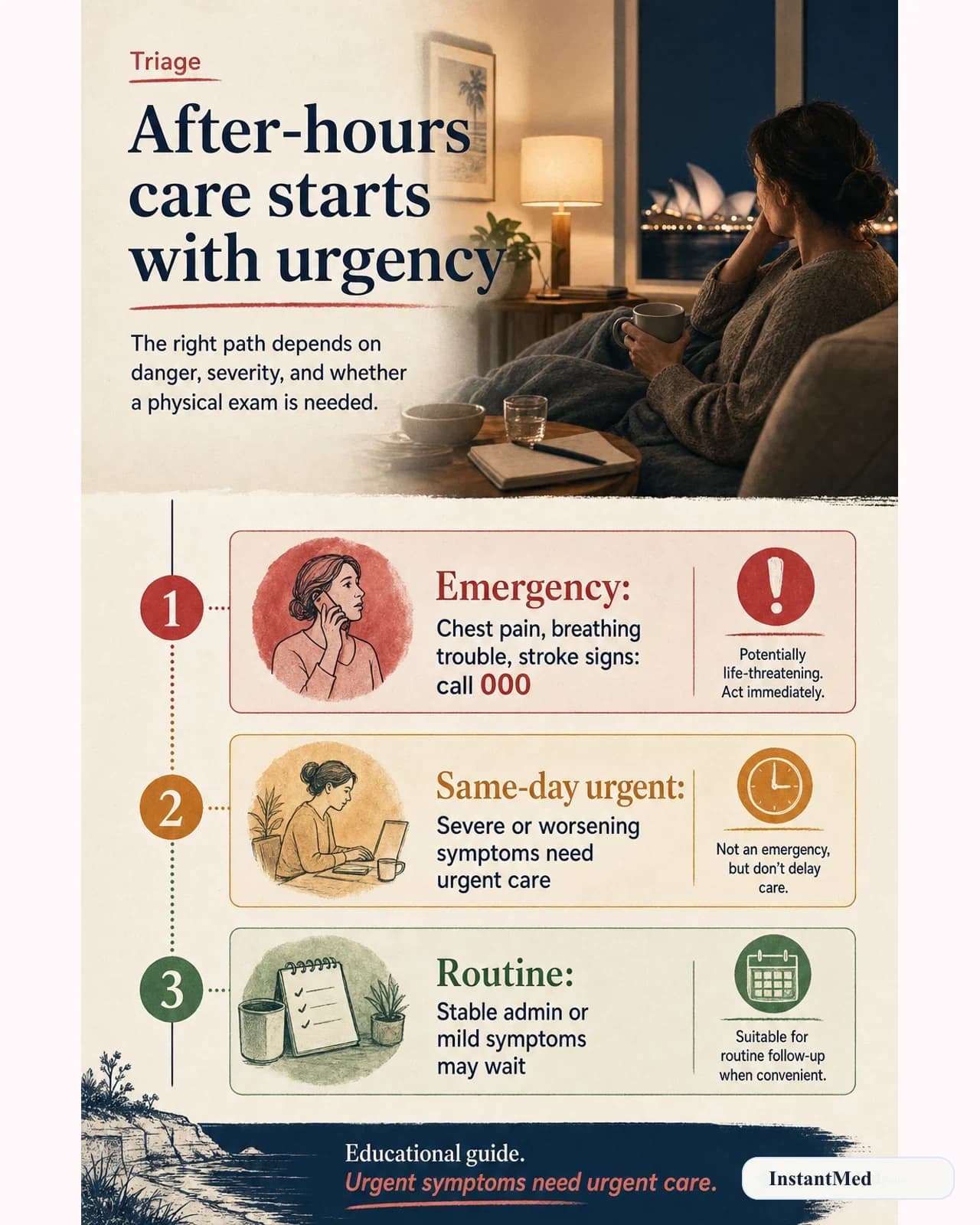
Before choosing an after-hours care option, assess how urgent your situation is. The first question is not "what is open?" It is "could this become dangerous if I wait?" Healthdirect advises calling triple zero (000) or attending an emergency department for serious illness or injury; minor illness or injury can often be directed through healthdirect, a GP, a medical centre, an urgent care clinic, or a pharmacist.
- Life-threatening emergency: chest pain or tightness, difficulty breathing, stroke signs, severe allergic reaction with throat swelling, unconsciousness, heavy uncontrolled bleeding, overdose, or serious injury. Call 000 immediately and do not attempt telehealth first.
- Urgent, same-day care: high fever not responding to paracetamol or ibuprofen, severe pain, worsening infection, dehydration with inability to keep fluids down, or significant mental health crisis. Use an after-hours GP clinic, Medicare Urgent Care Clinic, or ED if no appropriate clinic is accessible. Call healthdirect on 1800 022 222 if unsure.
- Lower-risk remote assessment: cold and flu symptoms, minor infections, absence documentation, medication advice, non-severe skin concerns, and non-crisis anxiety or mental health support may be suitable if no red flags are present.
- Routine GP care: preventive health, long-term condition planning, routine check-ups, and non-acute new symptoms are usually better handled by your regular GP when they reopen.
Important Warning
Emergency: For any life-threatening emergency, call 000 immediately. Do not delay to use telehealth. For mental health crisis, call Lifeline on 13 11 14 (24/7) or present to your nearest hospital emergency department.
After-Hours Care Options in Australia
Telehealth
For non-urgent presentations, telehealth can be a practical after-hours option. It works best when the problem can be assessed mainly through history, medication records, photos, or a focused conversation. It is a poor fit when diagnosis depends on a physical examination, vital signs, imaging, wound care, or observation.
Remote assessment may be suitable for:
- Work or university absence documentation where a certificate is clinically appropriate
- Stable medication questions or repeat-prescription requests where the history is clear
- Minor infection symptoms without red flags, such as selected urinary, skin, or respiratory symptoms
- Mental health support and referral planning for non-crisis presentations
- General health advice where the decision does not depend on examination or monitoring
Remote assessment is not suitable for:
- Emergency care (call 000)
- Prescribe Schedule 8 controlled medications
- Assess conditions requiring physical examination
Medicare Urgent Care Clinics
Medicare Urgent Care Clinics are designed for urgent, non-life-threatening illnesses and injuries that cannot wait for a routine GP appointment but do not require hospital admission. The Department of Health lists examples such as minor infections, minor fractures or sprains, UTIs, minor cuts, insect bites, rashes, minor eye or ear problems, respiratory illness, gastroenteritis, and mild burns.
These clinics are not for routine preventive care, chronic disease management, cervical screening, or life-threatening symptoms. For chest pain, breathing difficulty, severe bleeding, poisoning, seizures, unconsciousness, or serious neurological symptoms, call 000 or go to an emergency department.
After-Hours Home Visit Services
Home visit services vary by city, state, provider, and availability. They may be suitable when:
- You are too unwell to safely travel to a clinic
- You need physical examination that telehealth cannot provide
- The presentation is urgent but not life-threatening
- You are caring for a child or elderly person who cannot easily travel
Check local availability, fees, Medicare billing rules, and expected wait time before relying on a home visit. If symptoms are deteriorating or time-critical, use emergency care instead of waiting at home.
HealthDirect (1800 022 222)
HealthDirect is a free, 24-hour telephone health advisory service funded by state, territory, and federal governments and staffed by registered nurses. It is available anywhere in Australia.
Call HealthDirect when you are uncertain whether your situation requires emergency care, urgent clinic attendance, or can be safely managed at home or via telehealth. The nurse follows a structured triage protocol and advises on the most appropriate care pathway. This is particularly useful for parents assessing a sick child after hours -- the nurses are experienced in paediatric triage.
HealthDirect does not provide prescriptions or medical certificates -- it is an advisory and triage service only.
After-Hours GP Clinics
Most major cities and large regional centres have after-hours GP clinics (also called medical centres with extended hours, super-clinics, or urgent care centres). These operate on weeknights (typically until 10pm) and during weekends and public holidays.
After-hours GP clinics are appropriate when:
- You need physical examination (ear inspection, throat culture, wound assessment)
- Your condition is too urgent to wait until your regular GP opens
- Telehealth assessment is insufficient for your presentation
Wait times at after-hours clinics vary but are typically shorter than ED wait times for non-emergency presentations.
Hospital Emergency Departments (ED)
Emergency departments are staffed and equipped for genuine emergencies -- they are not a walk-in GP service. Attending an ED for a non-urgent presentation means:
- Triage wait times of 2-6 hours or more for non-urgent presentations (Category 4-5 on the Australasian Triage Scale)
- Higher cost to the public health system (ED presentations cost significantly more than GP visits)
- Exposure to genuinely sick patients in a shared waiting environment
Use the ED for:
- Life-threatening emergencies
- Conditions where rapid deterioration is possible and monitoring is needed
- Presentations that after-hours GPs or telehealth have directed you to attend
- Any situation where you are significantly concerned about the severity
What Telehealth Covers Well After Hours
Several common after-hours presentations are well-suited to telehealth assessment:
Medical Certificates
Fit check
If diagnosis depends on examination, monitoring, imaging, or emergency treatment, telehealth is the wrong first stop.
For non-urgent illness where absence evidence is clinically appropriate, remote assessment may support documentation without using an emergency department as an administrative workaround.
Urinary Tract Infection Symptoms
Some uncomplicated UTI symptoms can be assessed remotely, especially when the history is clear and there are no red flags. Fever, flank pain, vomiting, pregnancy, male UTI symptoms, or recurrent complicated infections need a lower threshold for in-person review.
Repeat Prescriptions
For stable, established medicines, a remote clinician may be able to assess whether a short repeat prescription is appropriate until regular care resumes. Urgent medicines, controlled medicines, unclear histories, or deteriorating symptoms need a more cautious pathway.
Minor Respiratory Illness
Cold and flu symptoms -- congestion, cough, sore throat without severe difficulty swallowing -- may be suitable for remote assessment. The clinical question is often whether symptoms fit viral illness, whether antibiotics are indicated, and whether any red flags require in-person review.
Skin Conditions
Rashes, insect bites, mild skin infections, and known skin conditions such as eczema or psoriasis can sometimes be assessed with photos and history. Rapidly spreading redness, severe pain, fever, facial swelling, or eye involvement needs in-person assessment.
Mental Health Support
Non-crisis anxiety, stress, sleep disturbance, and mood symptoms can sometimes be assessed remotely. If the presentation involves thoughts of self-harm, call Lifeline on 13 11 14 or attend an ED; remote routine care is not the right resource for acute mental health crisis.
After-Hours Pharmacies and eScripts
Finding a pharmacy after hours can be an additional challenge. eScripts (electronic prescriptions via QR code SMS) can be filled at any pharmacy that participates in the national Prescription Exchange Service -- which includes all Australian pharmacies.
To find a 24-hour or late-trading pharmacy, check local pharmacy websites, call ahead before travelling, or use healthdirect's Service Finder. Major hospital precincts and larger shopping areas are more likely to have extended-hours pharmacies, but opening hours and medicine stock can still vary.
After-Hours Care for Children
Children's presentations after hours can be particularly stressful for parents. Key guidance:
- For children under 12 months with a fever, seek same-day medical assessment
- For children 1-5 years, a fever above 39.5°C that is not responding to paracetamol or ibuprofen warrants after-hours assessment (in-person or home visit, not telehealth alone)
- For older children with mild illness, HealthDirect (1800 022 222) can help assess urgency
- Any child with difficulty breathing, persistent vomiting, drowsiness, a non-blanching rash, or severe pain should be seen in person immediately
Telehealth can support parents with advice about symptom management for mild illness, but physical examination is often important for children, and a lower threshold for in-person assessment is appropriate.
After-Hours Mental Health Support
If you are experiencing a mental health crisis after hours:
- Lifeline: 13 11 14 (24/7 crisis support, phone and online chat)
- Beyond Blue: 1300 22 4636 (24/7 phone, online chat)
- SANE Australia: 1800 187 263 (mental health information and support, weekday hours)
- Kids Helpline (for people under 25): 1800 55 1800 (24/7)
Care map
Health advice lines, urgent care clinics, telehealth, and emergency departments each solve different after-hours problems.
If you are in immediate danger or have thoughts of self-harm, call 000 or attend your nearest hospital emergency department. These services do not require a referral.
Telehealth is appropriate for non-crisis mental health presentations -- anxiety, stress, mild-to-moderate mood symptoms. For acute mental health crisis, the services above or an ED are the appropriate care pathway.
Sources
- healthdirect: What care do I need?
- Australian Government Department of Health, Disability and Ageing: healthdirect helpline
- Australian Government Department of Health, Disability and Ageing: When to visit a Medicare Urgent Care Clinic
- Australian Government Department of Health, Disability and Ageing: Medicare Urgent Care Clinics
- Lifeline: Crisis support
- Beyond Blue: Talk to a counsellor
- Australian Government Department of Health, Disability and Ageing: Kids Helpline
Frequently Asked Questions
Is after-hours telehealth more expensive than daytime?
Pricing varies by provider, time, Medicare eligibility, and whether the service is part of your usual GP practice. Check the fee and refund policy before using any private service. If you are unsure what level of care you need, healthdirect can provide free 24/7 nurse-led advice.
Can I get a prescription filled after hours?
Sometimes. eScripts can be dispensed by participating pharmacies, but after-hours access depends on local pharmacy trading hours and stock. Major cities are more likely to have late-trading pharmacies than regional areas. If a medicine is urgent and no pharmacy is accessible, seek clinical advice rather than waiting without a plan.
Should I go to emergency for a medical certificate?
No. Emergency departments are for serious illness, injury, or rapid deterioration. A routine work, university, or administrative document should go through your regular GP or an appropriate non-urgent care pathway unless the illness itself needs emergency assessment.
What is HealthDirect and when should I call?
HealthDirect (1800 022 222) is a free, 24/7 Australian Government health advice line staffed by registered nurses. Call when you are unsure whether your presentation needs emergency care, urgent care, or can wait. The nurse will ask structured questions and advise the most appropriate care level. It is particularly useful for parents uncertain about a sick child.
Is telehealth available 24 hours a day?
Availability varies. Some GP clinics, state virtual emergency departments, and private telehealth providers offer after-hours or 24/7 access; others do not. For non-emergency symptoms in the middle of the night, healthdirect is available 24/7 and can help you choose the right care level.
InstantMed Medical Team
Related Articles
11 min read
Telehealth vs GP: What's Actually Different in Australia?
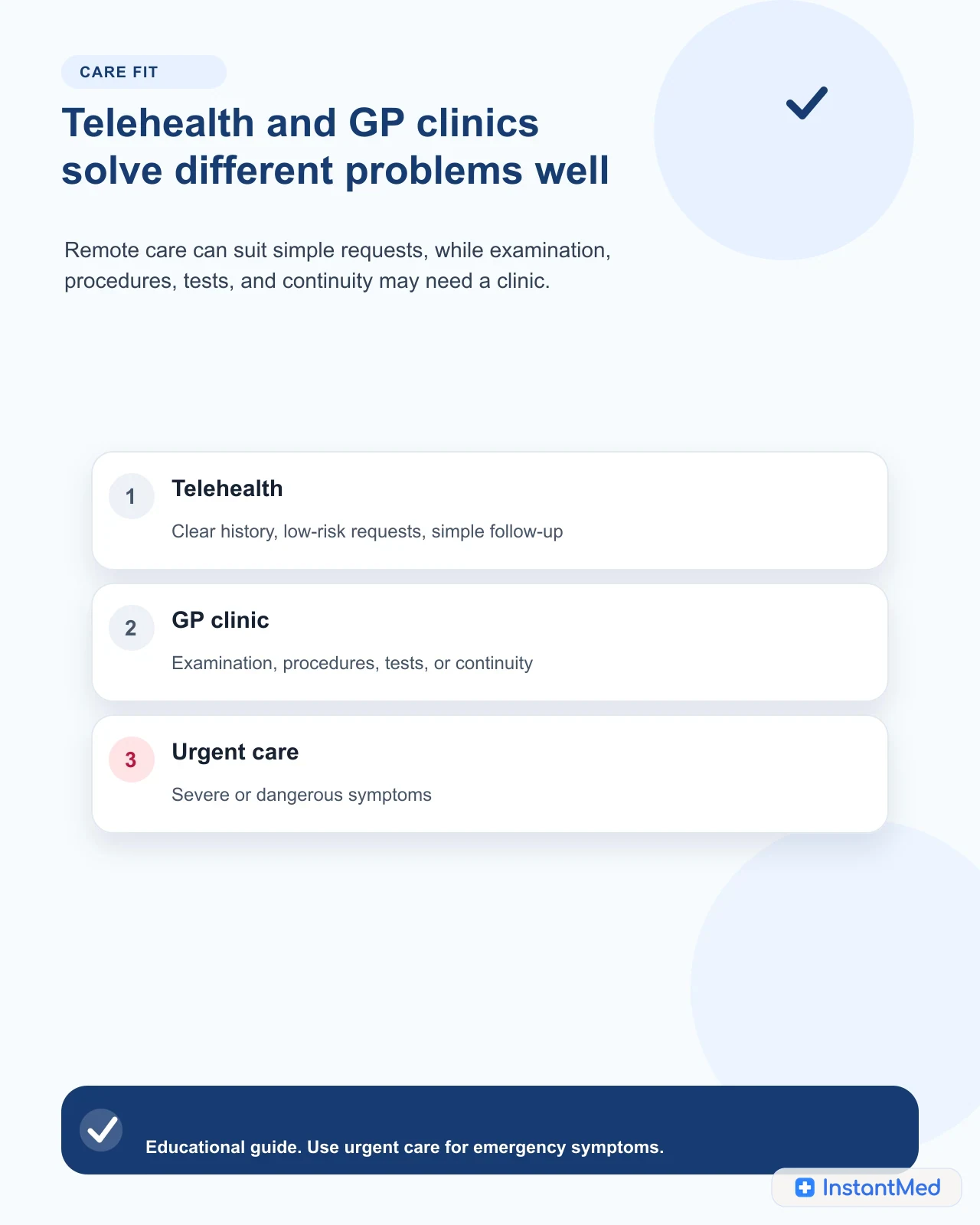
Telehealth and in-person GP care are not rivals. Telehealth can be useful for suitable remote assessment, while GP clinics remain essential for examination, continuity, procedures, tests, and complex care.
InstantMed Medical Team
11 min read
When Telehealth Cannot Help: Knowing the Limits
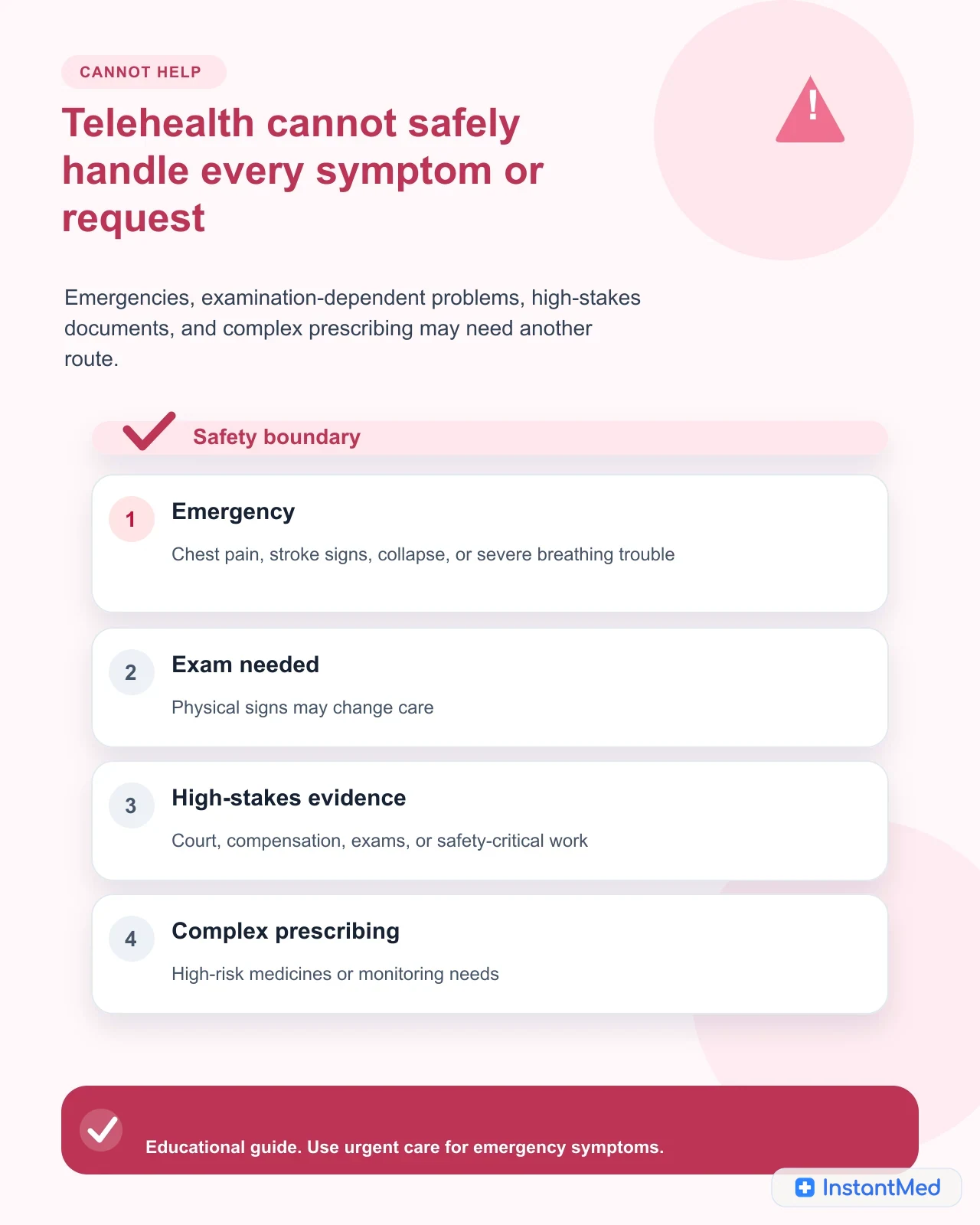
Telehealth can be safe and useful when the problem fits remote assessment. It cannot replace emergency care, a physical examination, monitoring, or continuity when those are needed. This guide explains the limits and safer next steps.
InstantMed Medical Team
8 min read
Online Doctor Consultations in Australia: Complete Guide
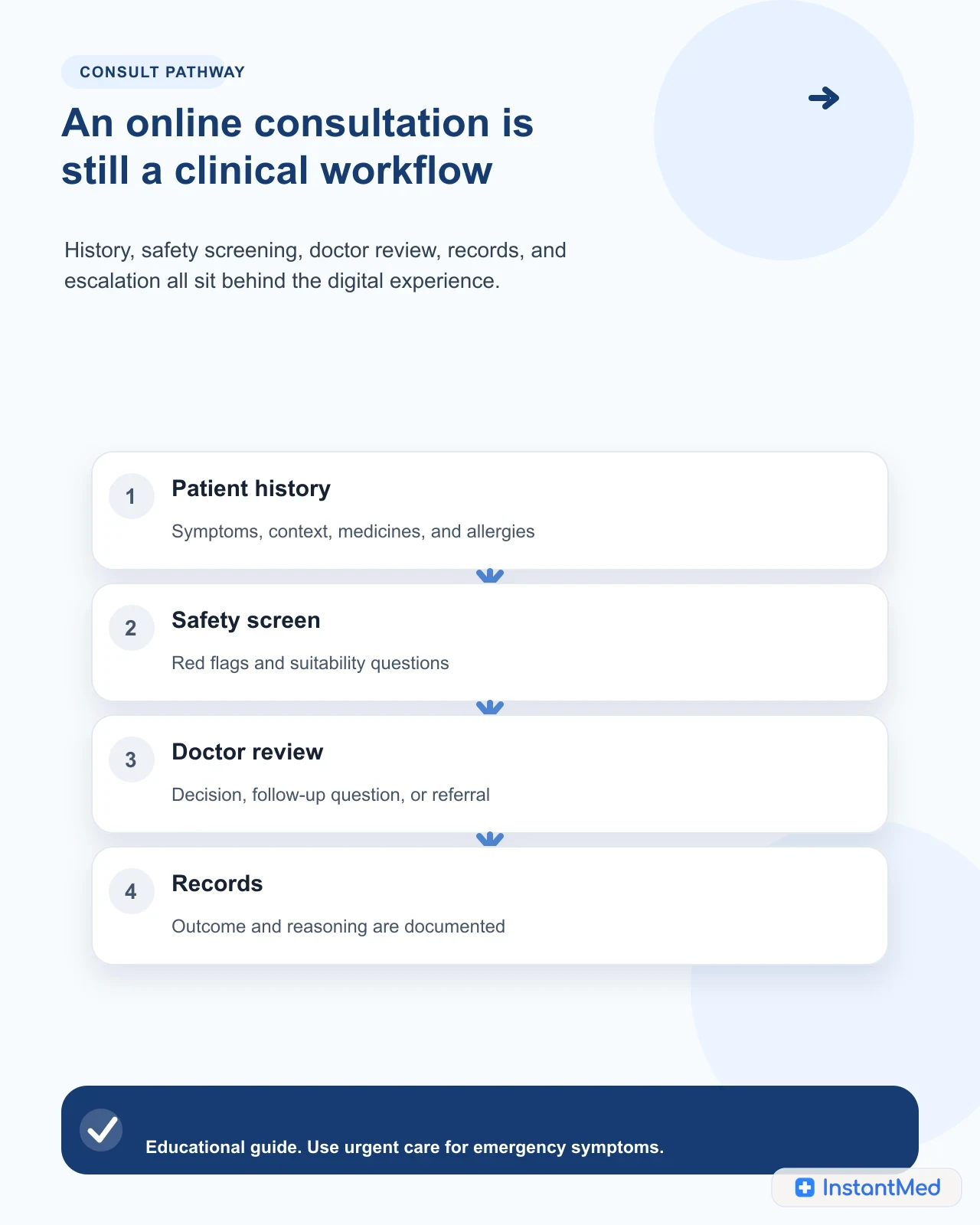
Online doctor consultations are now a mainstream part of Australian healthcare. This guide covers how telehealth works, what AHPRA-registered doctors can treat online, Medicare eligibility, and patient rights.
InstantMed Medical Team