Loading article
Back to Health Guides
Eczema and Dermatitis: Managing a Chronic Skin Condition
What drives eczema flares, how the skin barrier theory changed treatment, and the evidence behind each management tier.
8 min read
·Updated 10 May 2026
·Doctor Reviewed
AHPRA Verified
In this article
- 1The Skin Barrier: Why It Matters
- 2Recognising Eczema
- 3Identifying and Avoiding Triggers
- 4The Foundation: Emollient Therapy
- 5Treating Flares: Topical Corticosteroids
Medical information only. This article is for general information and does not constitute medical advice. Treatment decisions are made by an AHPRA-registered doctor after reviewing your circumstances.
Review
InstantMed Clinical Team
Clinical governance review for guide content
Updated
10 May 2026
General information only, not personal medical advice.
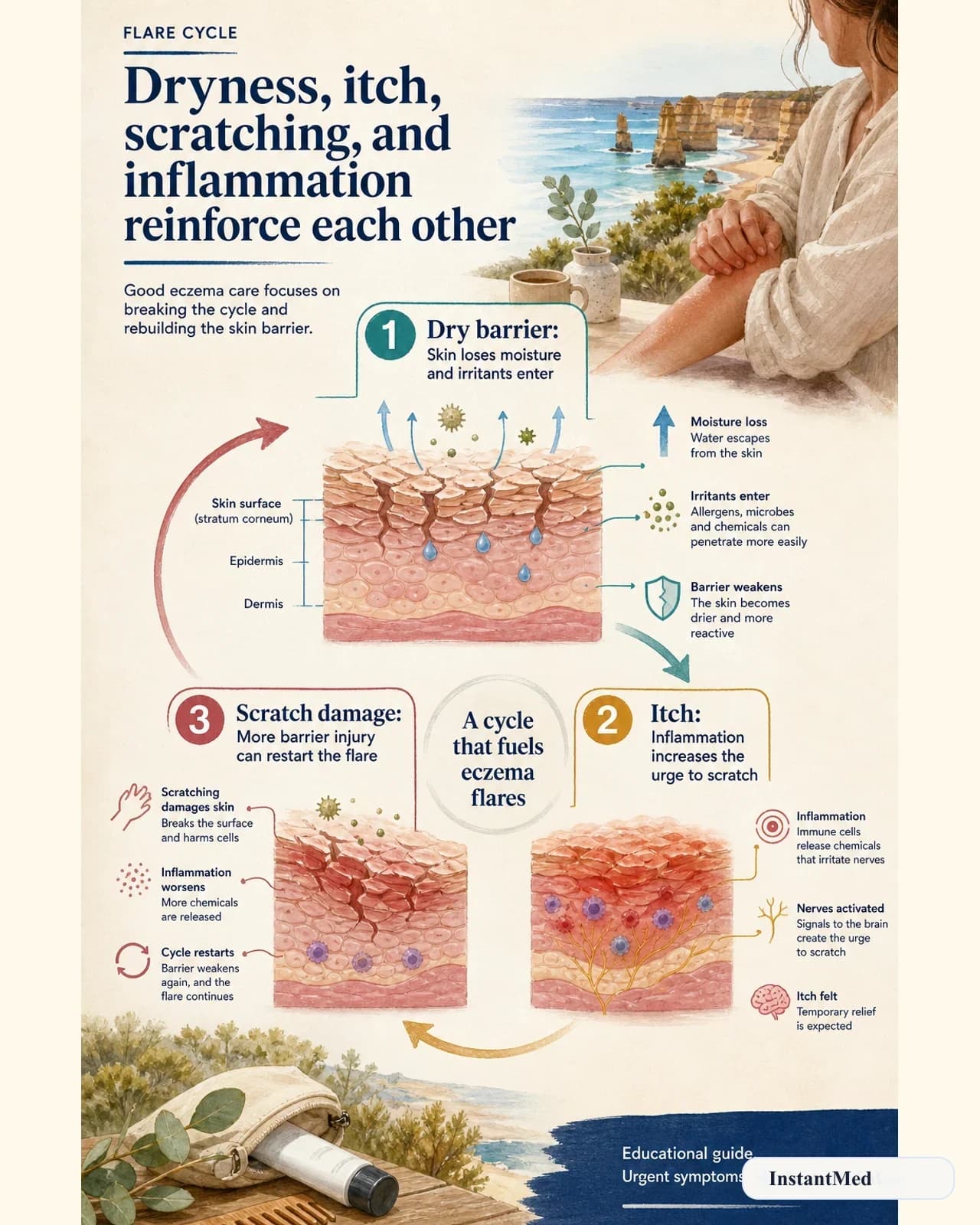
Eczema is common, relapsing, and often misunderstood. Australian patient resources from healthdirect, ASCIA, and the Skin Health Institute describe it as a chronic inflammatory skin condition where the skin barrier does not hold moisture well, making skin more vulnerable to irritants, allergens, scratching, and infection.
Eczema (atopic dermatitis) is a chronic inflammatory skin condition characterised by skin barrier dysfunction, immune dysregulation, and heightened sensitivity to environmental triggers. It is not simply dry skin, and it is not contagious. With the right approach, most patients achieve sustained control - but understanding what drives the condition is essential for effective management.
The Skin Barrier: Why It Matters
Contemporary understanding of eczema centres on the skin barrier hypothesis, developed following the discovery that loss-of-function mutations in the gene encoding filaggrin - a key structural protein in the skin barrier - are a major genetic risk factor for atopic dermatitis. Filaggrin deficiency impairs the skin's ability to retain water and form an effective physical barrier, allowing allergens, irritants, and microorganisms to penetrate the skin and trigger immune activation.
This explains several clinical features:
- Why moisturising is the foundation of management (it supports and augments the impaired barrier)
- Why eczema is associated with other atopic conditions (hay fever, asthma, food allergies) - all share underlying immune dysregulation
- Why early emollient therapy in high-risk infants may reduce eczema development (currently under active research)
Recognising Eczema
Classic symptoms:
- Dry, sensitive skin that feels rough or tight
- Intense itching, often worse at night and disrupting sleep
- Red, inflamed patches (may appear brown or grey on darker skin tones - eczema is frequently missed or misdiagnosed in people with darker skin)
- Thickened, lichenified skin in chronic areas (from repeated scratching)
- Most commonly: flexural areas (inner elbows, behind knees), hands, face, neck, around the eyes
In infants and young children, eczema typically affects the face (cheeks), scalp, and extensor surfaces. The flexural pattern becomes more prominent from toddler age onward.
Weeping, crusting, and increased redness of eczema patches may indicate secondary infection with Staphylococcus aureus, a very common complication that requires antibiotic treatment alongside topical therapy.
Identifying and Avoiding Triggers
Triggers do not cause eczema, but they precipitate flares. Identifying individual triggers through observation and modification is a core component of management:
- Skin irritants: soaps, detergents, fragrances, shampoos, and cleaning products commonly worsen the barrier. Switch to fragrance-free, pH-balanced cleansers, and use gloves when washing up or handling irritants.
- Environmental allergens: dust mites, pet dander, mould, and pollen can worsen symptoms in some people. Mattress and pillow encasements, regular washing, mould control, and HEPA filtration may help if the trigger is clear.
- Temperature extremes: cold dry air, hot showers, and excessive sweating can all trigger flares. Use lukewarm showers, avoid overheating, consider a humidifier in dry winter air, and cool down after exercise.
- Stress: work pressure, anxiety, poor sleep, and major life events can lower the threshold for flares. Stress management helps most when paired with maintaining the skincare routine during high-stress periods.
- Clothing: wool and some synthetic fabrics can irritate eczema-prone skin. Cotton or bamboo fabrics next to skin and avoiding fabric conditioner may reduce friction and irritation.
- Food: food-triggered eczema is more relevant in young children with severe eczema than in adults. Restriction diets should be guided by a dietitian or allergy specialist when food allergy is suspected.
- Skin infections: Staphylococcus aureus and herpes simplex can complicate eczema. Infection signs need prompt assessment, and antiseptic bath additives may be used in selected cases under clinical guidance.
Food allergies are more significant triggers in young children with eczema than in adults. In adults, food-triggered eczema flares are much less common and dietary restriction should only be undertaken if a clear temporal relationship is established, ideally under the guidance of an allergist or dietitian.
The Foundation: Emollient Therapy
Emollients (moisturisers) are the cornerstone of eczema management. Evidence consistently shows that regular, generous moisturising reduces flare frequency, reduces the need for topical corticosteroids, and improves quality of life.
ASCIA and RACGP guidelines recommend:
Care routine
Most plans combine trigger reduction, regular moisturiser, and short targeted treatment during flares.
- Apply at least twice daily, every day - not just during flares
- Apply within 3 minutes of getting out of the bath or shower, while skin is still slightly damp
- Use a thick cream or ointment formulation rather than a light lotion - the heavier the formulation, the better the barrier protection
- Use fragrance-free, preservative-free products
- Apply generously - a typical adult with eczema may use 250-500g of emollient per week
Product selection matters: patients should trial different formulations to find one they will actually use consistently. An effective emollient that is used regularly is better than a theoretically superior one that the patient finds uncomfortable and uses infrequently.
Treating Flares: Topical Corticosteroids
Topical corticosteroids (TCS) are the most established and effective treatment for active eczema flares. The Pharmaceutical Benefits Scheme (PBS) lists a range of TCS formulations at different potency levels.
Understanding potency and appropriate site is more important than treating all steroid creams as the same medicine.
- Mild preparations: examples include hydrocortisone 1%. These are commonly used for sensitive sites such as the face, eyelids, flexures, and in infants when clinically appropriate.
- Moderate preparations: examples include betamethasone valerate 0.05%. These may be used on the trunk and limbs depending on flare severity.
- Potent preparations: examples include betamethasone valerate 0.1% and mometasone furoate. These are generally reserved for thicker skin or more significant flares, such as palms, soles, and some limb areas.
- Very potent preparations: examples include clobetasol propionate. These are usually short-term treatments used with specialist guidance.
Key prescribing principles:
- Use the lowest effective potency for the site being treated
- Apply once or twice daily until the flare resolves
- Do not apply to unaffected skin
- Limit continuous use on the face and flexures to short courses
- "Weekend therapy" (applying on 2 days per week to previously affected areas) reduces relapse frequency
Common concerns about TCS relate to skin thinning (atrophy). This is primarily a risk with prolonged use of potent preparations on sensitive areas. Short courses as directed are safe, and the undertreatment of eczema flares carries its own risks (infection, sleep disruption, quality of life impact).
Calcineurin Inhibitors
Topical calcineurin inhibitors - tacrolimus (Protopic) and pimecrolimus (Elidel) - are steroid-free anti-inflammatory treatments approved by the TGA for moderate-to-severe atopic dermatitis. They are particularly useful for:
- Sensitive areas where TCS use is limited (face, eyelids, neck, genitalia)
- Patients where long-term TCS use is a concern
- Maintenance therapy to reduce flare frequency
Both are Schedule 4 prescription medicines in Australia. A transient burning sensation on application is common when first used and typically resolves with continued use.
Newer Biological Treatments
For moderate-to-severe eczema not adequately controlled with topical therapy, systemic treatments are available:
Dupilumab (Dupixent): A biologic (monoclonal antibody) targeting the IL-4/IL-13 pathway - key inflammatory mediators in atopic dermatitis. PBS-listed for moderate-to-severe atopic dermatitis in adults and adolescents (requires specialist initiation). Highly effective, with significant improvements in itch, skin clearance, and quality of life in clinical trials.
Baricitinib (Olumiant) and upadacitinib (Rinvoq): Oral JAK inhibitors PBS-listed for moderate-to-severe atopic dermatitis in adults. Provide rapid itch relief and skin clearance. Require specialist initiation and monitoring.
These treatments require specialist referral (dermatologist or clinical immunologist).
When to See a Doctor
See your GP if:
- Skin is not controlled after 2 weeks of consistent emollient use
- You need corticosteroid cream more than 2-3 times per week for most of the year
- Sleep is regularly disrupted by itching
- Skin is weeping, crusting, or showing signs of infection
- Eczema is affecting daily life, work, or mental health
- You want to discuss prescription treatments (calcineurin inhibitors, biologics)
Safety boundary
Weeping, crusting, spreading redness, fever, or painful blisters need medical review before treating it as a routine flare.
Seek prompt care for:
- Widespread weeping or crusting eczema (possible eczema herpeticum - viral superinfection)
- Signs of bacterial infection (increasing redness, warmth, swelling, fever)
- Sudden severe widespread eczema flare with systemic unwellness
Important Warning
Warning: Eczema herpeticum - herpes simplex virus infection of eczematous skin - is a medical emergency. Symptoms include rapidly spreading, painful, punched-out vesicles and ulcers, often with fever. Seek urgent medical care immediately.
Follow-Up and Review
Good eczema care usually needs review rather than one-off treatment. A useful review checks whether the diagnosis still fits, whether the moisturiser routine is realistic, how often topical corticosteroids are being used, whether sleep is improving, and whether infection or contact dermatitis is contributing.
In-person assessment is preferable for a first diagnosis, uncertain rashes, suspected infection, severe flares, facial or eyelid involvement, widespread symptoms, or when specialist referral is being considered.
Sources
- healthdirect: Eczema
- ASCIA: Eczema (atopic dermatitis)
- Skin Health Institute: Atopic eczema information sheet
- PBS Medicine Status: Dupilumab
- PBS Medicine Status: Baricitinib
- Department of Health, Disability and Ageing: Upadacitinib PBS listing for severe atopic dermatitis
Frequently Asked Questions
What is the best moisturiser for eczema in Australia?
There is no single best product - the most effective moisturiser is one you will use consistently, at least twice daily. Thick creams and ointments (fragrance-free, preservative-free) provide better barrier protection than light lotions. Brands like QV, Cetaphil, and Dermeze are widely used. A GP or dermatologist can recommend options suited to your skin type and severity.
Is eczema contagious?
No. Eczema is a non-contagious inflammatory skin condition caused by genetic and immune factors. It cannot be spread to another person by touch or contact.
What triggers eczema flares?
Common triggers include soap and detergents, fragrances, heat or sweating, dust mites, pet dander, wool or synthetic fabrics, stress, and skin infections. Triggers are individual - keeping a symptom diary helps identify your specific patterns.
Can eczema be cured?
Eczema is usually managed rather than cured. Many people have long quiet periods when the skin barrier is protected, irritants are reduced, and flares are treated early. Persistent, infected, or sleep-disrupting eczema needs medical review.
When should I see a specialist for eczema?
See a dermatologist if your eczema is not controlled with GP-prescribed topical treatments, if it significantly affects your sleep or quality of life, or if you are a candidate for newer therapies such as dupilumab (Dupixent), which is PBS-listed for moderate-to-severe atopic dermatitis after specialist assessment.
InstantMed Medical Team
Related Articles
8 min read
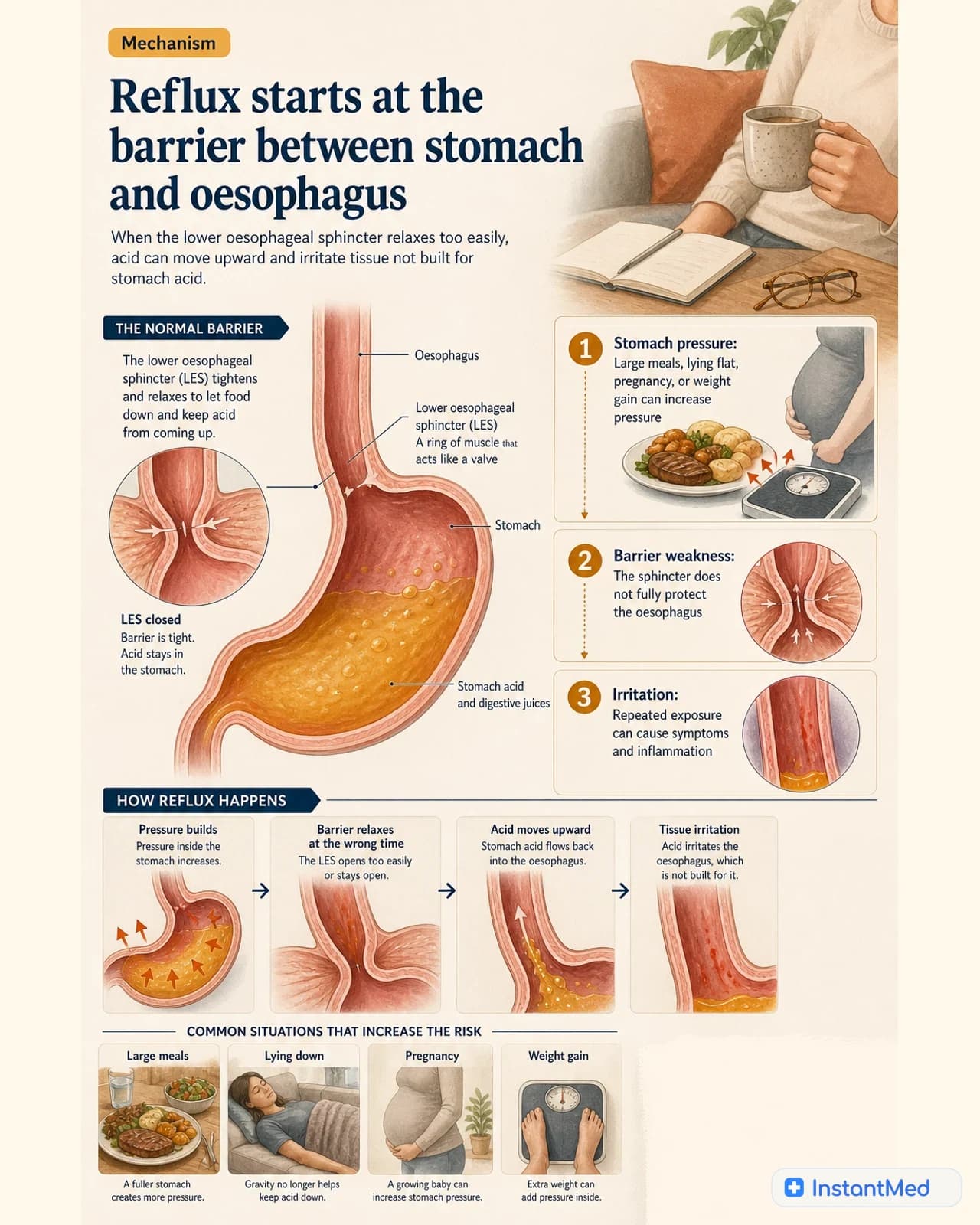
Acid Reflux and GORD: Symptoms, Red Flags, and Treatment
Occasional reflux is common, but frequent heartburn, regurgitation, swallowing symptoms, chest pain, bleeding signs, or persistent vomiting need a more careful plan.
InstantMed Medical Team

8 min read
Burnout vs Stress: How to Tell the Difference
Stress and burnout overlap, but they are not the same. Learn the practical differences, common warning signs, workplace drivers, recovery steps, and when to seek professional support.
InstantMed Medical Team
8 min read
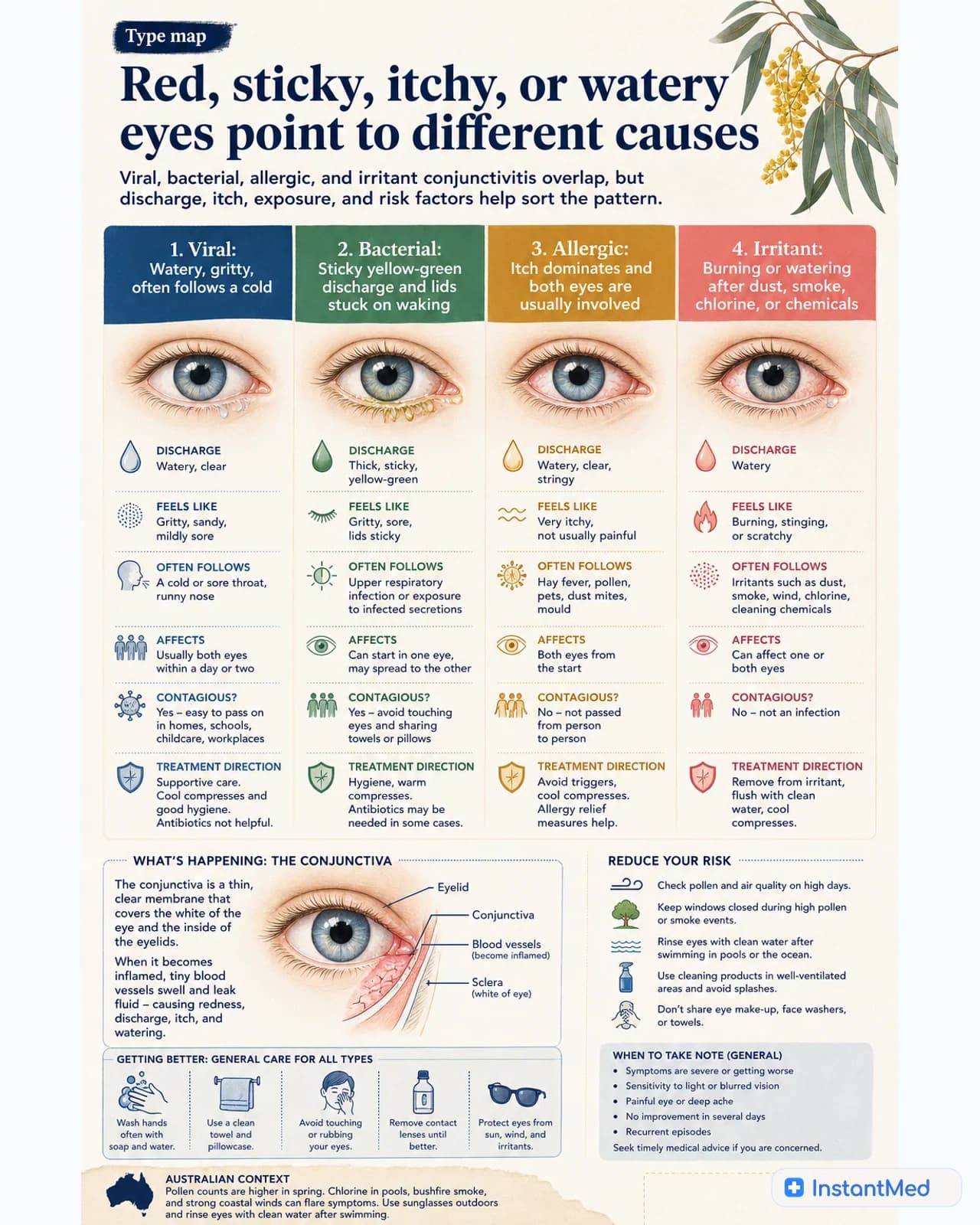
Conjunctivitis (Pink Eye): Types, Treatment, and When to Seek Care
Conjunctivitis is common, but not every red eye is routine pink eye. Discharge, itch, contact lens use, pain, light sensitivity, and vision change determine the safest next step.
InstantMed Medical Team