Loading article
Back to Health Guides
Medical Certificates 101•Part 2 of 4
Food Poisoning, Sick Leave, and Medical Certificates
Your entitlements, the food handler exclusion rules, what absence evidence should say, and when gastro symptoms need medical review.
8 min read
·Updated 11 June 2026
·Doctor Reviewed
AHPRA Verified
In this article
- 1Your Sick Leave Entitlements Under the Fair Work Act
- 2The 48-Hour Rule for Food Handlers
- 3Food Poisoning vs Viral Gastroenteritis
- 4Typical Recovery Time and Certificate Duration
- 5Medical Certificates and Absence Evidence
Medical information only. This article is for general information and does not constitute medical advice. Treatment decisions are made by an AHPRA-registered doctor after reviewing your circumstances.
Review
InstantMed Clinical Team
Clinical governance review for guide content
Updated
11 June 2026
General information only, not personal medical advice.
Jump to section
1Your Sick Leave Entitlements Under the Fair Work Act2The 48-Hour Rule for Food Handlers3Food Poisoning vs Viral Gastroenteritis4Typical Recovery Time and Certificate Duration5Medical Certificates and Absence Evidence6What Your Certificate Will and Will Not Say7When to Seek Urgent Care8Recovery: What Actually Helps9Returning to Work10Sources
Food poisoning is sudden, unpleasant, and often impossible to prove without testing. Whether it was last night's takeaway, a shared barbecue, or viral gastroenteritis that feels identical, active vomiting, diarrhoea, fever, dehydration, and abdominal cramping can make you genuinely unfit for work. This guide explains the workplace evidence rules, the stricter food-safety boundary for food handlers, what a certificate should and should not disclose, and when gastro symptoms need medical review.
Your Sick Leave Entitlements Under the Fair Work Act
Under the National Employment Standards (NES), full-time and part-time employees accrue 10 days of paid personal/carer's leave per year. Food poisoning qualifies as personal illness under the Fair Work Act 2009 in the same way as any other acute illness.
Your employer can request "evidence that would satisfy a reasonable person" of your illness. For a single day off with food poisoning, many workplaces do not require documentation. For absences of two or more days, a medical certificate is standard practice.
The certificate does not need to disclose the cause of your illness. It states you were assessed by a doctor and found unfit for work for a specified period. "Medical condition" is sufficient - you are not required to tell your employer you had food poisoning.
Key Information
Casual employees do not accrue paid sick leave but cannot be penalised for being absent due to genuine illness. Casual employees may access unpaid personal leave under the NES for periods of illness.
The 48-Hour Rule for Food Handlers
If you work in food service, different rules apply. Food Standards Australia New Zealand (FSANZ) advice for food handlers says that if you know or think you have a foodborne illness, you should only return to food handling when a doctor says you are well enough, usually 48 hours after symptoms stop.
This rule exists because you remain infectious and capable of contaminating food or spreading illness even after you feel better. The 48-hour exclusion period reflects the time needed for the infectious agents that cause gastroenteritis to clear from your system to safe levels.
The 48-hour rule applies regardless of whether your illness was food poisoning or viral gastroenteritis - the food safety outcome is the same. The relevant food-safety principles:
- Food Standards Code Standard 3.2.2, Clause 15 requires that food handlers not handle food while ill with symptoms that could contaminate food
- Food businesses must take reasonable steps to prevent food contamination by ill food handlers
- Some workplaces caring for vulnerable people may apply additional exclusion or return-to-work policies
Important Warning
If you handle food, do not return while you are still vomiting or having diarrhoea. Follow your workplace food-safety policy and medical advice before resuming food-handling duties.
Food Poisoning vs Viral Gastroenteritis
From a sick leave perspective, the distinction barely matters - both make you genuinely unfit for work. But understanding the difference helps set expectations about duration and transmission.
Food poisoning occurs when you consume food contaminated with bacteria, viruses, or toxins. Symptoms typically appear within 1-24 hours of the contaminated meal, though some types take longer.
Viral gastroenteritis spreads person-to-person. Symptoms overlap significantly with food poisoning: nausea, vomiting, diarrhoea, stomach cramps, and sometimes fever.
Common causes in Australia and their typical onset times:
- Staphylococcal toxin: symptoms within 1-6 hours, classically from improperly stored cooked meats or dairy
- Salmonella: symptoms 6-72 hours after contaminated chicken, eggs, or produce
- Campylobacter: symptoms 2-5 days, the most common bacterial food poisoning in Australia, usually from poultry
- Norovirus: symptoms 12-48 hours, highly contagious person-to-person
- E. coli: variable onset of 1-10 days depending on strain
You do not need to know the exact pathogen for your certificate. Describe your symptoms and the doctor will make the clinical assessment.
Typical Recovery Time and Certificate Duration
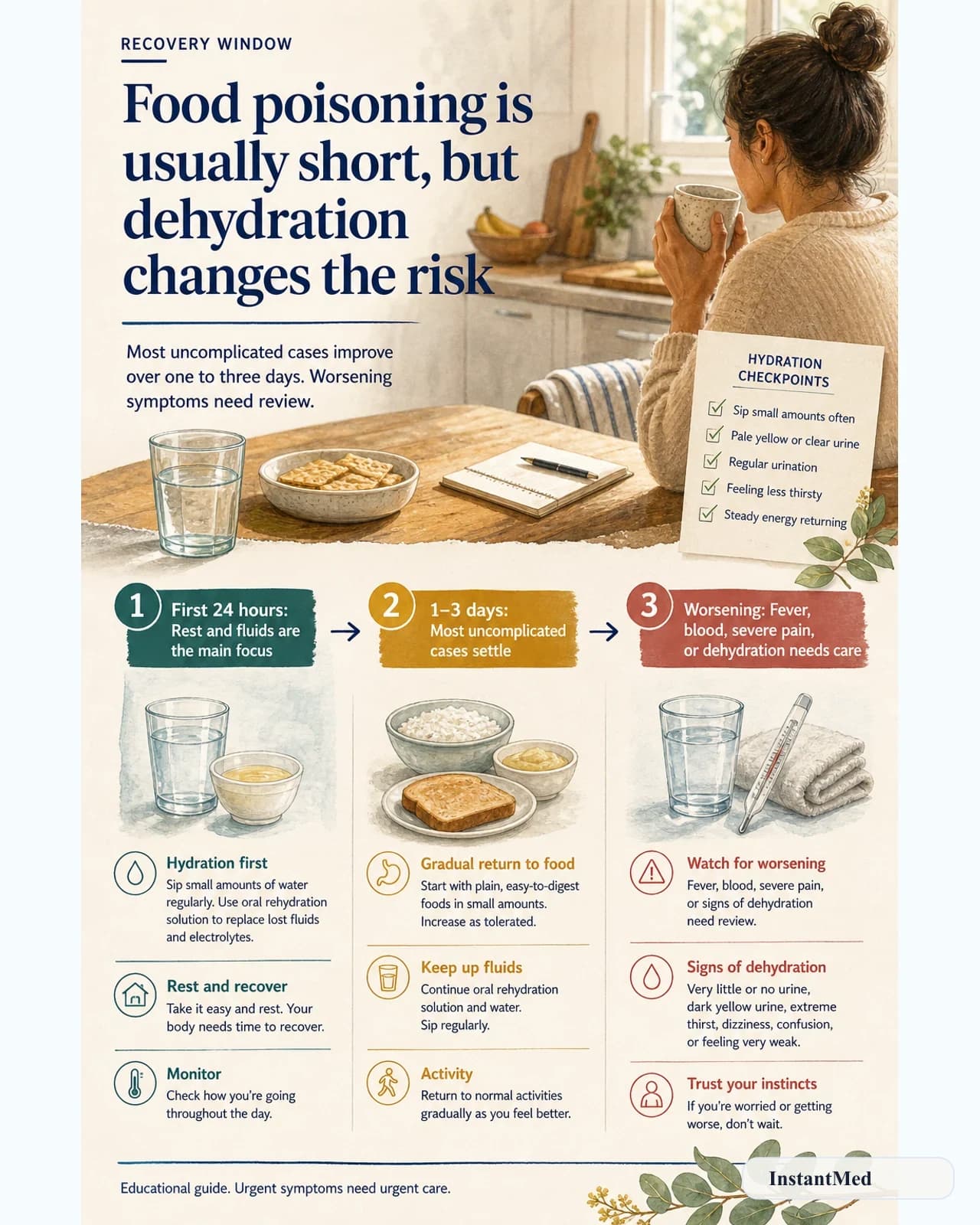
Most uncomplicated food poisoning resolves within 1-3 days. The acute phase - active vomiting and diarrhoea - typically lasts 12-48 hours. Fatigue and reduced appetite can persist for a day or two after.
Typical certificate durations by role:
Work safety
Work involving food service or vulnerable people may need longer exclusion after symptoms stop.
- Office and desk workers: 1-2 days for mild cases, 2-3 days for moderate
- Physical roles: may need an extra day to regain adequate strength
- Food handlers: at minimum 2 days to clear the 48-hour exclusion, often 3 days if symptoms persisted beyond the first day
If your recovery takes longer than expected - fever not settling, symptoms worsening, or still unable to keep fluids down after 48 hours - a follow-up consultation is appropriate.
Medical Certificates and Absence Evidence
When you are actively vomiting or managing diarrhoea, travelling to a clinic may be impractical and can increase exposure risk for others. The important question is not the format of the consultation. It is whether the clinician has enough information to assess your fitness for work and whether your symptoms need escalation.
Useful information for a clinician includes:
- When symptoms started
- How often you have vomited or had diarrhoea
- Whether you have fever, blood, severe pain, dizziness, reduced urination, or signs of dehydration
- Whether symptoms are improving, stable, or worsening
- Whether other people who ate the same food are also unwell
- Your role, especially if you handle food or care for vulnerable people
- Pregnancy, diabetes, immune suppression, older age, or other risk factors
For straightforward gastro symptoms, absence evidence usually focuses on the dates you were unfit for work. For food handlers, the evidence may need to align with the return-to-food-handling boundary rather than only the day you first felt sick.
What Your Certificate Will and Will Not Say
An InstantMed certificate confirms the consultation date and approved absence period. It does not name food poisoning or describe gastrointestinal symptoms.
The certificate will include:
- Your full legal name
- The consultation date
- The period you are unfit for work (start and end dates)
- The doctor's full name, AHPRA registration number, and contact details
- The doctor's signature (digital signatures can be used as evidence in Australia)
If your employer or a food safety authority needs fitness-for-food-handling or return-to-work evidence, check its requirements and arrange the appropriate assessment. InstantMed's standard short certificate documents absence only.
When to Seek Urgent Care
Most food poisoning is unpleasant but manageable at home. Seek in-person or emergency care when:
- Blood appears in vomit or stool
- Fever is above 38.5 degrees and not settling
- Signs of significant dehydration: dark urine, confusion, dizziness, or no urination for 8 or more hours
- Symptoms show no improvement after 3 days
- You are pregnant - gastroenteritis in pregnancy requires prompt assessment
- The person affected is elderly, immunocompromised, or very young
Emergency Information
If you experience blood in vomit or stool, severe dehydration with confusion or no urination for 8 or more hours, or rapidly worsening symptoms, seek emergency care or call 000. These are not situations for telehealth.
Recovery: What Actually Helps
During the acute phase:
- Sip small amounts of water, clear broth, or oral rehydration solution frequently. Large amounts may trigger vomiting.
- Rest completely while symptoms are active.
- Avoid solid food until vomiting has settled for several hours.
- When starting to eat, stick to bland foods (plain toast, rice, banana, crackers) before returning to a normal diet.
- Avoid dairy, alcohol, caffeine, and fatty foods until fully recovered.
Red flags
Blood, severe dehydration, pregnancy, high-risk age, or symptoms not improving should not be treated as routine food poisoning.
Oral rehydration solution (ORS) is more effective than water alone for replacing electrolytes lost through vomiting and diarrhoea. Pharmacy sachets (Hydralyte, Gastrolyte) are inexpensive and worth having at home.
Over-the-counter loperamide (Imodium) reduces diarrhoea frequency but is generally not recommended for bacterial food poisoning as it can prolong the time the pathogen stays in your system. Ask a pharmacist if you are considering this.
Returning to Work
For most workers, return when you feel genuinely well enough to perform your role - symptoms resolved and energy adequate.
For food handlers: follow your workplace policy and medical advice. FSANZ advice is that food handlers should return to food handling only when a doctor says they are well enough, usually 48 hours after symptoms stop. If your last symptom was Tuesday morning, Thursday morning is the earliest common benchmark, but your workplace or public health advice may be stricter.
If your employer requests a return-to-work clearance certificate, a telehealth or in-person doctor can confirm you are fit to resume normal duties once you have been symptom-free for the required period.
Sources
- Fair Work Ombudsman: Notice and medical certificates
- Fair Work Ombudsman: Sick and carer's leave and compassionate leave fact sheet
- Food Standards Australia New Zealand: Health and hygiene advice for food handlers
- Food Standards Australia New Zealand: Health and hygiene responsibilities of food businesses
- healthdirect: Food poisoning
- healthdirect: Gastroenteritis
Frequently Asked Questions
How long should I stay off work with food poisoning?
Many uncomplicated gastro illnesses improve within 1-3 days. If you work with food or vulnerable people, return-to-work rules can be stricter. FSANZ advice says food handlers should return to food handling only when a doctor says they are well enough, usually 48 hours after symptoms stop.
When is a medical certificate appropriate for food poisoning?
A certificate may be appropriate when your workplace requests reasonable evidence, when the absence lasts more than a short self-managed period, or when your role has food safety or vulnerable-person duties. The certificate should focus on fitness for work and dates, not unnecessary symptom details.
Does my employer have to accept a medical certificate for food poisoning?
Fair Work says an employer can ask for evidence that would satisfy a reasonable person that the employee was entitled to sick leave. A medical certificate is a common form of evidence. If there is a dispute about workplace policy or evidence, check the Fair Work Ombudsman rather than relying on informal advice.
Do I need a separate clearance certificate to return to work?
For most office and desk workers, no formal clearance is needed. Food handlers, childcare, aged care, and healthcare workers must be 48 hours symptom-free before returning. If your employer requests a clearance certificate, a doctor can confirm you are fit to return.
What if I am not sure whether it was food poisoning?
The distinction between food poisoning and viral gastroenteritis is often impossible to confirm without testing, and it rarely matters for sick leave purposes. Both make you genuinely unfit for work. Describe your symptoms accurately to the doctor and let them make the clinical assessment.
InstantMed Medical Team
Related Articles
9 min read
Medical Certificates for Work: Complete Australian Guide
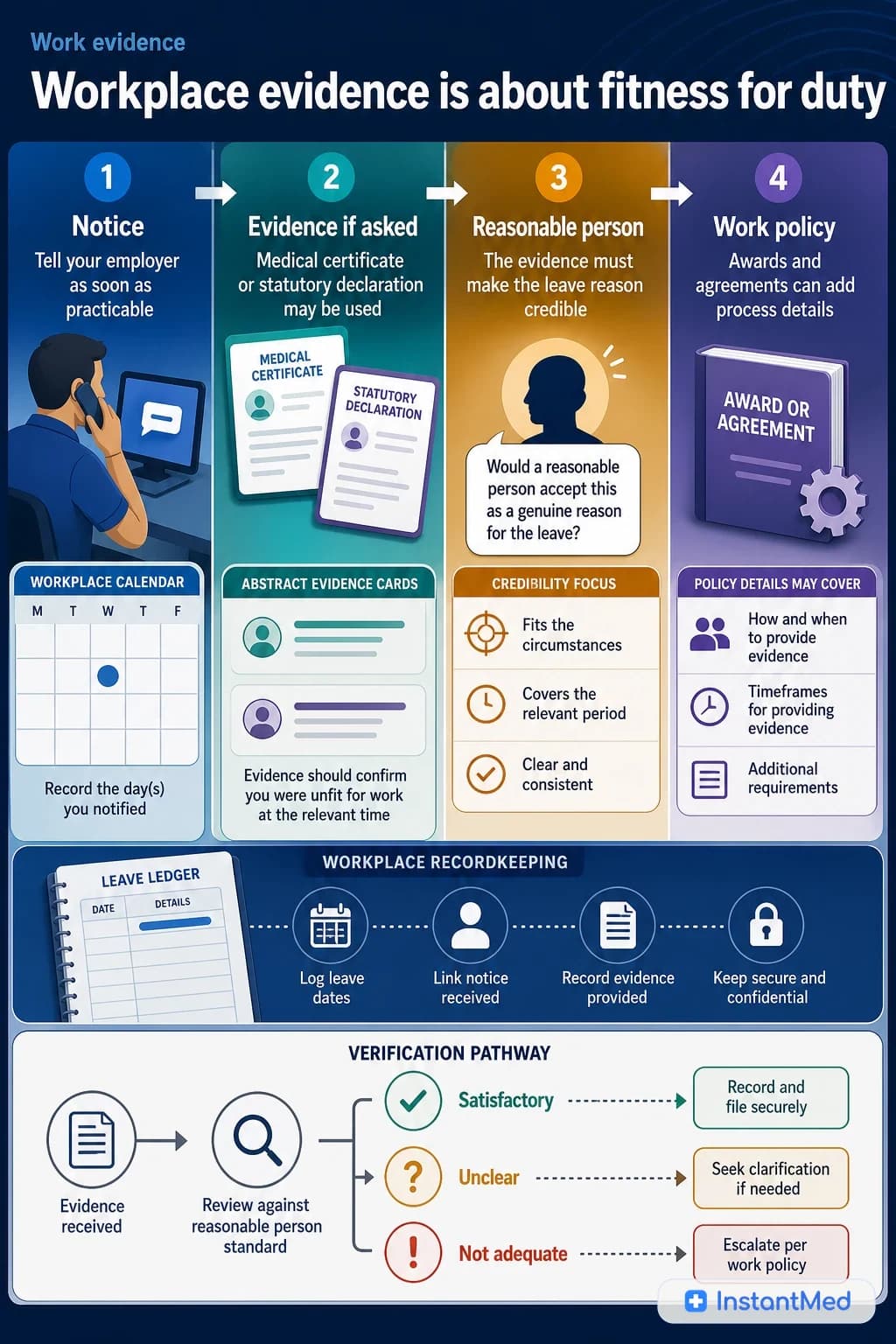
A work medical certificate is evidence that you were unfit for work, not a public explanation of your diagnosis. This Australian guide explains employer evidence rules, privacy, telehealth, stat decs, and return-to-work issues.
InstantMed Medical Team
13 min read
Doctor's Note for Work Australia: What Counts?
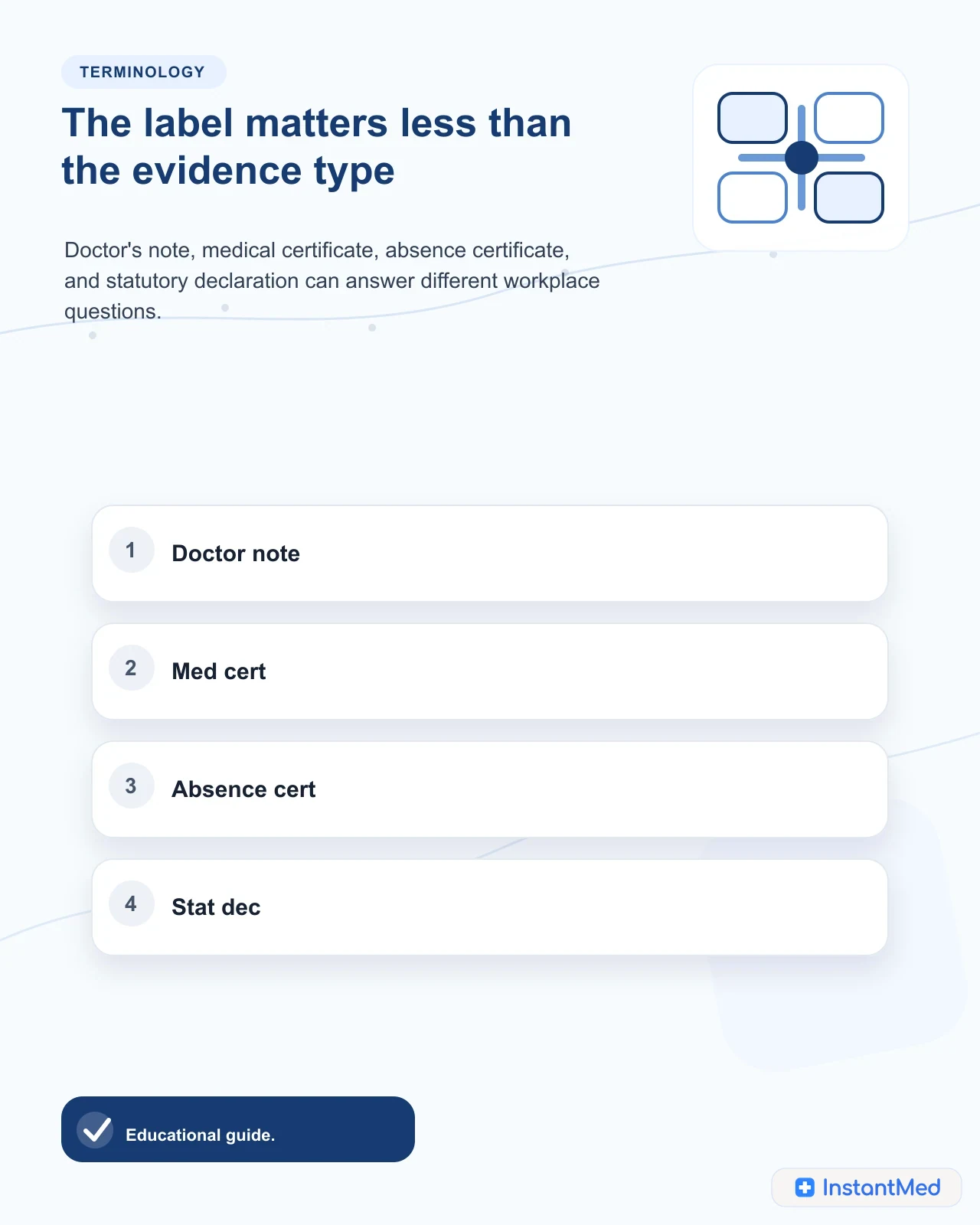
A doctor's note for work in Australia usually means a medical certificate, but sick notes, absence-from-work certificates, and statutory declarations can also matter. Learn what counts as evidence, what a strong certificate includes, and when a workplace may ask questions.
InstantMed Medical Team
11 min read
Can I Take Sick Leave If My Child Is Sick?
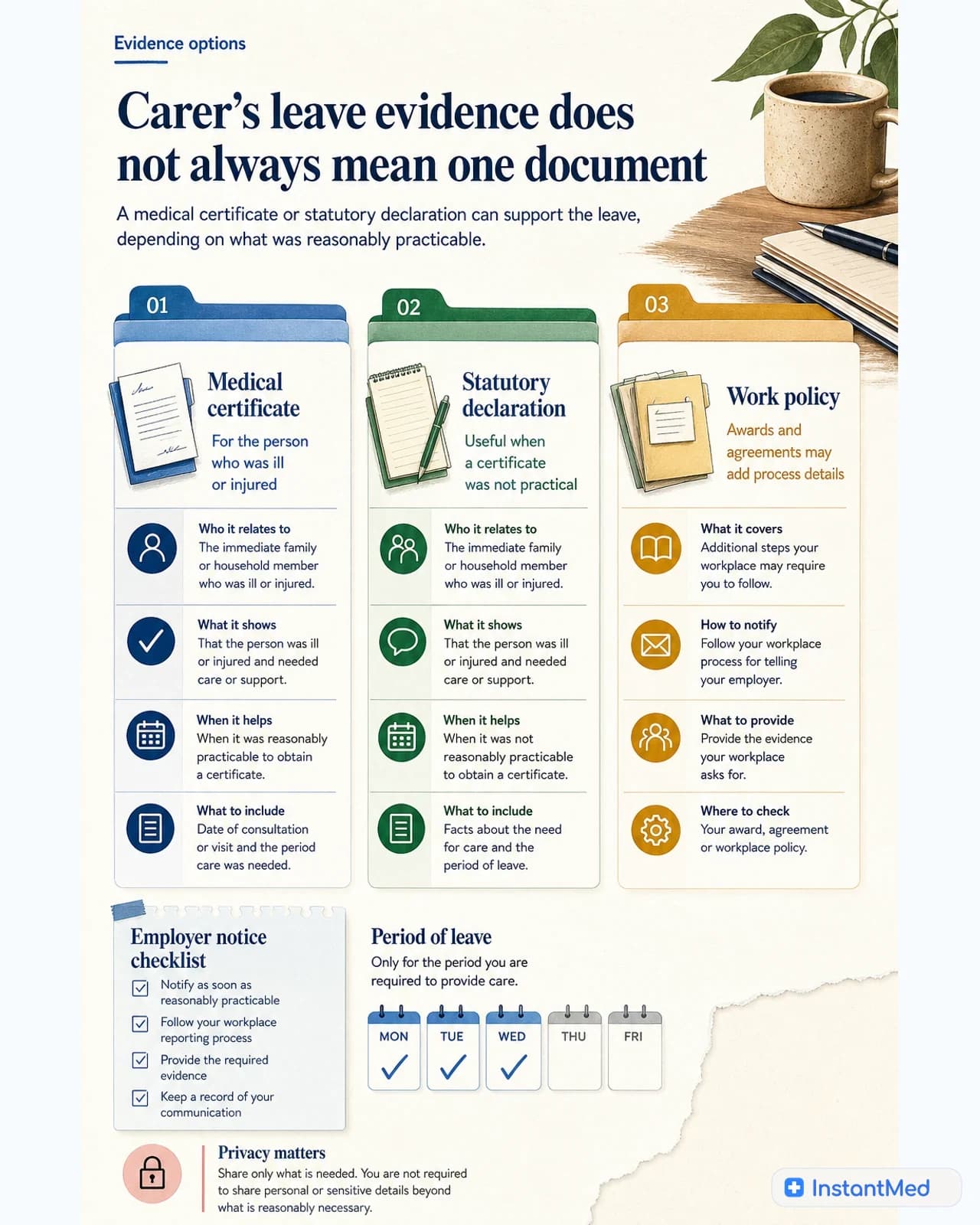
If your child is sick, you may be able to use personal/carer's leave rather than ordinary sick leave. Here is what employers can ask for, when a medical certificate helps, and when child symptoms need urgent care.
InstantMed Medical Team