Loading article
Back to Health Guides
Vertigo and Dizziness: Causes, Types, and Red Flags
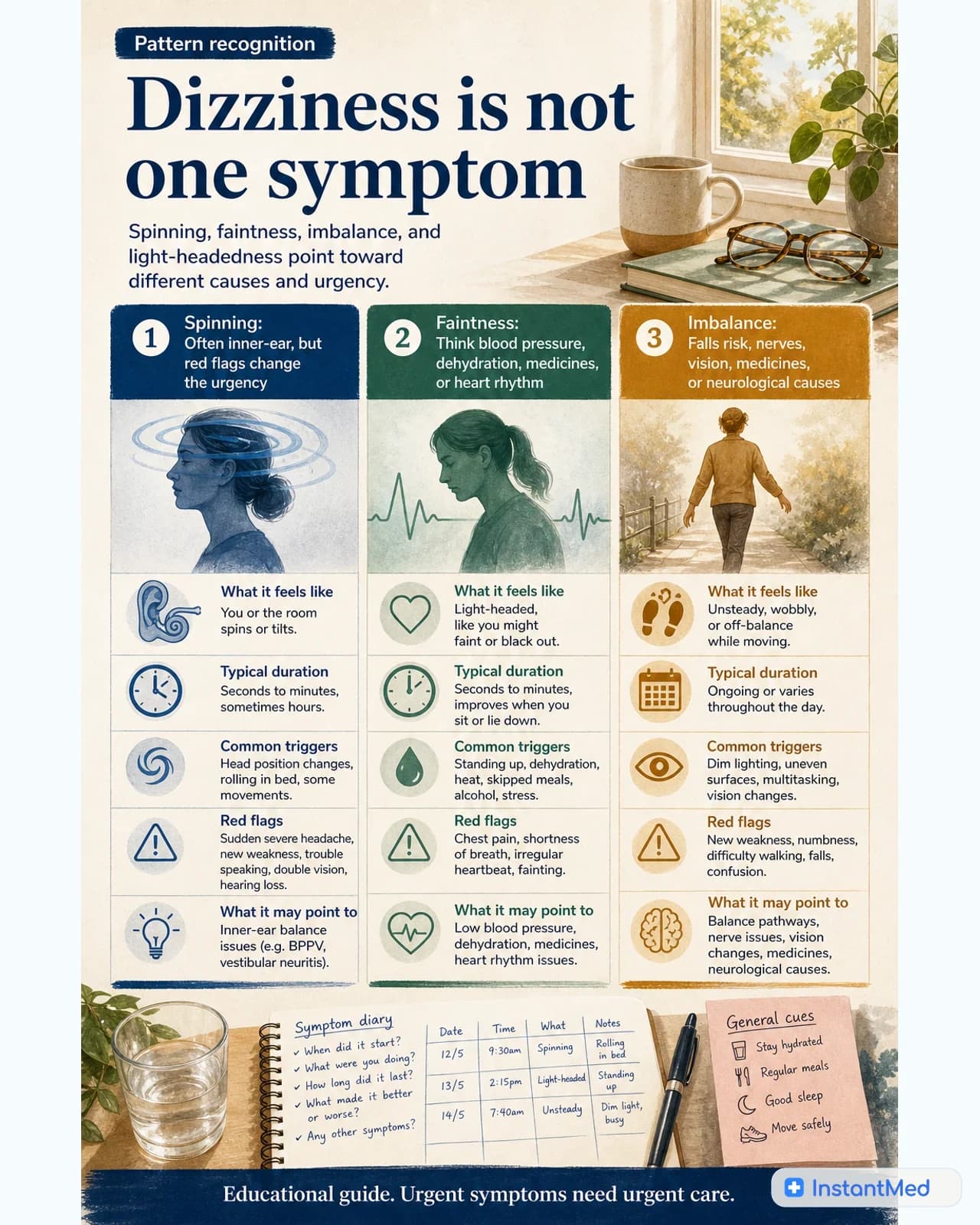
Vertigo, light-headedness, and imbalance feel similar when you are unwell, but they point to different causes and different levels of urgency.
8 min read
·Updated 10 May 2026
·Doctor Reviewed
AHPRA Verified
In this article
- 1Start by Naming the Sensation
- 2Pattern Clues That Matter
- 3BPPV: Brief Positional Vertigo
- 4Vestibular Neuritis, Labyrinthitis, and Meniere's
- 5Light-Headedness and Faintness
Medical information only. This article is for general information and does not constitute medical advice. Treatment decisions are made by an AHPRA-registered doctor after reviewing your circumstances.
Review
InstantMed Clinical Team
Clinical governance review for guide content
Updated
10 May 2026
General information only, not personal medical advice.
Jump to section
1Start by Naming the Sensation2Pattern Clues That Matter3BPPV: Brief Positional Vertigo4Vestibular Neuritis, Labyrinthitis, and Meniere's5Light-Headedness and Faintness6Imbalance and Falls Risk7What Helps While You Are Dizzy8Treatment Depends on the Cause9Red Flags: When Dizziness Needs Urgent Assessment10Work, Driving, and Daily Safety11Sources
Dizziness is a symptom word, not a diagnosis. One person uses it to mean the room is spinning. Another means they feel faint. Another means they feel unsteady when walking. Those patterns point in different directions, so the first job is to describe the sensation clearly.
Most dizziness is not a stroke or emergency. But some dizziness is urgent, especially when it comes with neurological symptoms, collapse, chest pain, head injury, new hearing loss, or inability to walk safely. This guide separates common patterns from the warning signs that should bypass routine self-care.
Start by Naming the Sensation
Vertigo means a false sense of movement. The room may spin, tilt, rock, or move around you, or you may feel like you are moving when you are still. Vertigo often points to the inner ear, although brainstem and cerebellar causes matter when warning signs are present.
Light-headedness or presyncope means feeling faint, greyed-out, weak, or close to passing out. This pattern can come from blood pressure changes, dehydration, heat, vasovagal episodes, anaemia, medication effects, or heart rhythm problems.
Imbalance or disequilibrium means feeling unsteady on your feet without a spinning sensation. This can involve vision, inner-ear balance, joint-position sensation, nerve function, medications, neurological conditions, or age-related falls risk.
Floating or vague dizziness is less specific. It can occur with anxiety, migraine, poor sleep, dehydration, medication effects, post-viral illness, persistent postural-perceptual dizziness, or several overlapping causes.
The most useful description is concrete: "the room spins for 20 seconds when I roll to the left in bed" is far more helpful than "I feel dizzy."
Pattern Clues That Matter
Before thinking about treatment, write down the pattern:
- Trigger: rolling in bed, looking up, standing, walking, exertion, coughing, turning the head, screens, busy visual environments, or no clear trigger
- Timing: seconds, minutes, hours, days, or constant background unsteadiness
- Associated symptoms: nausea, vomiting, hearing loss, tinnitus, ear fullness, headache, weakness, numbness, speech trouble, double vision, chest pain, palpitations, fainting, fever, or neck pain
- Falls risk: near falls, actual falls, unsafe walking, needing to hold walls, or older age
- Context: recent viral illness, migraine history, new medication, dehydration, alcohol, head injury, ear infection, diabetes, cardiovascular disease, or previous BPPV
RACGP guidance on vertigo in general practice emphasises careful history and examination because peripheral inner-ear causes and central neurological causes can overlap at first presentation.
BPPV: Brief Positional Vertigo
Benign paroxysmal positional vertigo (BPPV) is a common cause of brief spinning vertigo. It occurs when tiny calcium carbonate particles in the inner ear move into a semicircular canal and send a false movement signal when your head changes position.
BPPV often fits this pattern:
- Sudden spinning triggered by rolling over in bed, looking up, bending, or turning the head
- Episodes lasting seconds rather than hours
- Nausea can occur, but hearing loss and tinnitus are not typical BPPV features
- Symptoms may be intense but brief, then settle until the next triggering head movement
- It is more common with age and can recur
Diagnosis is usually made with positional testing such as the Dix-Hallpike manoeuvre, which looks for a characteristic vertigo and eye-movement pattern. Treatment depends on the canal involved. The Epley manoeuvre is a canalith repositioning manoeuvre used for posterior canal BPPV and is supported by evidence, but it is not a generic dizziness exercise.
Helpful Tip
Do not force an Epley manoeuvre if the diagnosis is uncertain, symptoms are atypical, or you have neck pain, neck injury, severe cervical arthritis, severe nausea, neurological symptoms, or unsafe balance. In those cases, assessment comes first.
Vestibular Neuritis, Labyrinthitis, and Meniere's
Not all vertigo is BPPV. Longer episodes and hearing symptoms shift the thinking.
Vestibular neuritis is inflammation affecting the balance nerve, often after a viral illness. It can cause sudden, intense, continuous vertigo with nausea, vomiting, imbalance, visual disturbance, and difficulty concentrating. Hearing is usually not affected.
Labyrinthitis affects inner-ear balance structures and hearing structures. It can cause vertigo plus hearing loss or tinnitus. New hearing loss with vertigo should be assessed promptly because it changes the differential diagnosis and the urgency.
Meniere's disease is an inner-ear condition involving episodes of vertigo with hearing symptoms. A typical pattern includes recurrent vertigo attacks, tinnitus, fluctuating hearing loss, and a feeling of fullness or pressure in one ear. It needs medical assessment and, when suspected, may require audiology or ENT review.
Vestibular migraine can cause dizziness or vertigo with or without headache. Light sensitivity, sound sensitivity, visual aura, motion sensitivity, and a migraine history can be clues. It can mimic inner-ear disorders, so pattern and recurrence matter.
Light-Headedness and Faintness
If dizziness feels like you might faint, the inner ear may not be the main issue. Common causes include:
- Orthostatic hypotension: blood pressure drops after standing, especially after illness, dehydration, prolonged bed rest, or medication changes
- Vasovagal episodes: a reflex response to heat, pain, blood, needles, prolonged standing, or emotional stress
- Dehydration or low intake: reduced circulating volume, often worse with vomiting, diarrhoea, fever, heat, or exercise
- Medication effects: blood pressure tablets, diuretics, sedatives, some antidepressants, alcohol, and medication combinations
- Anaemia or low iron: can cause fatigue, exertional symptoms, pallor, and light-headedness
- Heart rhythm problems: palpitations, chest discomfort, shortness of breath, fainting without warning, or episodes during exertion need prompt assessment
Inner ear
Brief spinning with head movement can happen when inner-ear particles move into a semicircular canal.
This pattern is one reason "dizzy" should not automatically be treated as vertigo. A spinning positional episode and a fainting episode are different clinical problems.
Imbalance and Falls Risk
Imbalance becomes more important with age, frailty, neuropathy, neurological disease, vision problems, sedating medicines, and previous falls. The Australian Institute of Health and Welfare reports falls as the leading cause of injury hospitalisations in Australia, with 248,211 fall-related hospitalisations in 2023-24.
Falls-risk assessment may include:
- Lying and standing blood pressure
- Medication review, especially sedatives and blood pressure medicines
- Vision and footwear review
- Balance and gait assessment
- Home hazards, stairs, bathroom safety, and lighting
- Diabetes or neuropathy assessment
- Referral to vestibular physiotherapy, falls prevention programs, GP, ENT, neurology, or geriatrics depending on the pattern
For an older adult with new dizziness, repeated near falls, or unsafe walking, the right question is not "which vertigo exercise should I try?" It is "why is this person now unstable, and what needs to be ruled out?"
What Helps While You Are Dizzy
For mild dizziness without red flags:
- 1
Sit or lie down as soon as symptoms start.
- 2
Avoid driving, ladders, heights, machinery, swimming alone, and risky work until symptoms settle and the cause is clear.
- 3
Stand up slowly. Pause on the edge of the bed or chair before walking.
- 4
Hydrate, especially after vomiting, diarrhoea, fever, exercise, or hot weather.
- 5
Reduce fall hazards: poor lighting, loose mats, clutter, stairs, and slippery bathrooms.
- 6
Keep a symptom log with timing, triggers, duration, hearing symptoms, headache, medications, and falls.
If vomiting is persistent, you cannot keep fluids down, you cannot walk safely, or symptoms are worsening, seek medical assessment rather than trying to push through it.
Treatment Depends on the Cause
Treatment is not one-size-fits-all.
For BPPV, canalith repositioning such as the Epley manoeuvre may be appropriate after the pattern is confirmed. Some people can learn a home version, but only after the affected side and canal are clear.
Urgency
Facial droop, arm weakness, speech trouble, severe headache, chest pain, or collapse needs urgent care.
For vestibular neuritis or labyrinthitis, short-term symptom control may be used early, but prolonged use of vestibular suppressants can interfere with compensation. Vestibular rehabilitation exercises are often important during recovery.
For Meniere's disease, treatment is individualised and may include lifestyle measures, hearing assessment, medication, specialist review, and longer-term planning.
For presyncope, management may involve fluids, blood pressure review, medication adjustment, ECG, blood tests, or investigation for anaemia or heart rhythm problems.
For falls risk, treatment may be less about vertigo and more about reducing harm: medication review, strength and balance work, vision correction, home safety, and managing underlying disease.
Red Flags: When Dizziness Needs Urgent Assessment
Call 000 if dizziness occurs with possible stroke symptoms. The Stroke Foundation's FAST test focuses on face droop, arm weakness, speech difficulty, and time to call 000. Other stroke symptoms can include dizziness, loss of balance, unexplained fall, sudden vision change, severe abrupt headache, trouble swallowing, or weakness and numbness.
Seek prompt urgent assessment for:
- New trouble walking, coordination problems, severe unsteadiness, or repeated falls
- Double vision, vision loss, abnormal eye movements, confusion, slurred speech, difficulty swallowing, weakness, numbness, or facial droop
- Sudden severe headache or a major change in headache pattern
- Dizziness after head injury
- Dizziness with chest pain, palpitations, shortness of breath, collapse, or fainting without warning
- New one-sided hearing loss, especially with vertigo
- Neck pain after trauma
- Persistent vomiting, dehydration, or inability to keep fluids down
Important Warning
A new spinning sensation can still be a stroke warning sign when it comes with neurological symptoms, unsafe walking, or severe abrupt headache. Do not label new severe dizziness as "just vertigo" when red flags are present.
Work, Driving, and Daily Safety
Active vertigo can make driving, operating machinery, working at heights, caring for dependants, or concentrating at a screen unsafe. The practical issue is function: whether you can safely do your normal activities without putting yourself or others at risk.
If dizziness affects work or study, useful documentation focuses on:
- The date of assessment
- The period of impaired capacity
- Whether driving, heights, machinery, physical work, screens, or concentration are affected
- Whether follow-up or in-person assessment is recommended
- Any safety restrictions relevant to the role
For recurrent episodes, the priority should be diagnosis and prevention, not repeated short-term workarounds. Keep a pattern log and take it to your GP, vestibular physiotherapist, audiologist, ENT specialist, neurologist, or falls clinic depending on the features.
Sources
- healthdirect: Vertigo
- RACGP: An approach to vertigo in general practice
- RACGP: The Epley manoeuvre for benign paroxysmal positional vertigo
- Stroke Foundation: Signs of stroke
- Australian Institute of Health and Welfare: Falls
- Better Health Channel: Labyrinthitis and vestibular neuritis
- Better Health Channel: Meniere's disease
Frequently Asked Questions
What is the difference between vertigo and dizziness?
Vertigo is a specific sensation of spinning or movement, either you feel like you are moving or the environment seems to move around you. Dizziness is broader and can include light-headedness, faintness, floating, imbalance, or unsteadiness. The distinction matters because inner-ear, cardiovascular, neurological, medication, and falls-risk causes are assessed differently.
What causes brief spinning when I roll over in bed?
Brief spinning triggered by rolling over, looking up, or changing head position can fit benign paroxysmal positional vertigo (BPPV), a common inner-ear cause. BPPV should still be assessed, especially if it is new, severe, recurrent, associated with falls, or different from previous episodes.
What is the Epley manoeuvre and can I do it at home?
The Epley manoeuvre is a series of guided head movements used for posterior canal BPPV. It should be matched to the affected side and canal, and extra care is needed if you have neck pain, neck injury, severe cervical arthritis, severe nausea, or an uncertain diagnosis. A GP or vestibular physiotherapist can assess whether it is appropriate and teach a home version if suitable.
When is dizziness a medical emergency?
Call 000 if dizziness occurs with facial droop, arm weakness, speech trouble, sudden severe headache, new vision symptoms, trouble walking or coordinating, collapse, chest pain, or symptoms after a head injury. Sudden dizziness with one-sided weakness, speech difficulty, or loss of balance can be a stroke warning sign.
Is BPPV serious?
BPPV is usually not dangerous, but it can be very disabling while active and it increases falls risk, especially in older adults. It is treatable, but recurrent, atypical, or persistent symptoms should be reviewed so central causes, medication effects, hearing problems, and falls risk are not missed.
How long does vestibular neuritis or labyrinthitis last?
Vestibular neuritis and labyrinthitis can cause sudden intense vertigo, nausea, imbalance, and difficulty concentrating. Symptoms often improve gradually, but recovery may take days to weeks. Labyrinthitis can involve hearing symptoms, so new hearing loss, severe headache, neurological symptoms, or unsafe walking needs prompt assessment.
InstantMed Medical Team
Related Articles
8 min read
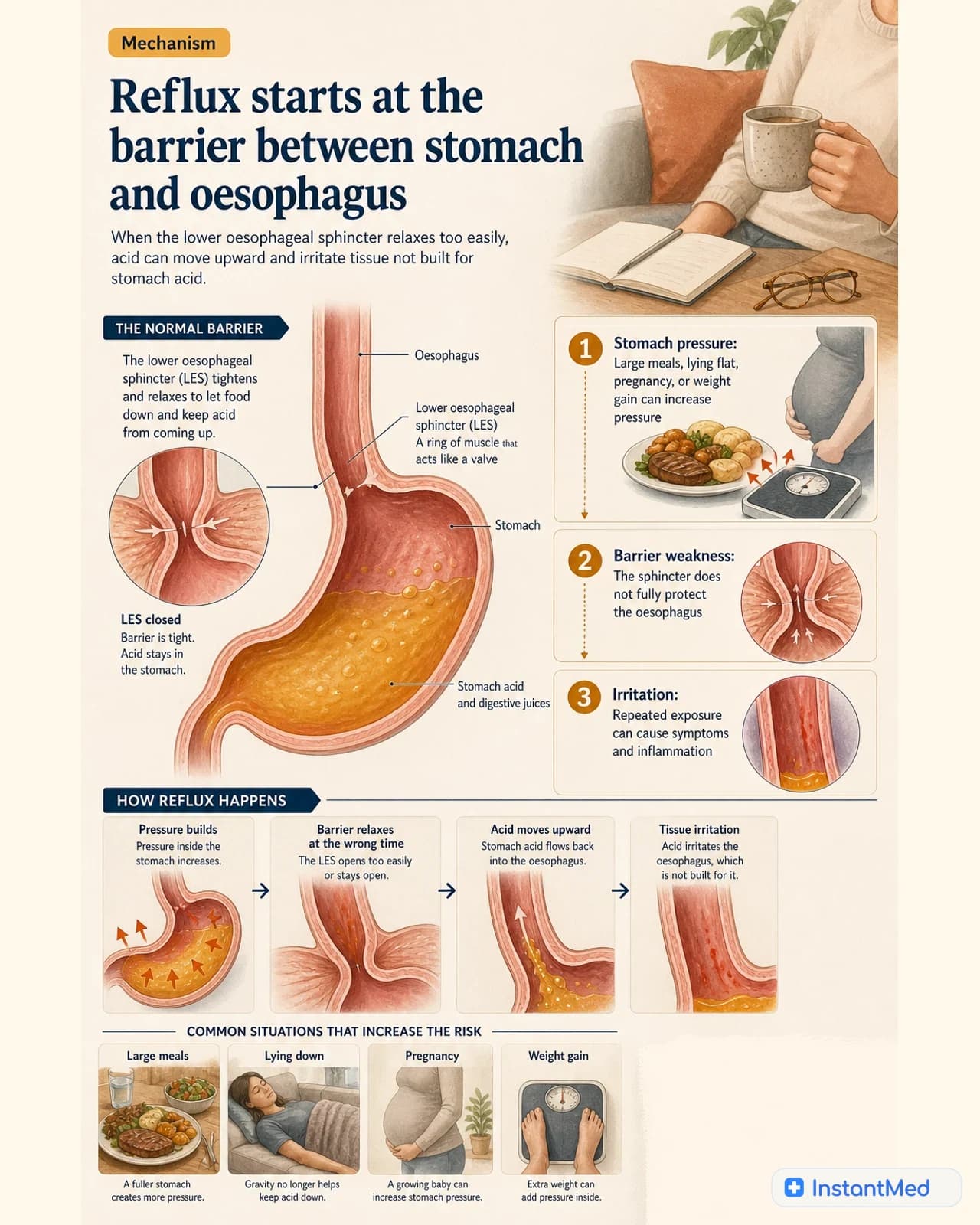
Acid Reflux and GORD: Symptoms, Red Flags, and Treatment
Occasional reflux is common, but frequent heartburn, regurgitation, swallowing symptoms, chest pain, bleeding signs, or persistent vomiting need a more careful plan.
InstantMed Medical Team

8 min read
Burnout vs Stress: How to Tell the Difference
Stress and burnout overlap, but they are not the same. Learn the practical differences, common warning signs, workplace drivers, recovery steps, and when to seek professional support.
InstantMed Medical Team
8 min read
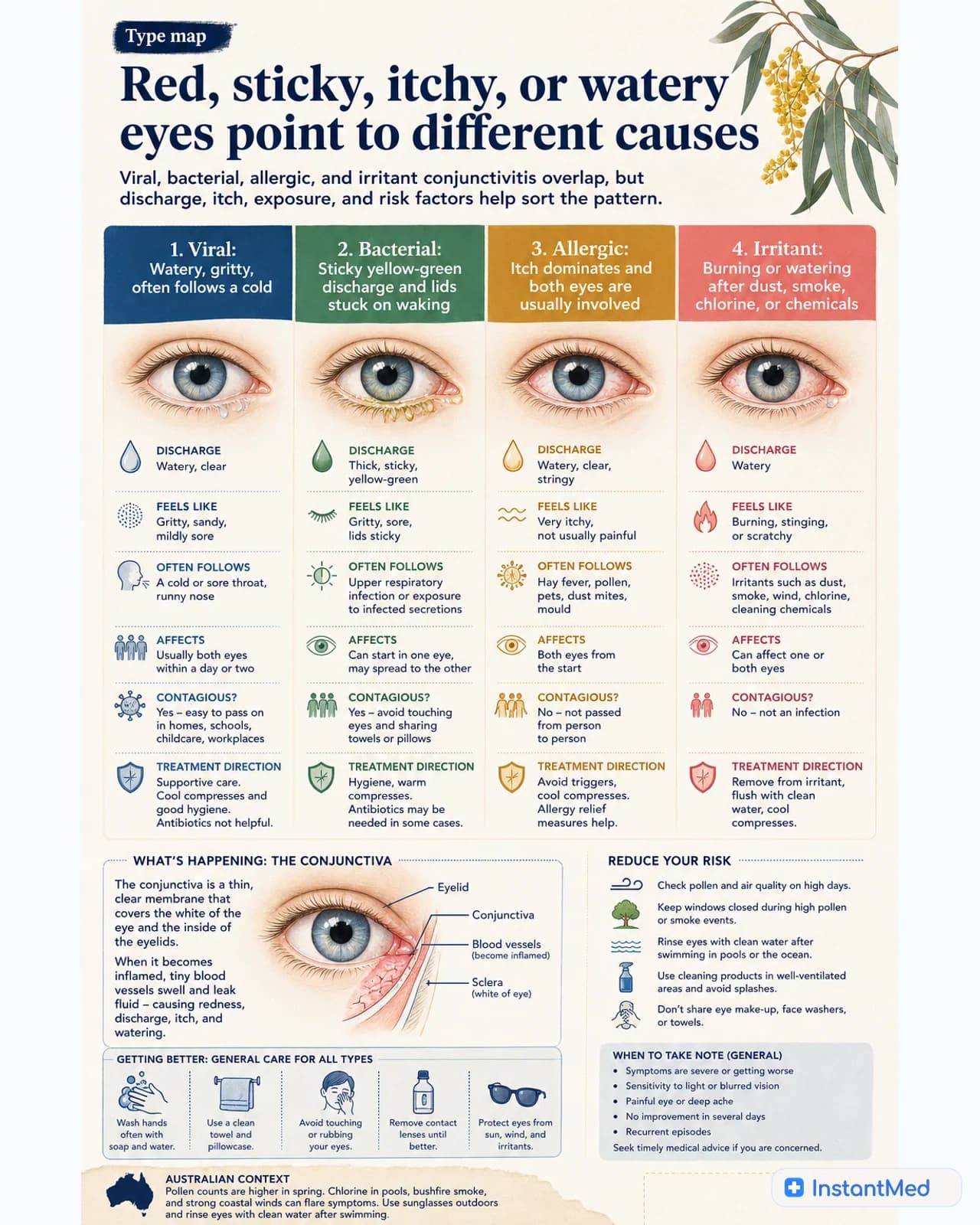
Conjunctivitis (Pink Eye): Types, Treatment, and When to Seek Care
Conjunctivitis is common, but not every red eye is routine pink eye. Discharge, itch, contact lens use, pain, light sensitivity, and vision change determine the safest next step.
InstantMed Medical Team