Loading article
Back to Health Guides
Acid Reflux and GORD: Symptoms, Red Flags, and Treatment
How heartburn differs from gastro-oesophageal reflux disease, what helps, when medicines are reviewed, and which symptoms should not be assumed to be reflux.
8 min read
·Updated 10 May 2026
·Doctor Reviewed
AHPRA Verified
In this article
- 1How Reflux Works
- 2Common Symptoms
- 3Red Flags: Do Not Assume It Is Reflux
- 4Lifestyle Measures That Can Help
- 5Medicine Options
Medical information only. This article is for general information and does not constitute medical advice. Treatment decisions are made by an AHPRA-registered doctor after reviewing your circumstances.
Review
InstantMed Clinical Team
Clinical governance review for guide content
Updated
10 May 2026
General information only, not personal medical advice.
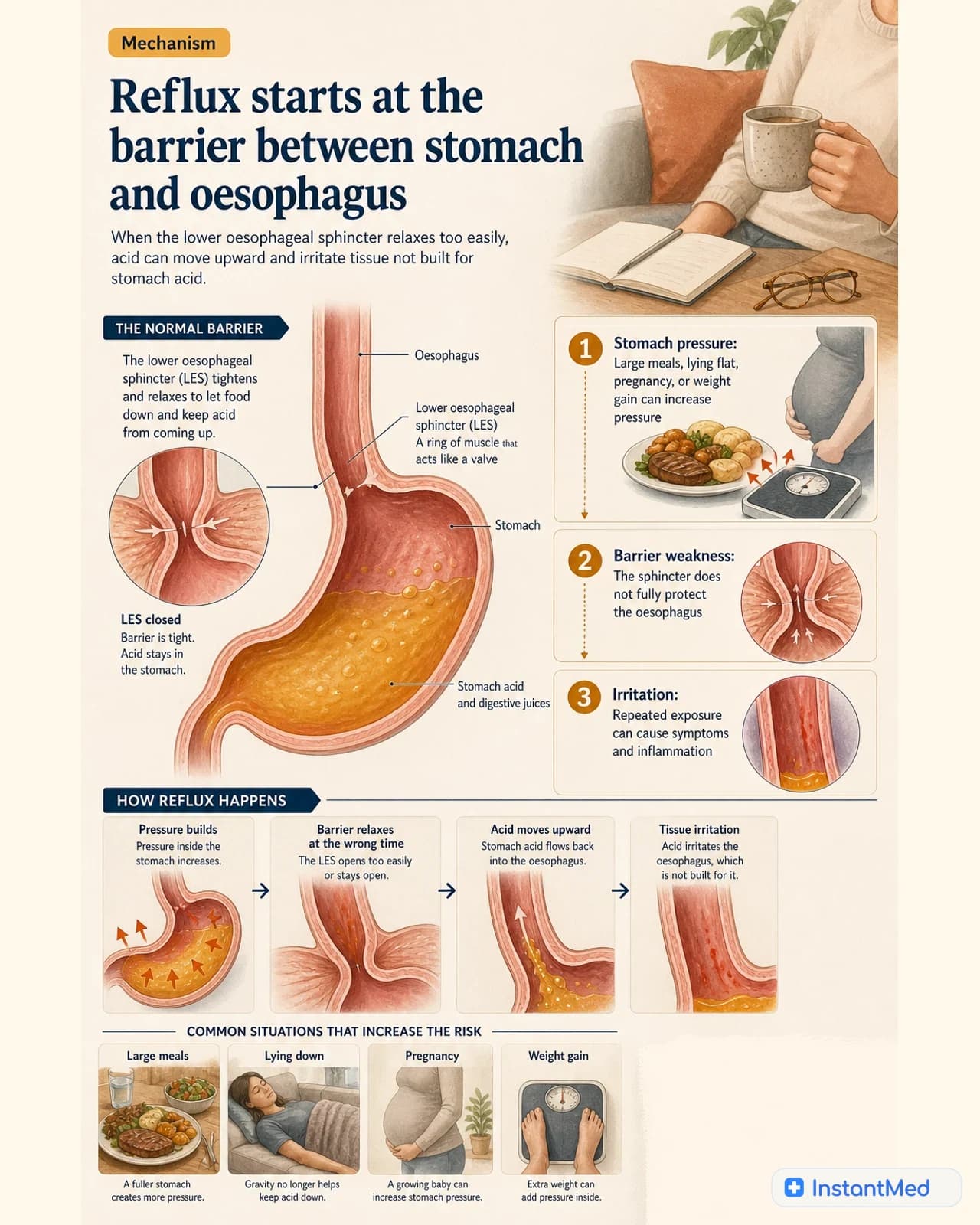
Acid reflux happens when stomach contents move back up into the oesophagus. The oesophagus is not built to handle repeated acid exposure, so reflux can cause burning, regurgitation, throat symptoms, cough, or inflammation.
GORD stands for gastro-oesophageal reflux disease. In Australia, GORD is the usual medical term; GERD is the American spelling. The difference is not just spelling. Occasional reflux after a large meal is common. GORD means reflux is frequent enough, troublesome enough, or complicated enough to need a proper management plan.
Healthdirect describes GORD as reflux that causes symptoms or health complications. It also warns that some symptoms can overlap with a heart attack, so severe chest symptoms should not be self-diagnosed as reflux.
How Reflux Works
The lower oesophageal sphincter is a ring of muscle between the oesophagus and stomach. It normally helps keep stomach contents moving in the right direction.
Reflux can happen when:
- The sphincter relaxes too easily
- Stomach pressure increases
- The stomach is very full
- A person lies flat soon after eating
- A hiatus hernia affects the barrier
- Pregnancy or weight gain increases abdominal pressure
- Smoking, alcohol, or some medicines worsen the barrier or irritation
The result is acid or stomach contents moving upward into tissue that is more sensitive than the stomach lining.
Common Symptoms
Typical reflux symptoms include:
- Heartburn: burning behind the breastbone
- Regurgitation: sour, bitter, or acidic fluid coming up
- Burping or belching
- Upper abdominal discomfort
- Symptoms worse after meals
- Symptoms worse when lying flat or bending forward
Some people also get less obvious symptoms:
- Chronic cough
- Hoarse voice
- Sore throat
- Throat clearing
- Bad taste in the mouth
- Nausea
- Sleep disruption
- Dental enamel wear
These symptoms are not specific to reflux. Chronic cough, throat symptoms, and chest discomfort can have other causes, so persistent symptoms deserve assessment.
Red Flags: Do Not Assume It Is Reflux
Seek prompt assessment for:
- Chest pain or pressure, especially with breathlessness, sweating, faintness, nausea, or pain spreading to the arm, jaw, neck, back, or shoulder
- Difficulty swallowing
- Painful swallowing
- Food getting stuck
- Vomiting blood or material that looks like coffee grounds
- Black, tarry stools
- Unexplained weight loss
- Persistent vomiting
- Iron deficiency anaemia
- New reflux symptoms later in life
- Symptoms not improving despite an adequate treatment trial
Emergency Information
Call Triple Zero (000) for chest pain with possible heart attack features. It is not safe to decide at home that chest pain is reflux.
Lifestyle Measures That Can Help
Lifestyle changes work best when matched to the person's symptom pattern. The goal is not to ban every food forever. The goal is to find the triggers that actually matter.
Meals and Timing
Try:
- Smaller meals
- Avoiding very large evening meals
- Avoiding lying down for 2-3 hours after eating
- Reducing late-night snacks
- Eating more slowly
- Keeping a short symptom diary
Common triggers include fatty meals, spicy foods, coffee, alcohol, chocolate, peppermint, citrus, tomato, and carbonated drinks. But trigger lists are not universal. A food diary is more useful than copying someone else's restrictions.
Sleep Position
Night reflux can improve when gravity helps keep stomach contents down.
Options include:
- Raising the head of the bed by about 15-20 centimetres
- Using a wedge pillow rather than stacking soft pillows
- Avoiding meals close to bedtime
- Sleeping on the left side if this reduces symptoms
Pressure and Habits
Reflux can worsen when pressure around the stomach increases.
Practical steps include:
- Avoiding tight waistbands if they trigger symptoms
- Weight management where relevant
- Stopping smoking
- Reducing alcohol if it triggers symptoms
- Reviewing medicines that may worsen reflux with a doctor or pharmacist
Stress may not be the root cause of GORD, but it can make symptoms feel worse, affect eating patterns, increase muscle tension, and worsen sleep. Stress management can be part of symptom control without pretending reflux is "just stress".
Medicine Options
Medicine choice depends on frequency, severity, pregnancy status, other medicines, and red flags.
Antacids and Alginates
Red flags
Chest pain, swallowing difficulty, bleeding signs, weight loss, persistent vomiting, or new symptoms later in life need prompt assessment.
These can give quick, short-term relief. They are often used for occasional symptoms or breakthrough symptoms. They do not heal significant oesophagitis and they are not a long-term plan for frequent symptoms without review.
H2 Receptor Blockers
These reduce acid production for longer than antacids. They may help mild or intermittent symptoms.
Proton Pump Inhibitors
Proton pump inhibitors, or PPIs, reduce acid production more strongly. Australian Prescriber describes an initial PPI trial of 4-8 weeks for suspected GORD when there are typical symptoms and no red flags.
PPIs can be very useful, but long-term use should have a reason. RACGP deprescribing guidance says the Gastroenterological Society of Australia and RACGP recommend regular review of long-term PPI use with the goal of dose reduction and cessation where appropriate.
That does not mean everyone should stop PPIs. Some people need longer-term treatment, such as those with severe erosive disease, Barrett's oesophagus, peptic stricture, Zollinger-Ellison syndrome, or other specialist-directed indications. The point is review, not automatic stopping.
Step-Up and Step-Down Care
Good reflux care often follows a simple cycle:
- 1
Confirm there are no red flags.
- 2
Start lifestyle measures that match the trigger pattern.
- 3
Use short-term medicine when symptoms justify it.
- 4
Review response after a defined period.
- 5
Step down to the lowest effective approach once symptoms are controlled.
- 6
Reassess if symptoms return, worsen, or never respond.
Indefinite daily medicine without review is the failure mode. So is refusing medicine when symptoms are frequent, severe, or causing complications.
When Endoscopy May Be Needed
Most uncomplicated reflux does not need immediate gastroscopy.
Endoscopy is more likely to be considered when there are:
- Red flags
- Difficulty swallowing
- Painful swallowing
- Bleeding signs
- Unexplained weight loss
- Persistent vomiting
- Anaemia
- New symptoms later in life
- Symptoms that do not respond to an adequate treatment trial
- Concern for complications such as strictures, erosive oesophagitis, or Barrett's oesophagus
A gastroscopy lets a specialist look at the oesophagus, stomach, and first part of the small bowel with a flexible camera. It is usually done with sedation.
Barrett's Oesophagus
Barrett's oesophagus is a change in the lining of the lower oesophagus associated with chronic reflux in some people. It does not always cause different symptoms, so it is usually found on endoscopy.
Barrett's matters because it can increase the risk of oesophageal adenocarcinoma, although the absolute risk for most individuals is still low. People diagnosed with Barrett's may need surveillance and a long-term plan directed by their GP or gastroenterologist.
Treatment pathway
Lifestyle changes, short medication trials, review, and step-down planning prevent indefinite treatment without reassessment.
Reflux During Pregnancy
Reflux is common during pregnancy. Hormonal changes can relax the lower oesophageal sphincter, and the growing uterus can increase pressure on the stomach.
First steps are usually:
- Smaller meals
- Avoiding late meals
- Raising the head of the bed
- Avoiding personal triggers
- Wearing looser clothing around the waist
Medication choices during pregnancy should be checked with a doctor, pharmacist, or midwife because not every over-the-counter product is suitable for every pregnancy.
Practical Reflux Checklist
Before seeking review, write down:
- How often symptoms occur
- Whether symptoms wake you from sleep
- Whether swallowing is difficult or painful
- Any chest pain features
- Weight loss, vomiting, black stools, or blood
- Current medicines and supplements
- Pregnancy status, if relevant
- Trigger foods or timing patterns
- What you have already tried and whether it helped
This makes it easier to separate uncomplicated reflux from symptoms needing investigation.
Sources
- Healthdirect: Gastro-oesophageal reflux disease (GORD)
- Australian Prescriber: The management of gastro-oesophageal reflux disease
- RACGP: Deprescribing proton pump inhibitors
- NPS MedicineWise: Algorithm for reviewing patients using PPIs for GORD
- NSW Agency for Clinical Innovation: Gastro-oesophageal reflux disease fact sheet
Frequently Asked Questions
What is the difference between reflux and GORD?
Reflux means stomach contents move back up into the oesophagus. GORD, or gastro-oesophageal reflux disease, is when reflux causes troublesome symptoms or complications.
When should reflux symptoms be reviewed?
Seek review if symptoms are frequent, waking you from sleep, needing medicine often, lasting more than a few weeks, or associated with red flags such as swallowing difficulty, vomiting blood, black stools, unexplained weight loss, persistent vomiting, anaemia, or chest pain.
Can reflux feel like chest pain?
Yes, reflux can cause burning or pressure behind the breastbone. But heart-related chest pain can feel similar. Chest pain with breathlessness, sweating, faintness, nausea, or pain spreading to the arm, jaw, neck, back, or shoulder should be treated as urgent.
How long are PPIs usually tried for reflux?
Australian Prescriber describes an initial proton pump inhibitor trial of 4-8 weeks when there are typical symptoms and no red flags. Long-term use should be reviewed, with step-down or lowest-effective-dose planning where appropriate.
Do lifestyle changes really help reflux?
They can. Smaller meals, avoiding late meals, reducing personal triggers, weight management, stopping smoking, and raising the head of the bed can reduce reflux for some people.
Can reflux happen during pregnancy?
Yes. Reflux is common in pregnancy because hormones can relax the lower oesophageal sphincter and the growing uterus increases abdominal pressure. Medication choices in pregnancy should be discussed with a doctor, pharmacist, or midwife.
InstantMed Medical Team
Related Articles

8 min read
Burnout vs Stress: How to Tell the Difference
Stress and burnout overlap, but they are not the same. Learn the practical differences, common warning signs, workplace drivers, recovery steps, and when to seek professional support.
InstantMed Medical Team
8 min read
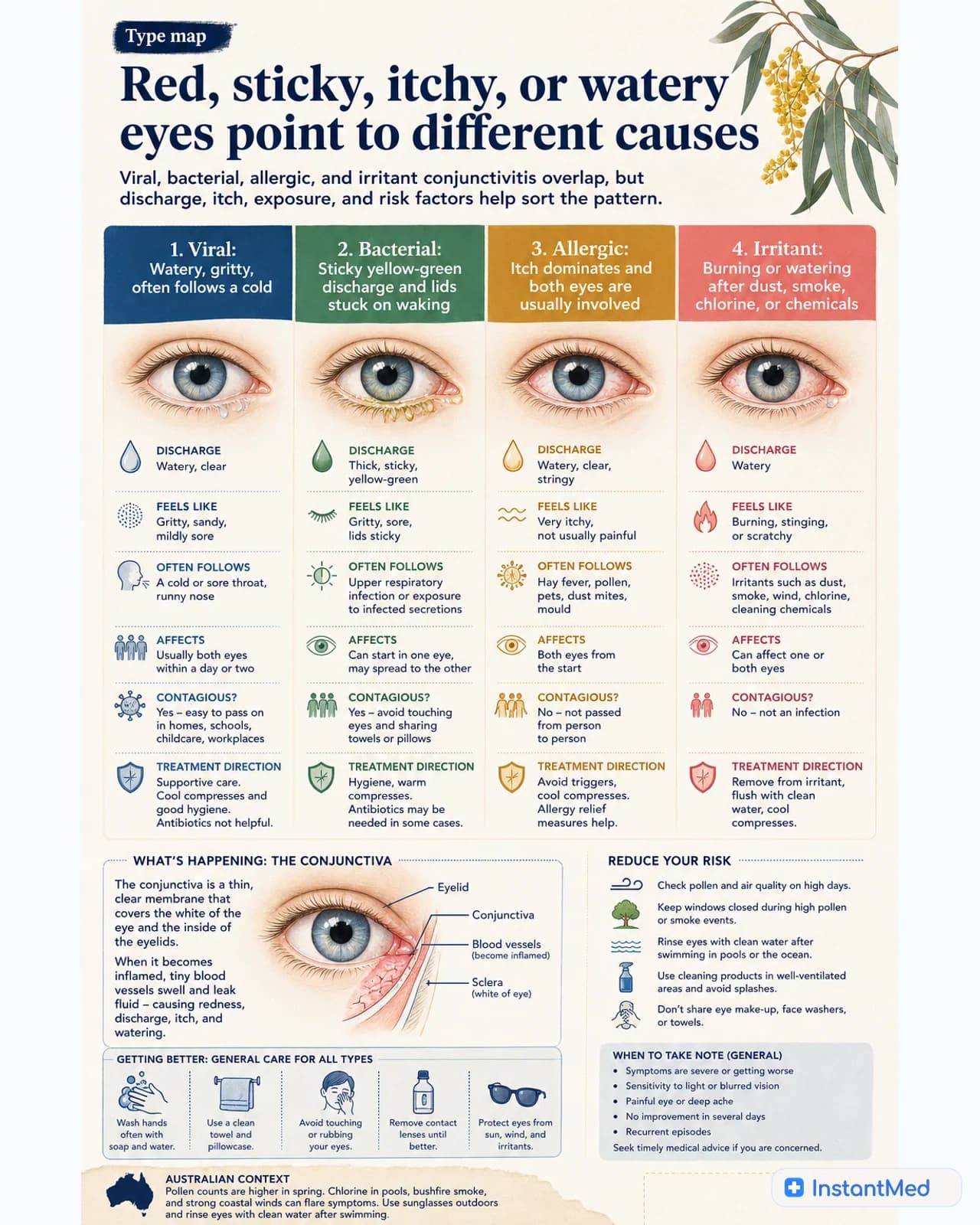
Conjunctivitis (Pink Eye): Types, Treatment, and When to Seek Care
Conjunctivitis is common, but not every red eye is routine pink eye. Discharge, itch, contact lens use, pain, light sensitivity, and vision change determine the safest next step.
InstantMed Medical Team
8 min read
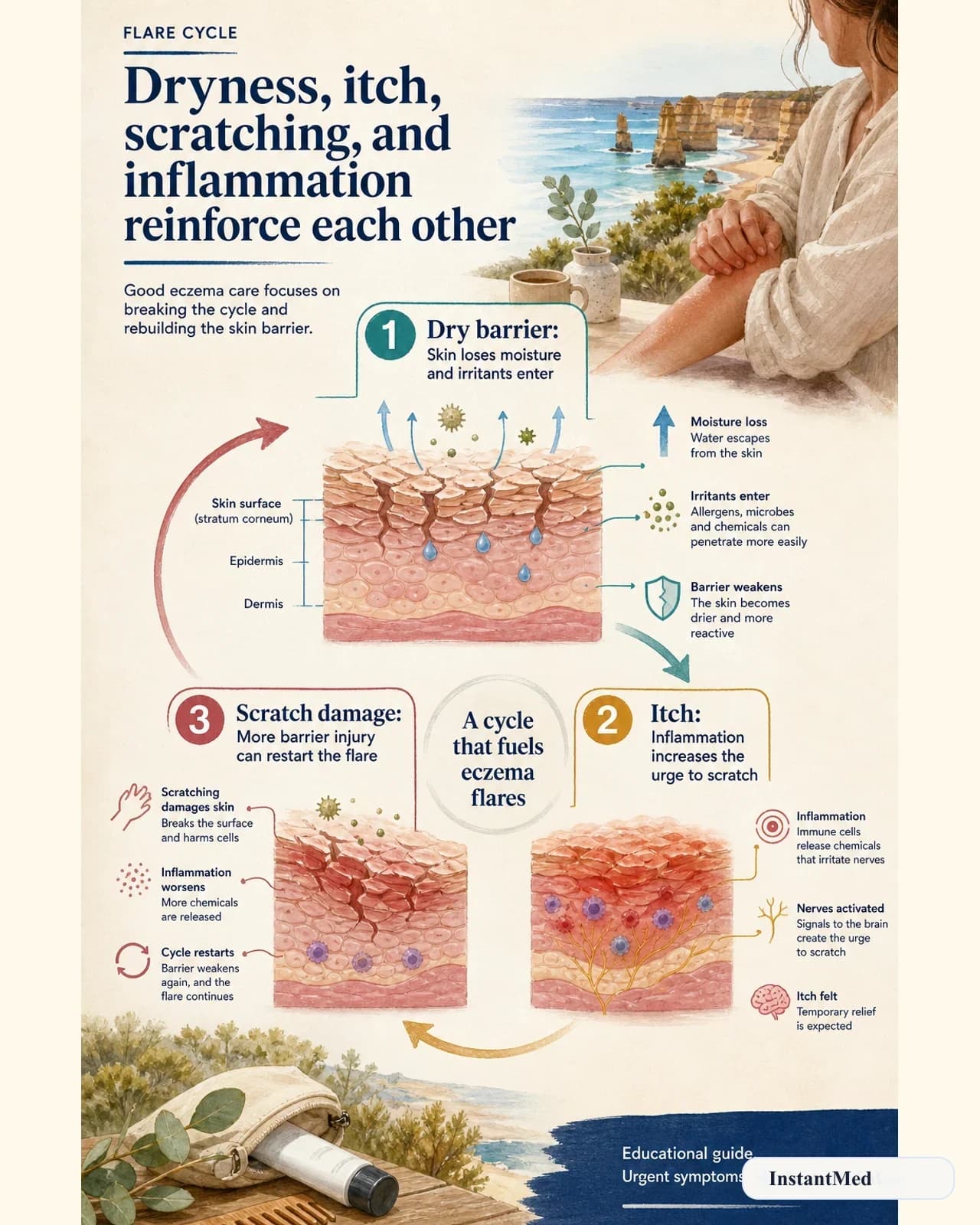
Eczema and Dermatitis: Managing a Chronic Skin Condition
Eczema affects around 1 in 3 Australians at some stage of life. With the right skin care approach, most people achieve good control and significantly reduce the frequency of flares.
InstantMed Medical Team