Loading article
Back to Health Guides
Burnout vs Stress: How to Tell the Difference
Stress usually improves when pressure drops. Burnout is more persistent and often needs changes to the work system, not just a weekend off.
8 min read
·Updated 3 June 2026
·Doctor Reviewed
AHPRA Verified

In this article
- 1Stress And Burnout At A Glance
- 2What Stress Looks Like
- 3What Burnout Looks Like
- 4Why Rest Alone Often Fails
- 5Burnout Can Overlap With Depression And Anxiety
Medical information only. This article is for general information and does not constitute medical advice. Treatment decisions are made by an AHPRA-registered doctor after reviewing your circumstances.
Review
InstantMed Clinical Team
Clinical governance review for guide content
Updated
3 June 2026
General information only, not personal medical advice.
Key Information
Burnout is not just being busy or tired. The useful distinction is recovery: ordinary stress often improves when pressure drops, while burnout tends to persist because the work pattern itself has stopped being sustainable.
"Burnout" is now used for everything from a hard week to serious work-related psychological strain. That makes the word less useful unless you separate it from ordinary stress.
Stress and burnout can both cause fatigue, poor sleep, irritability, headaches, stomach symptoms, low motivation, and emotional overload. The difference is usually the pattern: what triggered it, whether recovery restores you, and whether the underlying work environment has become chronically harmful.
This guide explains the difference without turning burnout into a buzzword or a self-diagnosis shortcut.
Stress And Burnout At A Glance
| Feature | Stress | Burnout |
|---|---|---|
| Main driver | Pressure, demand, conflict, overload, uncertainty | Chronic workplace stress that has not been successfully managed |
| Emotional tone | Wired, anxious, pressured, overwhelmed | Drained, detached, cynical, ineffective |
| Recovery pattern | Improves when pressure drops and rest happens | Persists despite rest unless the work pattern changes |
| Relationship to work | You may still care intensely | You may feel emotionally distant or numb |
| Usual response | Rest, prioritisation, problem-solving, support | Workload change, boundary repair, clinical support, workplace intervention |
The table is not a diagnosis. It is a pattern-recognition tool.
What Stress Looks Like
Stress is the body's response to demand. It can be short-term and useful, such as preparing for an exam or finishing a difficult project. It becomes harmful when demands exceed your capacity for too long.
Common stress signs include:
- Tension headaches, jaw clenching, muscle tightness
- Racing thoughts or difficulty switching off
- Poor sleep, lighter sleep, or early waking
- Irritability and impatience
- Digestive symptoms
- Feeling overwhelmed but still emotionally invested
- Improvement after rest, support, or the pressure resolving
The recovery pattern matters. If a weekend, a realistic workload, sleep, and reduced pressure help you return close to baseline, stress is more likely than burnout.
What Burnout Looks Like
The World Health Organization describes burnout as an occupational phenomenon resulting from chronic workplace stress that has not been successfully managed. It is not classified as a medical condition, but it can still be serious and disabling.
Burnout is usually described through three linked features:
- Exhaustion: feeling depleted, unable to recover, and emotionally used up
- Mental distance or cynicism: feeling detached, negative, resentful, or numb toward work
- Reduced effectiveness: feeling less capable, less useful, or unable to perform at your usual level
Burnout can feel quieter than stress. Stress often feels like too much. Burnout can feel like nothing left.
Why Rest Alone Often Fails
A day off can help stress. It may barely touch burnout.
That is because burnout is often maintained by job design and workplace conditions:
Core pattern
Exhaustion, mental distance, and reduced effectiveness are more useful than vague tiredness alone.
- Workload that cannot be completed within normal hours
- Low control over how work is done
- Unclear role expectations
- Constant interruption or emotional demand
- Poor manager support
- Values conflict between what the job requires and what you believe is right
- Lack of recognition or unfair reward
- Workplace conflict, bullying, or unsafe culture
- No genuine recovery time between demands
Safe Work Australia treats psychosocial hazards as work factors that can cause psychological or physical harm. In practice, that means burnout prevention is not just an individual resilience project. Employers have work health and safety duties to manage psychosocial risks.
Burnout Can Overlap With Depression And Anxiety
Burnout is work-related by definition. Depression and anxiety are broader clinical conditions. They can overlap.
Professional assessment is worth considering when:
- Low mood continues outside work
- You lose interest in things you normally value
- Sleep or appetite changes are significant
- Anxiety or panic symptoms are escalating
- You are withdrawing from people
- You are using alcohol, drugs, or stimulants to cope
- You feel hopeless, trapped, or unsafe
- Symptoms persist despite taking leave
This is where a GP, psychologist, or mental health professional can help separate burnout from depression, anxiety, sleep disorder, thyroid disease, iron deficiency, medication effects, substance use, or other contributors to exhaustion.
Important Warning
If you have thoughts of self-harm, feel unsafe, or think you might act on those thoughts, call 000 or contact a crisis support service immediately. Do not wait for a routine appointment.
What Recovery Usually Requires
Burnout recovery is less about one perfect self-care habit and more about removing the conditions that keep draining you.
1. Name the actual work drivers
Write down the specific work factors that are unsustainable. Be concrete:
- Too many clients or tasks per day
- No protected break time
- Unclear expectations
- Constant after-hours messages
- No authority to make decisions
- Emotionally difficult work without debriefing
- Repeated conflict with one person or team
"I am burned out" is true but hard to act on. "I have six hours of allocated work in a three-hour window every day" is actionable.
2. Reduce demand or increase control
Recovery usually needs at least one structural change:
- Reduced hours for a period
- Fewer active projects
- Clearer prioritisation from a manager
- Meeting reduction
- No after-hours response expectation
- More autonomy over scheduling
- A temporary change in duties
- Transfer away from a harmful reporting line
If nothing changes, leave may become a pause button rather than recovery.
3. Rebuild basic capacity
Sleep, food, movement, sunlight, and social contact are not a cure for a broken work system. They are still the platform recovery sits on.
Useful basics are boring by design:
- Consistent wake time
- Caffeine cut-off
- Gentle movement most days
- Regular meals
- One screen-free wind-down block
- Connection with someone who is not part of the work problem
These steps matter most when they are realistic enough to repeat.
4. Get clinical support if symptoms are persistent
A GP can assess physical contributors, screen for depression or anxiety, discuss fitness for work, and refer to psychology or other supports where appropriate.
A psychologist can help with boundaries, thought patterns, avoidance, values conflict, assertive communication, and return-to-work planning.
For workplace-related injury or severe occupational stress, workers' compensation, occupational health, HR, a union, or an employment adviser may become relevant. The right path depends on the workplace and the facts.
Taking Leave Without Oversharing
If symptoms affect your ability to work, sick leave may be appropriate. The Fair Work Ombudsman explains that employers can ask for evidence for sick and carer's leave, and that evidence needs to satisfy a reasonable person.
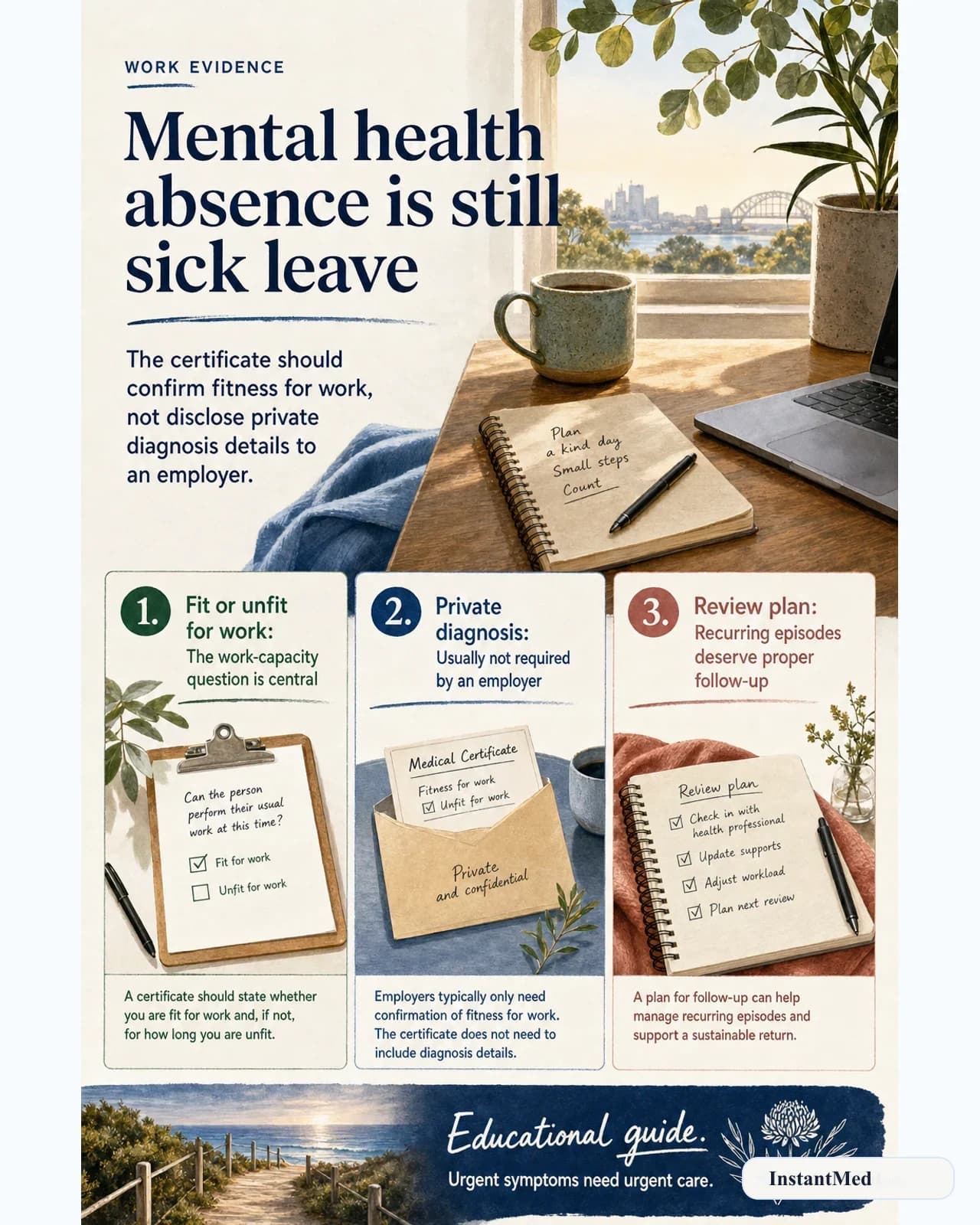
The evidence usually does not need to disclose your diagnosis. A medical certificate can focus on whether you are fit or unfit for work and the dates covered.
Practical steps:
- Notify your employer as soon as reasonably practicable
- Follow your workplace evidence policy
- Keep the message short: unwell, unable to work, expected return date if known
- Provide evidence if requested
- Keep clinical details private unless you choose to disclose them
- Ask for policy requirements in writing if there is a dispute
This is not legal advice. Awards, enterprise agreements, public-sector rules, and long absences can change the picture.
Returning To Work
Returning to the same conditions can restart the same cycle. A return plan should be specific.
Consider:
Work drivers
Workload, control, clarity, support, fairness, and conflict shape whether leave becomes recovery or only a pause.
- Reduced hours or staged return
- Written priority list from your manager
- Clear stop time
- Protected breaks
- Temporary task reduction
- Agreement about after-hours contact
- Check-in dates
- A plan for early warning signs
The goal is not to prove you are tough enough to resume full load immediately. The goal is to return in a way that does not recreate the injury pattern.
The Bottom Line
Stress is often a response to pressure that improves when pressure drops. Burnout is more persistent, more detached, and more tied to chronic workplace conditions.
Do not treat burnout as a personal productivity failure. Also do not use it as a vague label that stops proper assessment. If exhaustion, detachment, and reduced effectiveness are persisting despite rest, the next step is a more careful look at work design, mental health, physical contributors, and support.
Sources Used In This Guide
- World Health Organization: Burn-out an occupational phenomenon (ICD-11)
- Safe Work Australia: Mental health and psychosocial hazards
- Fair Work Ombudsman: Sick and carer's leave
- Beyond Blue
Frequently Asked Questions
How do I know if it is stress or burnout?
Stress is usually tied to a clear pressure and improves when the pressure reduces. Burnout is more likely when exhaustion, cynicism or detachment, and reduced effectiveness persist despite rest, especially when the pattern is linked to chronic workplace stress.
Is burnout a mental illness?
The World Health Organization classifies burnout as an occupational phenomenon, not a medical condition. However, burnout can overlap with depression, anxiety, sleep problems, substance use, and physical illness, so professional assessment may still be important.
Can burnout justify sick leave?
Mental health symptoms and work-related psychological strain can affect fitness for work. If you are unfit for work, a registered practitioner may provide evidence such as a medical certificate. Workplace requirements depend on Fair Work rules, awards, enterprise agreements, and employer policy.
Should I tell my employer I have burnout?
You usually do not need to disclose a diagnosis to explain an absence. A certificate or other evidence can focus on work capacity and dates. Whether to discuss burnout more openly depends on your workplace, the support available, and whether job changes are needed.
When should burnout symptoms be urgent?
Seek urgent help if you have thoughts of self-harm, feel unsafe, cannot function, are using alcohol or drugs to cope, have panic symptoms that feel unmanageable, or have severe depression symptoms. If there is immediate danger, call 000.
InstantMed Medical Team
Related Articles
8 min read
Medical Certificates for Mental Health Days
Mental health is valid sick leave in Australia. What your certificate says, how to notify your employer, same-day vs next-day certificates, and when to get ongoing support.
InstantMed Medical Team
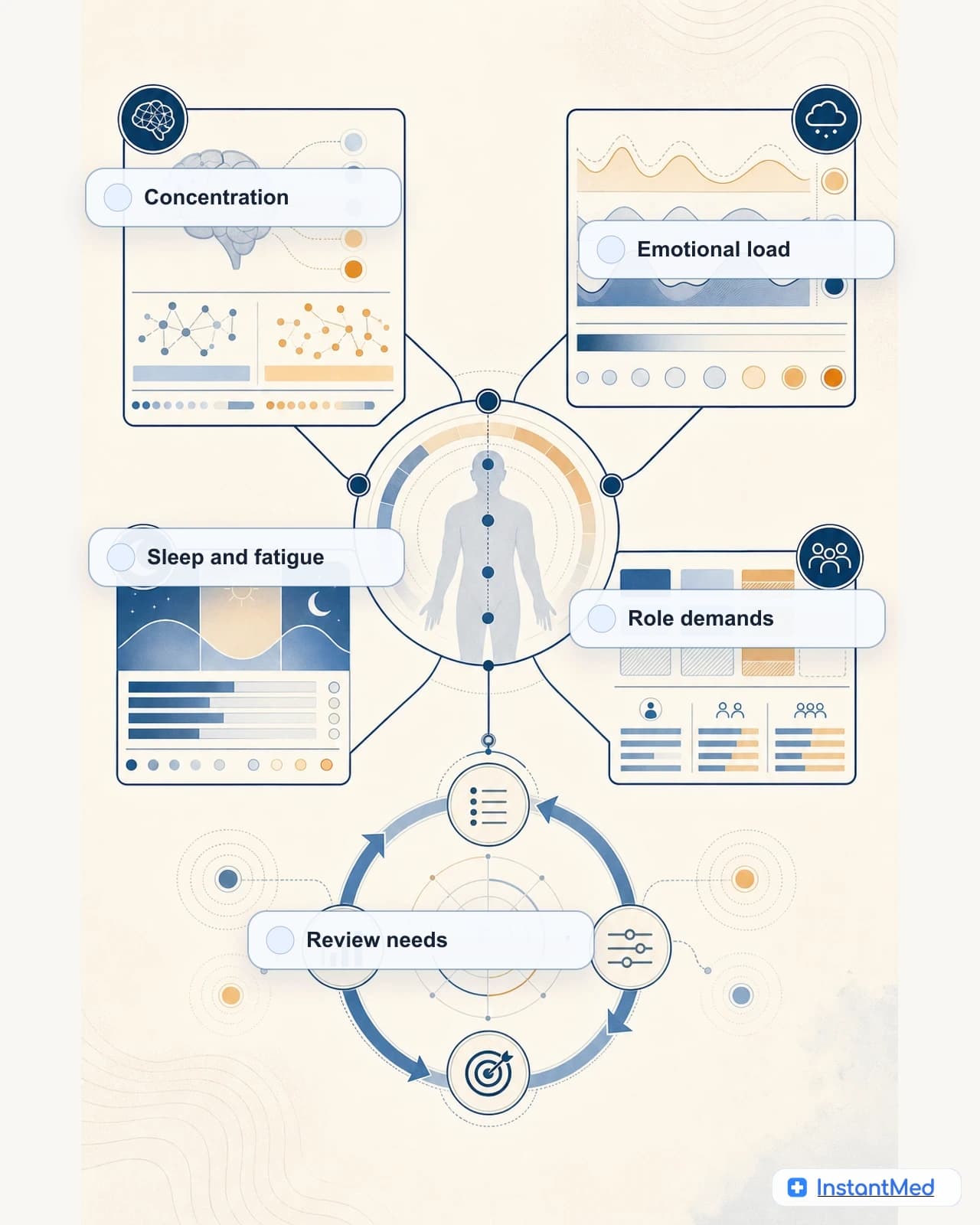
9 min read
How to Get a Mental Health Certificate for Work
Mental health-related illness can support sick leave evidence in Australia. Learn what a certificate usually says, what employers can ask for, and when to seek urgent support.
InstantMed Medical Team
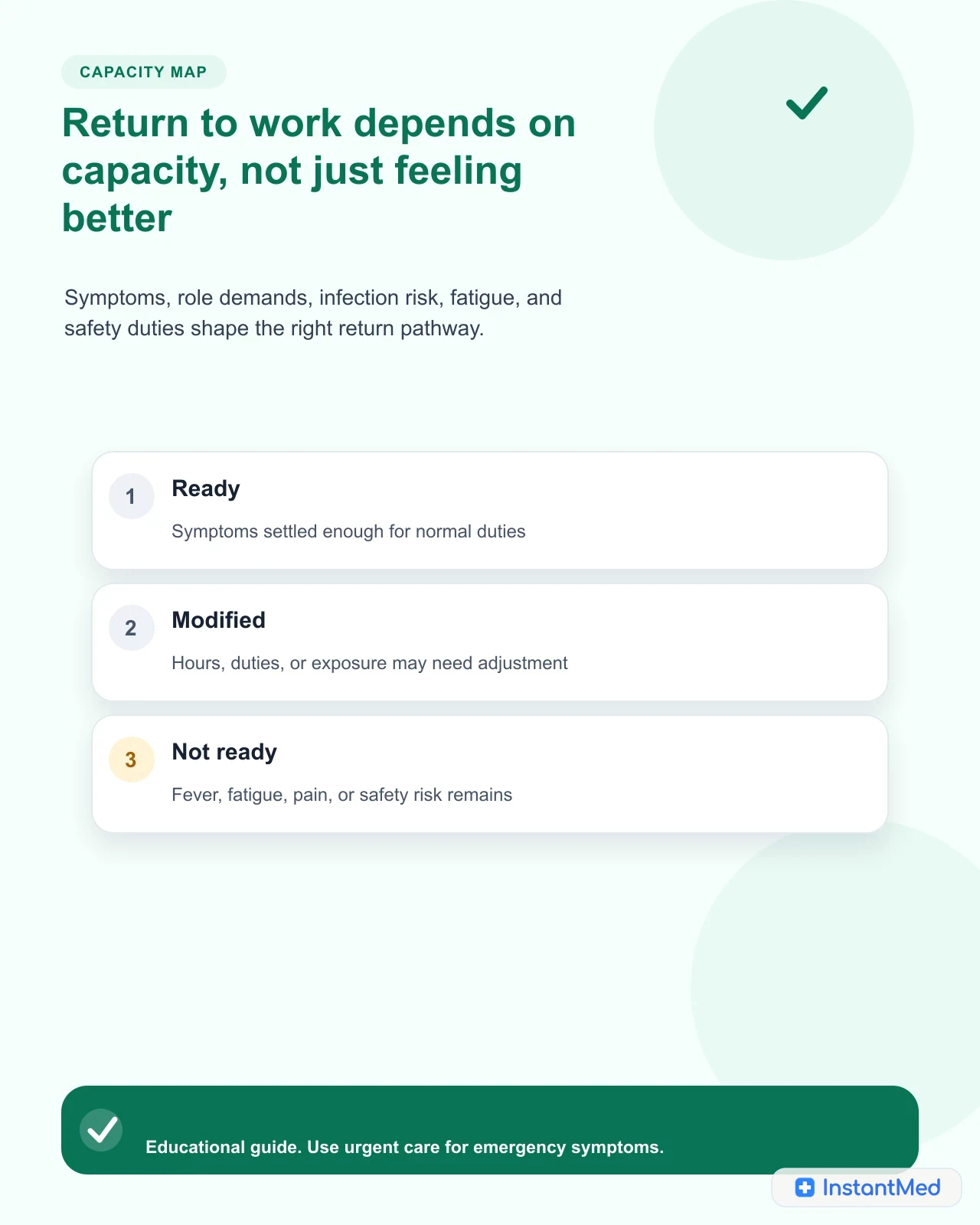
7 min read
Returning to Work After Illness: When You Are Ready
Returning too soon causes relapse, prolongs total absence, and risks colleagues. Here are the clinical markers for readiness by illness type, clearance certificate requirements, and your rights if an employer pushes you.
InstantMed Medical Team