Loading article
Back to Health Guides
Conjunctivitis (Pink Eye): Types, Treatment, and When to Seek Care
How viral, bacterial, allergic, and irritant conjunctivitis differ, what helps symptoms, and which red-eye signs need prompt assessment.
8 min read
·Updated 10 May 2026
·Doctor Reviewed
AHPRA Verified
In this article
- 1The Four Common Patterns
- 2Symptoms That Help Separate the Cause
- 3What Helps at Home
- 4Contact Lens Wearers
- 5Children, School, and Childcare
Medical information only. This article is for general information and does not constitute medical advice. Treatment decisions are made by an AHPRA-registered doctor after reviewing your circumstances.
Review
InstantMed Clinical Team
Clinical governance review for guide content
Updated
10 May 2026
General information only, not personal medical advice.
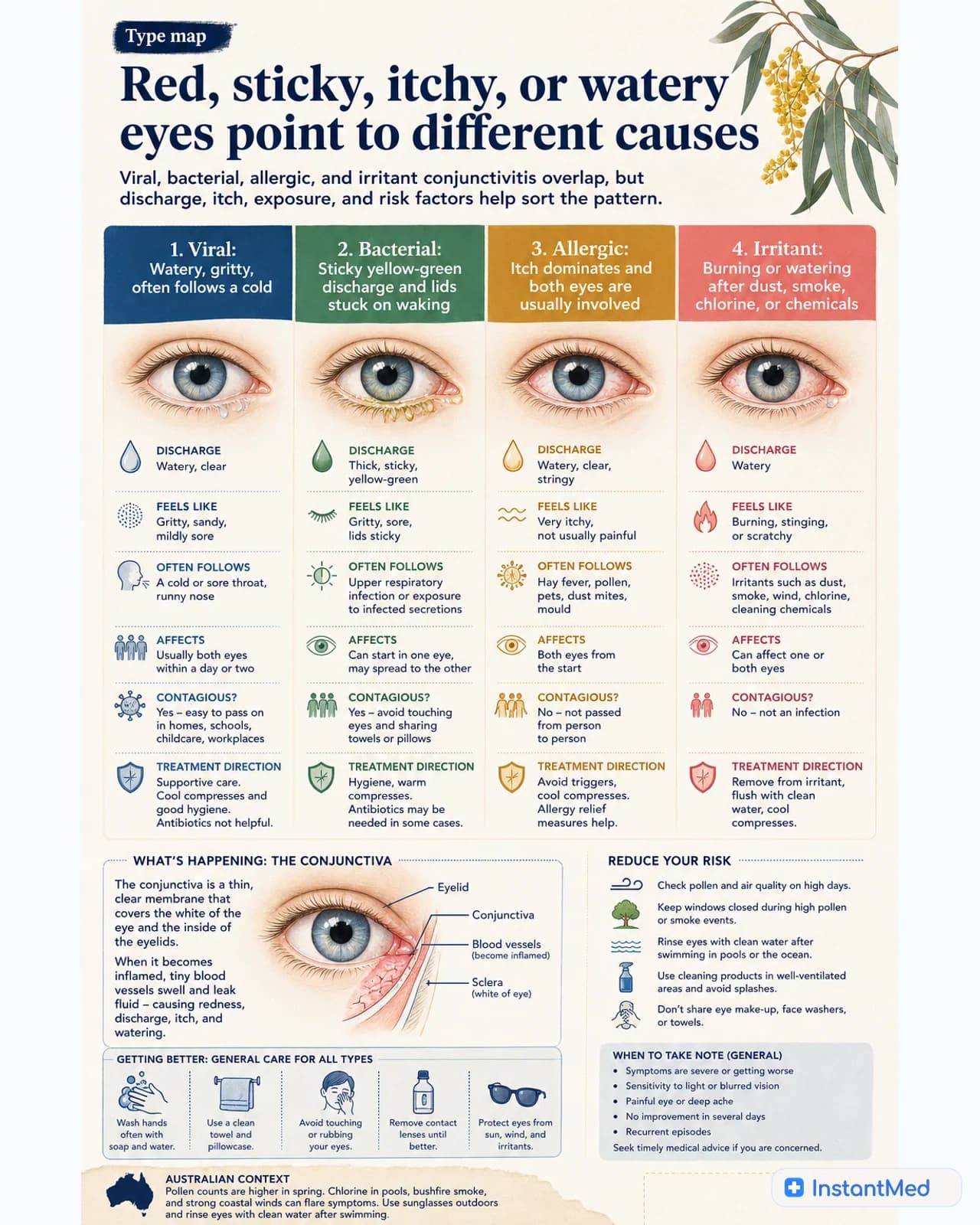
Conjunctivitis, often called pink eye or sticky eye, is inflammation of the conjunctiva: the clear tissue covering the white of the eye and the inside of the eyelid. It is common, but the important safety point is that not every red eye is simple conjunctivitis.
The practical first split is:
- Likely routine conjunctivitis: red or pink eye with watery, sticky, itchy, or gritty symptoms but normal vision and no significant pain.
- Not routine until assessed: pain, light sensitivity, sudden vision change, corneal haze, injury, contact lens use, newborn eye discharge, or symptoms that are worsening.
Healthdirect notes that conjunctivitis can be caused by bacteria, viruses, allergies, or irritants such as dust or chemicals. The cause matters because antibiotic drops do not help viral, allergic, or irritant conjunctivitis.
The Four Common Patterns
Viral Conjunctivitis
Viral conjunctivitis is common in adults and often follows a cold or upper respiratory infection.
Typical pattern:
- Watery or clear discharge
- Gritty, burning, or foreign-body sensation
- One eye may start first, then the other becomes involved
- Puffy lids or mild light sensitivity can occur
- Highly spreadable through eye secretions, hands, towels, tissues, and surfaces
Antibiotic drops do not treat viral conjunctivitis. Care is usually supportive: hand hygiene, gentle cleaning, avoiding shared towels, and waiting for the infection to settle.
Bacterial Conjunctivitis
Bacterial conjunctivitis is more common in children than adults, although adults can still get it.
Typical pattern:
- Yellow, white, or green sticky discharge
- Eyelids stuck together on waking
- Gritty discomfort
- One eye may start first, with spread to the other
- More pus-like discharge than viral or allergic conjunctivitis
Bacterial conjunctivitis may require antibiotic eye drops or ointment. The decision depends on severity, age, risk factors, contact lens use, and whether symptoms could represent something more serious.
Allergic Conjunctivitis
Allergic conjunctivitis is not contagious. It is triggered by allergens such as pollen, dust mites, animal dander, or mould.
Typical pattern:
- Itch is the dominant symptom
- Usually affects both eyes
- Clear watery discharge
- Often occurs with sneezing, runny nose, itchy nose, or hay fever
- Symptoms may be seasonal or linked to a specific exposure
Treatment usually focuses on allergen reduction, lubricating drops, antihistamine eye drops or tablets, and managing associated hay fever symptoms.
Irritant Conjunctivitis
Irritant conjunctivitis can happen after exposure to smoke, dust, chlorine, cosmetics, chemicals, or foreign material.
Typical pattern:
- Burning or watering after a clear exposure
- Both eyes may be affected if the exposure was environmental
- Symptoms improve when the irritant is removed
- Chemical exposure, strong pain, or reduced vision is not routine
Chemical splashes and significant foreign-body injuries need urgent assessment, especially if pain, vision change, or ongoing irritation persists after rinsing.
Symptoms That Help Separate the Cause
Discharge and itch are the fastest practical clues:
- Watery, clear discharge: more consistent with viral, allergic, or irritant causes
- Thick yellow or green discharge: more consistent with bacterial infection
- Intense itch in both eyes: strongly suggests allergic conjunctivitis
- Pain rather than discomfort: not typical and needs assessment
- Light sensitivity: can indicate corneal or internal-eye inflammation
- Vision change: not routine conjunctivitis
These patterns are useful, but they are not perfect. Viral and bacterial conjunctivitis can look similar, especially early.
What Helps at Home
Self-care can reduce symptoms and spread:
- 1
Wash hands before and after touching the eyes.
- 2
Clean discharge gently with a clean cotton pad or cloth.
- 3
Wipe from the inner corner near the nose outward.
- 4
Use a fresh pad for each eye.
- 5
Do not share towels, face washers, pillowcases, tissues, or eye drops.
- 6
Avoid eye makeup until symptoms resolve.
- 7
Throw out eye makeup or eyelash products used just before or during infection.
- 8
Avoid rubbing the eyes.
Cool compresses can help itchy or irritated eyes. Warm water can help soften crusted discharge. Do not put steroid drops, leftover antibiotic drops, breast milk, tea, colloidal silver, or home remedies into the eye unless a clinician has specifically advised it.
Contact Lens Wearers
Contact lens wearers need a stricter safety boundary. A red eye in a contact lens wearer can be conjunctivitis, but it can also be microbial keratitis, a corneal infection that can threaten vision.
If you wear contact lenses:
Urgent signs
Pain, vision change, light sensitivity, corneal haze, injury, or newborn eye discharge are not routine conjunctivitis.
- Stop wearing lenses immediately.
- Switch to glasses while symptomatic.
- Do not restart lenses while the eye is red, painful, light-sensitive, or blurry.
- Discard disposable lenses worn around the time symptoms started.
- Replace or disinfect the lens case according to optometrist advice.
- Seek prompt assessment, especially if there is pain, light sensitivity, blurred vision, or one-sided marked redness.
RACGP guidance on red eye in contact lens wearers highlights that common sore-eye drops may not cover the organisms that cause contact lens-related corneal infection. This is why contact lens red eye should not be treated casually.
Children, School, and Childcare
NHMRC Staying Healthy guidance for education and care settings recommends excluding conjunctivitis until eye discharge has stopped, unless a doctor has diagnosed non-infectious conjunctivitis. Contacts without symptoms are not excluded.
For children, keep the focus practical:
- Keep the child home while infectious eye discharge is present.
- Wash hands and clean surfaces.
- Avoid sharing towels, pillows, face washers, and dress-up eye items.
- Ask the school or childcare service whether they apply additional local requirements.
- Seek assessment for newborns, infants, significant swelling, pain, light sensitivity, or worsening symptoms.
Starting drops is not always the same as being ready to return. The NHMRC exclusion point is discharge stopping, unless a non-infectious cause has been diagnosed.
When Antibiotics Are and Are Not Useful
Antibiotic drops or ointments are for bacterial causes. They do not treat viral conjunctivitis, allergic conjunctivitis, or irritant conjunctivitis.
Antibiotics are more likely to be considered when there is:
- Thick purulent discharge
- Eyelids stuck together on waking
- Bacterial conjunctivitis suspected by a clinician or pharmacist
- High-risk features where bacterial infection must not be missed
Antibiotics are not a shortcut for:
- Viral watery red eye after a cold
- Allergic itchy eyes
- Chemical irritation
- Contact lens-related pain or blurred vision
- Red eye with vision change or light sensitivity
If antibiotics are prescribed or supplied, use them exactly as directed and avoid contaminating the bottle tip.
Red Flags: When Red Eye Is Not Routine
Seek prompt medical or optometry assessment if there is:
- Sudden vision change
- Eye pain
- Light sensitivity
- A cloudy, hazy, or irregular-looking cornea
- Recent eye injury or chemical exposure
- Contact lens use with red eye
- Newborn eye discharge
- Severe eyelid swelling
- Symptoms not improving after 1-2 days
- Symptoms worsening despite treatment
- Recurrent episodes in the same eye
- Possible sexually transmitted infection exposure with eye symptoms
Contact lenses
Stop lenses immediately and get assessed before restarting if symptoms, pain, or light sensitivity are present.
Emergency Information
Severe pain, sudden vision loss, chemical splash, penetrating injury, or a contact lens-related painful red eye should be treated as urgent.
Prevention
To reduce spread:
- Wash hands often.
- Avoid touching or rubbing eyes.
- Use separate towels and face washers.
- Change pillowcases regularly while discharge is present.
- Clean high-touch surfaces.
- Do not share eye makeup, eye drops, contact lenses, or lens cases.
- Keep children home from education and care settings until discharge has stopped, unless non-infectious conjunctivitis has been diagnosed.
For allergic conjunctivitis, prevention is different: reduce allergen exposure, manage hay fever, avoid known triggers, and consider preventive allergy treatment before high-pollen periods if this has been recommended for you.
Sources
- Healthdirect: Conjunctivitis
- NHMRC: Conjunctivitis fact sheet
- NHMRC: Managing infections in education and care services
- RACGP: The red eye in contact lens wearers
- Better Health Channel: Conjunctivitis
Frequently Asked Questions
Is conjunctivitis contagious?
Viral and bacterial conjunctivitis can be contagious. Allergic conjunctivitis is not contagious because it is triggered by allergens rather than infection. Infectious spread happens through eye secretions, hands, towels, tissues, pillowcases, and contaminated surfaces.
Do antibiotics help conjunctivitis?
Antibiotic drops or ointments do not help viral, allergic, or irritant conjunctivitis. Bacterial conjunctivitis may require antibiotic drops or ointment, but the right treatment depends on the likely cause and risk factors.
Can my child go to school or childcare with conjunctivitis?
NHMRC Staying Healthy guidance recommends exclusion until discharge from the eyes has stopped, unless a doctor has diagnosed non-infectious conjunctivitis. Local service policies can add practical requirements.
What if I wear contact lenses?
Stop wearing contact lenses immediately. Contact lens wearers with a red eye need a stricter safety boundary because corneal infection can threaten vision and may not respond to common conjunctivitis drops.
When is red eye urgent?
Sudden vision change, eye pain, light sensitivity, corneal haze, recent injury, contact lens-related red eye, newborn eye discharge, or symptoms that are not improving should be assessed promptly.
InstantMed Medical Team
Related Articles
8 min read
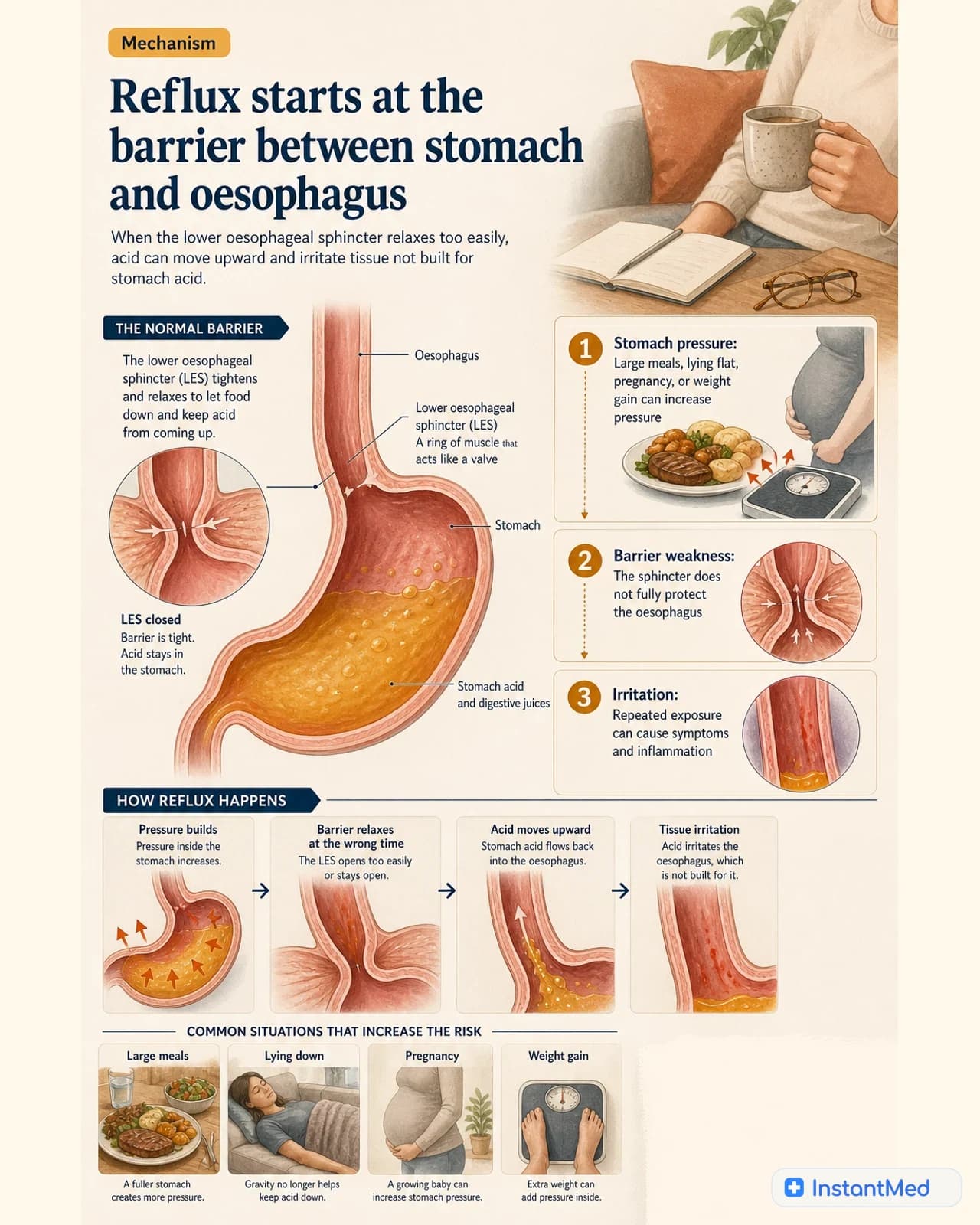
Acid Reflux and GORD: Symptoms, Red Flags, and Treatment
Occasional reflux is common, but frequent heartburn, regurgitation, swallowing symptoms, chest pain, bleeding signs, or persistent vomiting need a more careful plan.
InstantMed Medical Team

8 min read
Burnout vs Stress: How to Tell the Difference
Stress and burnout overlap, but they are not the same. Learn the practical differences, common warning signs, workplace drivers, recovery steps, and when to seek professional support.
InstantMed Medical Team
8 min read
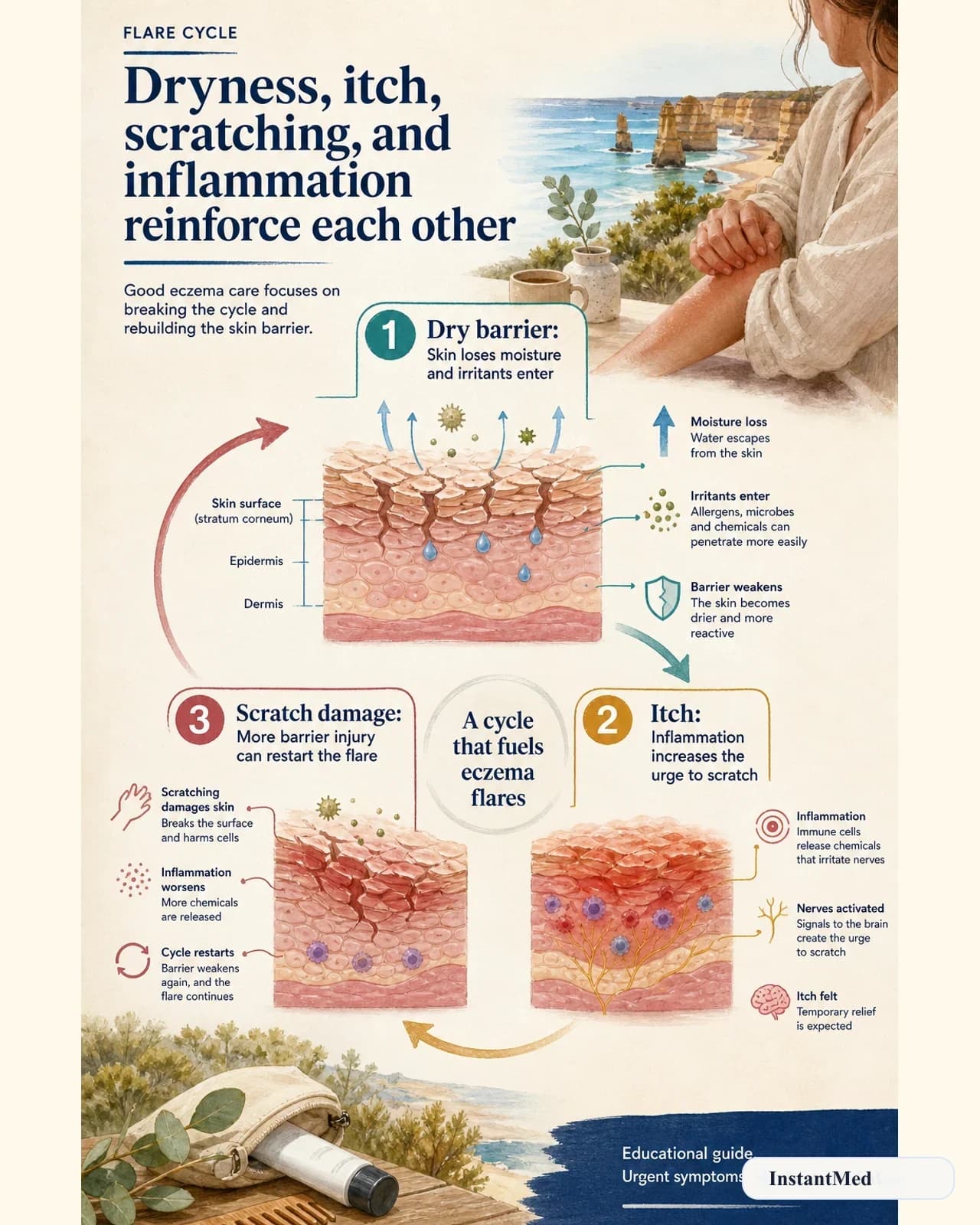
Eczema and Dermatitis: Managing a Chronic Skin Condition
Eczema affects around 1 in 3 Australians at some stage of life. With the right skin care approach, most people achieve good control and significantly reduce the frequency of flares.
InstantMed Medical Team