Loading article
Back to Health Guides
Can You Backdate a Medical Certificate in Australia?
The difference between backdating and retrospective certificates, and what to do when you forgot to see a doctor.
8 min read
·Updated 4 June 2026
·Doctor Reviewed
AHPRA Verified
In this article
- 1The Critical Distinction: Backdating vs Retrospective
- 2Why Doctors Will Not Backdate
- 3What Doctors Can Do: Retrospective Certificates
- 4Common Scenarios Where Retrospective Certificates Work
- 5Statutory Declarations: A Legitimate Alternative
Medical information only. This article is for general information and does not constitute medical advice. Treatment decisions are made by an AHPRA-registered doctor after reviewing your circumstances.
Review
InstantMed Clinical Team
Clinical governance review for guide content
Updated
4 June 2026
General information only, not personal medical advice.
Jump to section
1The Critical Distinction: Backdating vs Retrospective2Why Doctors Will Not Backdate3What Doctors Can Do: Retrospective Certificates4Common Scenarios Where Retrospective Certificates Work5Statutory Declarations: A Legitimate Alternative6Supporting Letters for Larger Time Gaps7What to Do Right Now8How to Prevent This Situation in Future9Sources Used In This Guide
The short answer: no registered Australian doctor will backdate a medical certificate, because that means recording a consultation date that never happened, and that is fraud. But there is a legitimate option many people do not know about. A doctor can issue a *retrospective* certificate that honestly shows today's consultation date while covering a past period you were unwell, when your history supports it.
So if you were sick last week, did not see a doctor, and your employer now wants documentation, you have not run out of options. Backdating and retrospective certification are two entirely different things, and that distinction is the whole point of this guide.
The Critical Distinction: Backdating vs Retrospective
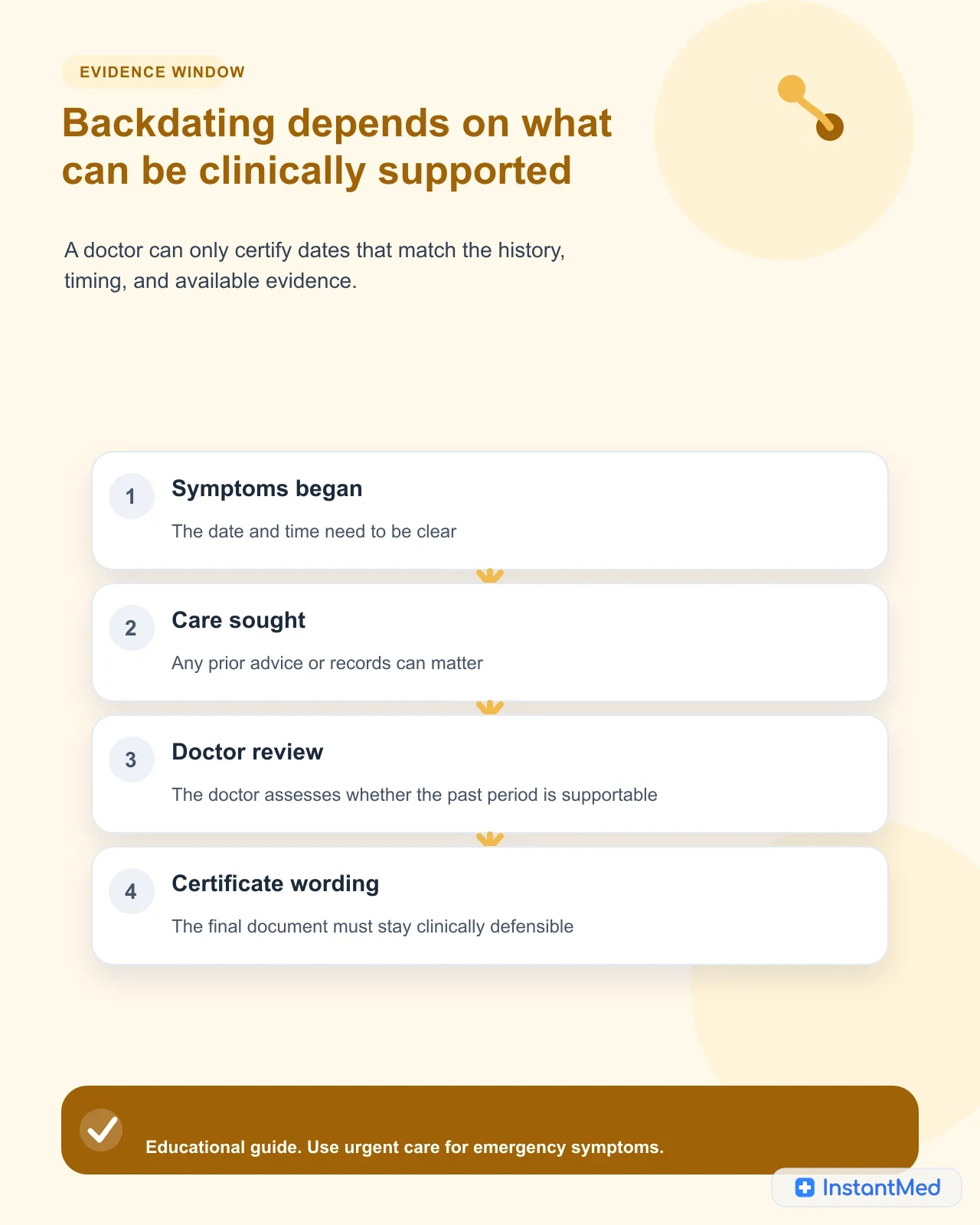
Backdating means recording a consultation date that did not occur. A certificate dated 12 April when you actually spoke to the doctor on 15 April is a false document. It misrepresents when the clinical assessment happened. No AHPRA-registered doctor will do this.
Retrospective certification is different. The consultation happens today. The certificate honestly records today's date. But the unfitness period covered extends back to when your illness started. A certificate from today might read: "Patient attended on 15 April 2026 and reports being unwell from 12 April 2026. Based on the presenting history and current assessment, this is clinically consistent with the reported period of incapacity."
The consultation date is always accurate. The period covered can legitimately extend backwards. That is the key distinction, and it is the reason one approach is standard clinical practice and the other is fraud.
Why Doctors Will Not Backdate
AHPRA's Code of Conduct (Good Medical Practice) requires doctors to be honest and transparent, and to only certify what they have genuinely assessed. A medical certificate is a clinical document with legal standing. Writing a consultation date that did not occur is falsification of a clinical record.
The consequences for the doctor are substantial:
- Formal disciplinary proceedings through AHPRA
- Conditions placed on their registration, restricting where and how they can practise
- Suspension or deregistration in serious cases
- Potential criminal charges
When you ask a doctor to backdate a certificate, you are asking them to risk their career and registration. The answer will always be no from any doctor who values their registration.
Important Warning
Using a fraudulent medical certificate is also a risk for you. Employers who suspect fraud can contact the issuing clinic to verify the consultation date. Presenting a false document can constitute fraud or misrepresentation under criminal law, with potential employment and criminal consequences that far outweigh whatever the absence was worth.
What Doctors Can Do: Retrospective Certificates
A doctor who sees you after your illness can issue a certificate covering the period you were unwell, provided certain conditions are met:
- The gap between illness and consultation is short - a doctor is more willing to certify 2-5 past days than 2-3 past weeks
- Your current symptoms or history are clinically consistent - if you say you had gastroenteritis for three days and you are still presenting with residual symptoms, this is credible
- Your account is plausible - the doctor assesses whether your reported illness makes sense given your history, current presentation, and the duration described
- Supporting evidence exists where possible - pharmacy receipts, a record of temperature readings, or messages to colleagues about being unwell all strengthen your account
The wording on a retrospective certificate will differ from a standard one. Instead of "unfit for work from [date to date]," it will typically read: "Patient reports being unwell from [date]. Based on reported history and current assessment, this is consistent with the reported period of incapacity."
This honest framing is deliberate. It distinguishes retrospective certification from backdating and protects both you and the doctor. Employers who understand how certificates work will recognise this wording as correct practice.
Common Scenarios Where Retrospective Certificates Work
You Were Too Sick to Leave Home
This is the most common situation. Severe flu, gastroenteritis, migraine - something that made leaving the house impractical or unsafe. You did not think you would need documentation, or you were too unwell to organise it.
See a doctor as soon as you are able, ideally within a few days of the illness resolving. Explain exactly what happened. Most doctors are pragmatic about acute illness that genuinely prevented clinic attendance, particularly if your account is coherent and your timing is reasonable.
Telehealth is worth knowing about for next time - it eliminates the need to physically attend a clinic when you are unwell. A same-day telehealth certificate means you never need to ask about retrospective documentation.
You Did Not Realise You Would Need a Certificate
Many workplaces only require certificates for absences of two or more consecutive days. You took one sick day, felt better, returned to work - and then HR asks for documentation. If the gap between your illness and the consultation is short, a retrospective certificate is straightforward.
You Were Away From Home
Illness while travelling, staying with family, or in a regional area can make local clinic access genuinely difficult. Explain the circumstances. Telehealth covers the whole country and requires only an internet connection - a useful fact to remember before the next trip.
A Brief Illness That Did Not Seem to Warrant a Visit
Short illnesses often do not prompt a doctor visit. If you need documentation for a 1-2 day absence from a few days ago, the options are a retrospective certificate (if the gap is short and the clinical picture supports it) or a statutory declaration.
Statutory Declarations: A Legitimate Alternative
Under the Fair Work Act 2009, a statutory declaration is acceptable evidence of illness when it was not reasonably practicable to obtain a medical certificate. A stat dec is a formal written statement sworn before an authorised witness, attesting that you were genuinely unwell during the relevant period.
This is not a loophole. It is explicitly built into the Fair Work framework for situations where accessing a doctor was genuinely not feasible - including being too unwell to attend a clinic, or a brief illness that resolved without requiring medical attention.
Statutory declarations are appropriate for:
- Brief illness (1-2 days) that resolved without a doctor visit
- Circumstances where accessing a doctor was genuinely impractical at the time
- Workplaces where your policy or award explicitly accepts them
They are not appropriate for extended absences where a medical assessment would be expected, or as a routine substitute when care was available.
A Justice of the Peace (JP) can witness a stat dec for free. JPs are available at most courthouses, many council offices, and some libraries. Most state government websites have a JP finder service. Pharmacists and police officers can also witness stat decs.
Key Information
Your employer cannot unreasonably reject a statutory declaration as evidence of illness under the Fair Work Act. However, some modern awards and enterprise agreements explicitly require a medical certificate rather than a stat dec. Check your specific award or enterprise agreement before relying on one.
Supporting Letters for Larger Time Gaps
If several weeks have passed since your illness, a retrospective certificate becomes harder to obtain and less clinically credible. In these circumstances, a supporting letter is often more honest and more useful.
A supporting letter from your treating doctor does not certify that you were unfit for work on specific past dates. Instead, it provides context: "The patient has a documented history of [condition]. Their reported symptoms during the period of [dates] are clinically consistent with this history. I am unable to certify absence for those specific dates as I did not assess the patient at the time."
Limits
Very old dates, unclear symptoms, high-stakes uses, or inconsistent histories can lead to a decline.
This honest framing is often more credible to employers and institutions than a certificate that stretches clinical plausibility. Courts, universities, and employers are more likely to accept a clearly honest letter than a certificate with suspicious retrospective wording.
What to Do Right Now
If you currently need documentation for a past illness, here is the practical sequence:
- 1
See a doctor as soon as possible - a telehealth assessment is usually the quickest route, and the shorter the gap between your illness and the consultation, the more viable a retrospective certificate becomes
- 2
Explain honestly - tell the doctor when you were unwell, what your symptoms were, and why you did not seek care at the time. Do not ask for backdating; ask whether they can provide a retrospective certificate covering the period
- 3
Bring any supporting evidence - pharmacy receipts, temperature log screenshots, messages to family or colleagues about being unwell, or pharmacy records
- 4
Consider a statutory declaration - for short absences of 1-2 days, this may be the most straightforward path if the consultation gap is more than a few days
- 5
Talk to your employer - honest communication about a genuine illness is often the best approach. Most employers are reasonable about infrequent, genuine absences where you have made an effort to obtain documentation
How to Prevent This Situation in Future
Every backdating request stems from the same root cause: not getting documentation at the time of illness. Telehealth makes this easier than it has ever been.
- Get documentation at the time: If you are too unwell to attend a clinic, a telehealth review can assess you and, where clinically appropriate, issue a certificate the same day - which removes the retrospective question entirely
- Know your workplace threshold: Many workplaces only require a certificate for two or more consecutive sick days. Know yours before you need it
- Document as you go: If you are taking over-the-counter medications, keep receipts. If you are monitoring a temperature, note the readings. This evidence supports a retrospective assessment if one is needed later
Helpful Tip
The cleanest fix is timing, not paperwork. Getting assessed on the day you are unwell - in person or by telehealth - means a certificate can be issued for the current period, so the backdating question never arises.
Sources Used In This Guide
- Fair Work Ombudsman: Notice and medical certificates
- Fair Work Ombudsman: Sick and carer's leave and compassionate leave fact sheet
- Medical Board of Australia: Good medical practice (code of conduct)
- Medical Board of Australia: Telehealth consultations with patients
- Attorney-General's Department: Statutory declarations
- Ahpra: Register of practitioners
Frequently Asked Questions
Can any doctor backdate a medical certificate?
No legitimate, registered doctor will backdate a certificate. Backdating means recording a consultation date that did not occur, which is clinical fraud and a breach of AHPRA's Code of Conduct. What doctors can do is issue a retrospective certificate that honestly states today's consultation date but covers a past period of incapacity.
I was sick last week and did not see a doctor - what are my options?
See a doctor as soon as possible and explain your situation. Many doctors will issue a retrospective certificate stating you reported being unwell from the relevant date if your current symptoms or history support this. For absences of 1-2 days, a statutory declaration sworn before a Justice of the Peace is an alternative accepted under the Fair Work Act.
Will my employer accept a retrospective certificate?
A retrospective certificate from an AHPRA-registered doctor can be used as workplace evidence, but employer policy still applies. The certificate should clearly show the real consultation date and the past absence period being certified.
What is the difference between backdating and a retrospective certificate?
A backdated certificate dishonestly states the consultation occurred on a date it did not. A retrospective certificate honestly shows today's consultation date and notes you reported being unwell from an earlier date. One is fraud; the other is legitimate medical practice.
Can I get a retrospective certificate online?
Yes. Telehealth doctors can issue retrospective certificates in appropriate circumstances. You describe your symptoms and when they started, the doctor assesses whether this is clinically credible, and if so can certify unfitness from the reported date. The certificate will show today's consultation date.
What happens if I use a fraudulent backdated certificate?
The consequences can be serious: termination of employment, potential criminal charges for fraud, and damage to your professional reputation. Employers who suspect fraud can contact the issuing clinic to verify. The risk is entirely disproportionate to what is being gained.
InstantMed Medical Team
Related Articles
9 min read
How to Get a Medical Certificate Online in Australia
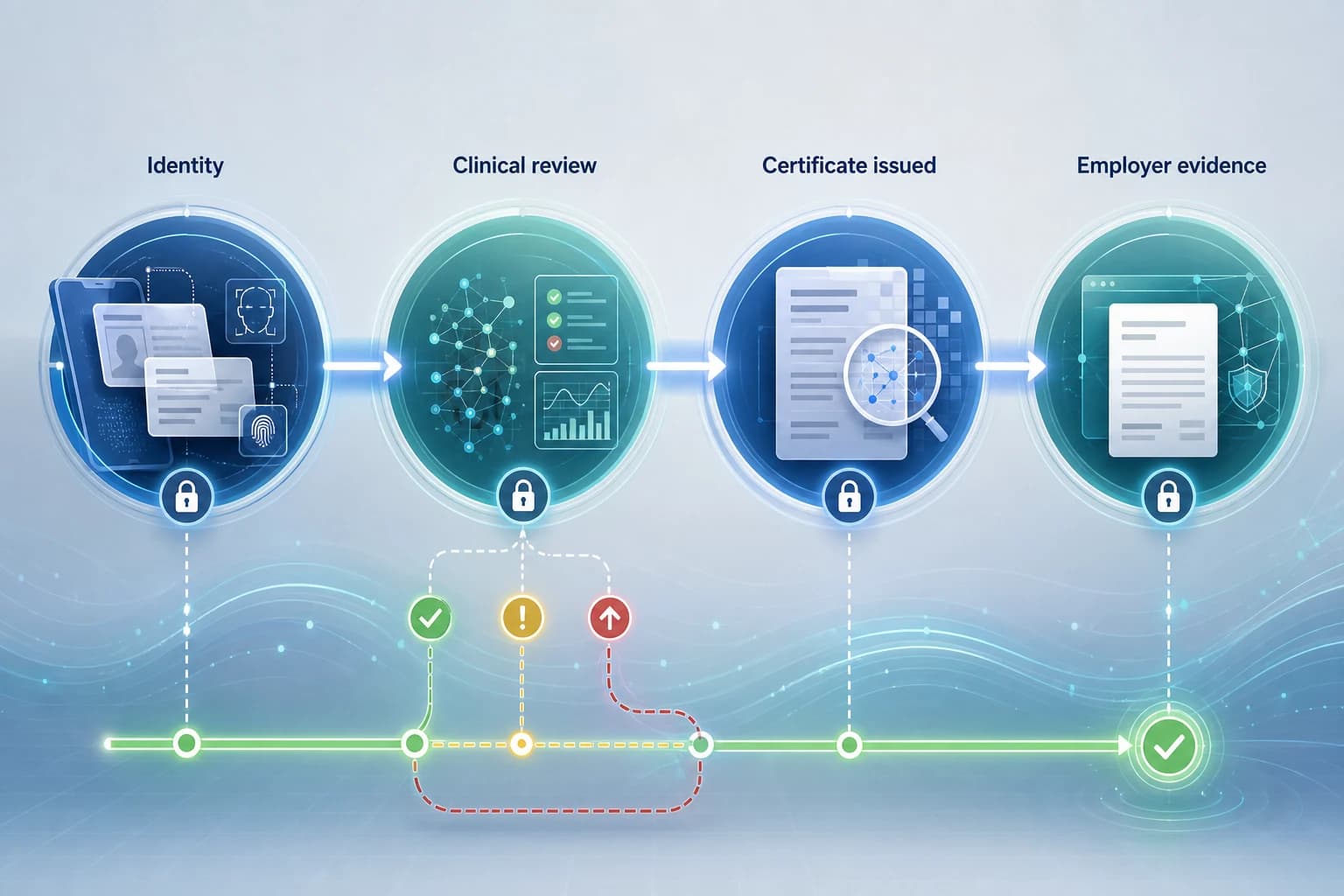
Online medical certificates can be valid workplace evidence in Australia when issued after an appropriate clinical review by a registered practitioner. Learn what matters, what to prepare, and where the limits are.
InstantMed Medical Team
11 min read
Medical Certificate Says Unfit for Work: Can You WFH?
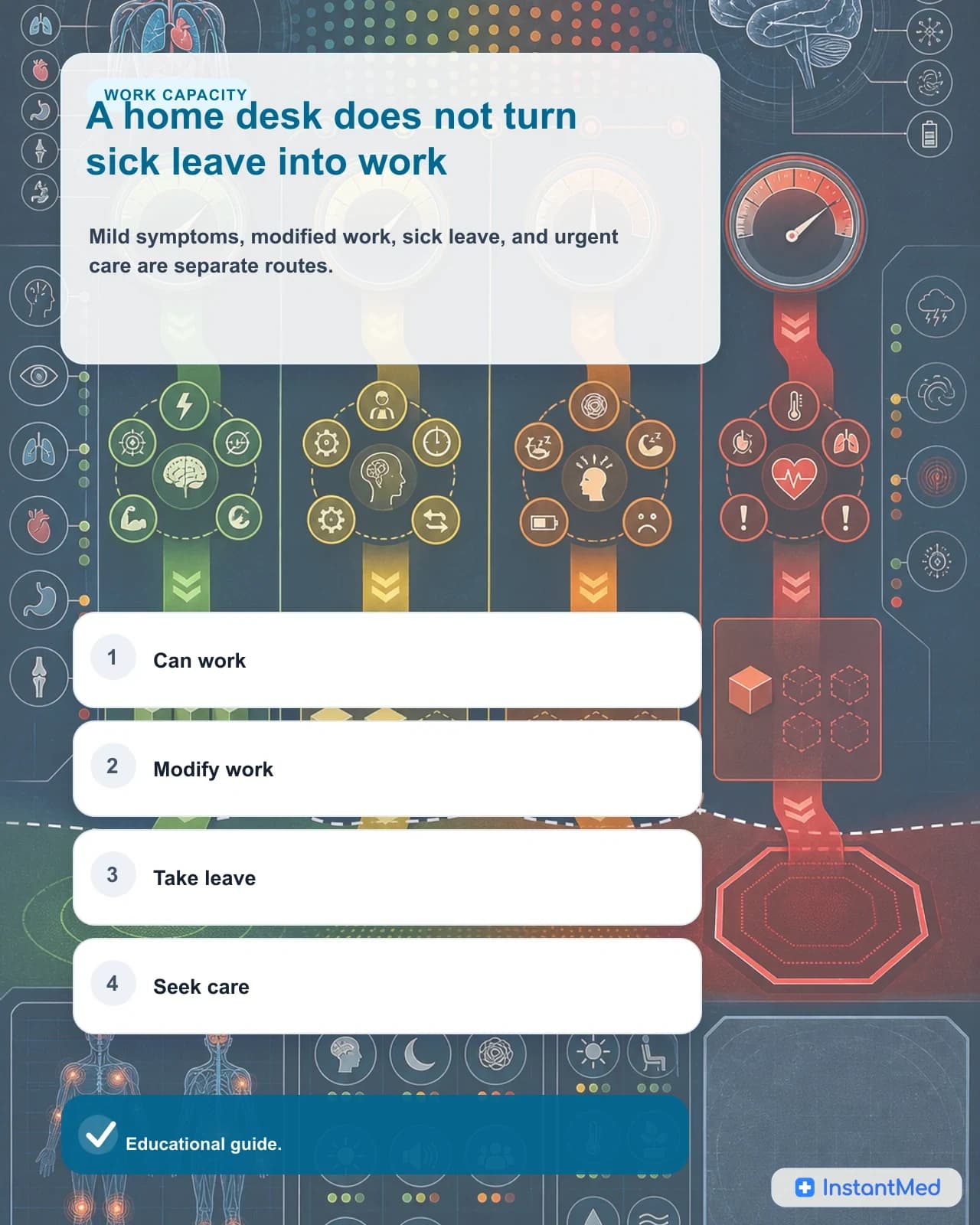
If a medical certificate says you are unfit for work, working from home is still work. Learn when WFH, modified duties, sick leave, and evidence rules differ.
InstantMed Medical Team
9 min read
Medical Certificates for Work: Complete Australian Guide
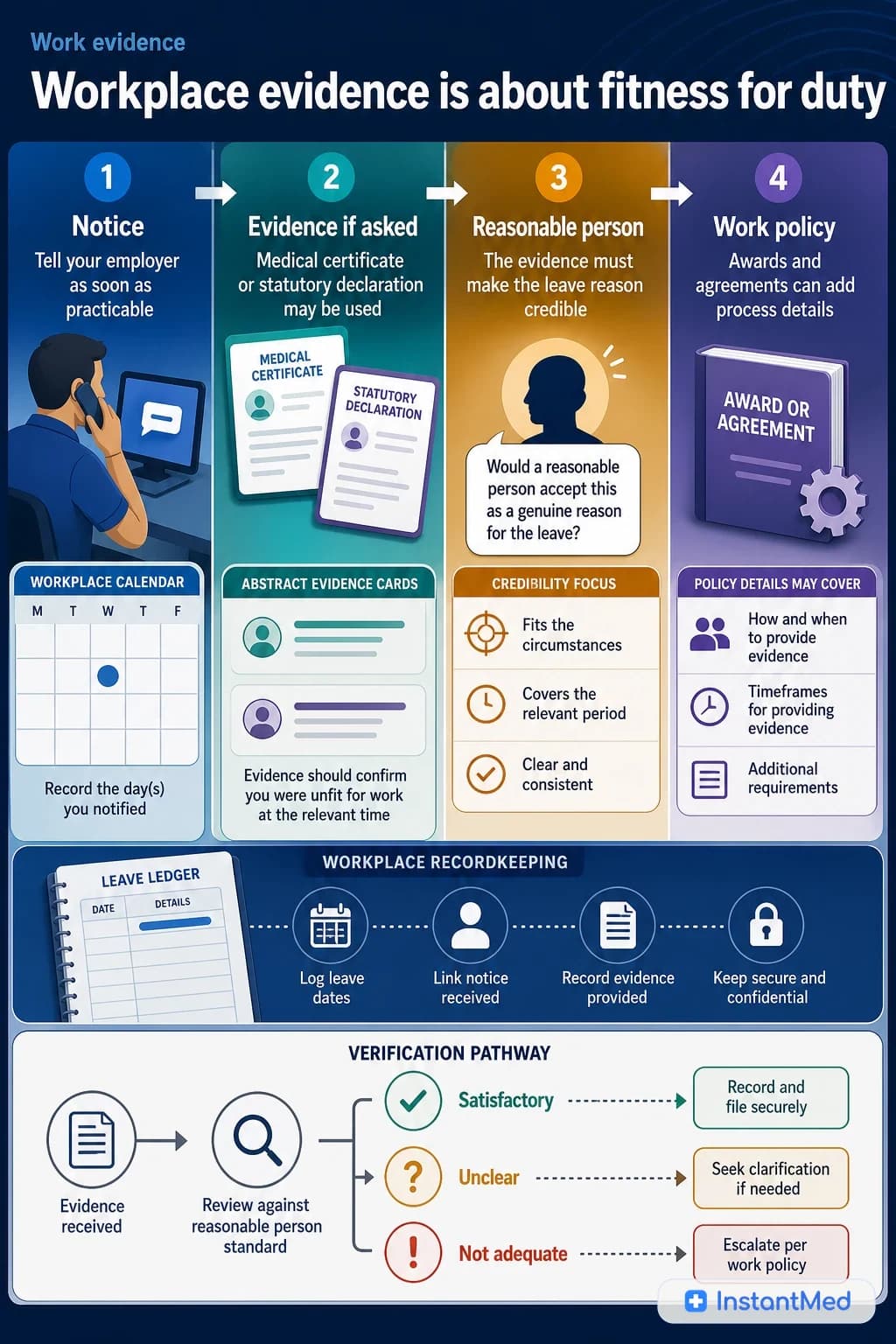
A work medical certificate is evidence that you were unfit for work, not a public explanation of your diagnosis. This Australian guide explains employer evidence rules, privacy, telehealth, stat decs, and return-to-work issues.
InstantMed Medical Team