Loading article
Back to Health Guides
Hay Fever and Seasonal Allergies in Australia
How allergic rhinitis affects more than 6 million Australians, what triggers symptoms, and what the evidence says about treatment.
8 min read
·Updated 10 May 2026
·Doctor Reviewed
AHPRA Verified
In this article
- 1What Is Allergic Rhinitis?
- 2Triggers: What Causes Hay Fever in Australia
- 3Symptoms and Diagnosis
- 4Treatment: The ASCIA and RACGP Approach
- 5The Hay Fever-Asthma Connection
Medical information only. This article is for general information and does not constitute medical advice. Treatment decisions are made by an AHPRA-registered doctor after reviewing your circumstances.
Review
InstantMed Clinical Team
Clinical governance review for guide content
Updated
10 May 2026
General information only, not personal medical advice.
According to the Australian Institute of Health and Welfare (AIHW), allergic rhinitis (hay fever) affected around 6.1 million Australians in 2022, or nearly 24% of the population. It is one of the most prevalent chronic respiratory conditions in the country. Despite being widely regarded as a minor inconvenience, hay fever can impair sleep, concentration, work, study, exercise, and quality of life, and it is closely linked with asthma in some people.
What Is Allergic Rhinitis?
Allergic rhinitis is an IgE-mediated hypersensitivity reaction in the nasal mucosa. When a sensitised person inhales an allergen - pollen, dust mite, pet dander, or mould - the immune system releases histamine and other mediators. These cause the classic symptoms: nasal congestion, rhinorrhoea, sneezing, and itching.
ASCIA distinguishes two patterns:
- Seasonal allergic rhinitis: triggered by pollens, most prominent in spring and summer
- Perennial allergic rhinitis: triggered year-round by dust mites, pet dander, or mould
Many Australians have both patterns - seasonal triggers on top of a perennial baseline.
Triggers: What Causes Hay Fever in Australia
Hay fever triggers vary by region, season, home environment, and personal sensitisation pattern.
- Grass pollen: often peaks from September to January, although timing varies by region. Check AusPollen forecasts and keep windows closed on high-pollen days.
- Tree pollen: usually peaks from late winter into spring. Morning outdoor activity can be harder when pollen concentrations are high.
- Weed pollen: tends to peak from late summer into autumn. Wraparound glasses, showering after outdoor exposure, and changing clothes can reduce carry-in exposure.
- Dust mites: present year-round and often worse in humid conditions. Wash bedding weekly at 60C where fabric allows and consider dust-mite-proof mattress and pillow covers.
- Pet dander: can trigger year-round symptoms, with cats a common sensitiser. Keeping pets out of bedrooms and using HEPA filtration may help when the trigger is clear.
- Mould spores: worse in damp or humid environments. Address moisture sources, run exhaust fans, and dehumidify affected rooms where possible.
Australian pollen monitoring services can help people anticipate high-risk days. On forecast high-pollen days, taking planned treatment before predictable exposure is often more useful than waiting until symptoms are severe.
Symptoms and Diagnosis
Allergic rhinitis symptoms reflect inflammation of the nasal mucosa and, frequently, the conjunctiva:
- Runny or blocked nose
- Sneezing, often in bursts
- Itchy, watery eyes (allergic conjunctivitis can occur alongside rhinitis)
- Itchy throat, mouth, or ears
- Fatigue from disrupted sleep
- Reduced sense of smell in severe cases
An important distinction from common cold: hay fever does not cause fever, body aches, or productive cough. If those symptoms are present, a viral infection is the more likely diagnosis. ASCIA notes that misidentifying colds as hay fever (and vice versa) is common and leads to inappropriate self-treatment.
Formal diagnosis is typically clinical, based on symptom history, trigger pattern, examination where needed, and response to treatment. Allergy testing (skin prick test or allergen-specific IgE blood testing) confirms sensitisation and is useful when immunotherapy is being considered, when the trigger is unclear, or when symptoms are persistent despite reasonable management.
Treatment: The ASCIA and RACGP Approach
Australian primary-care and allergy guidance supports a stepwise approach to treatment, starting with exposure reduction and pharmacy options, then escalating if symptoms are not controlled or if asthma, sleep, or daily function is affected.
Treatment choice depends on dominant symptoms, severity, timing, and whether asthma is also present.
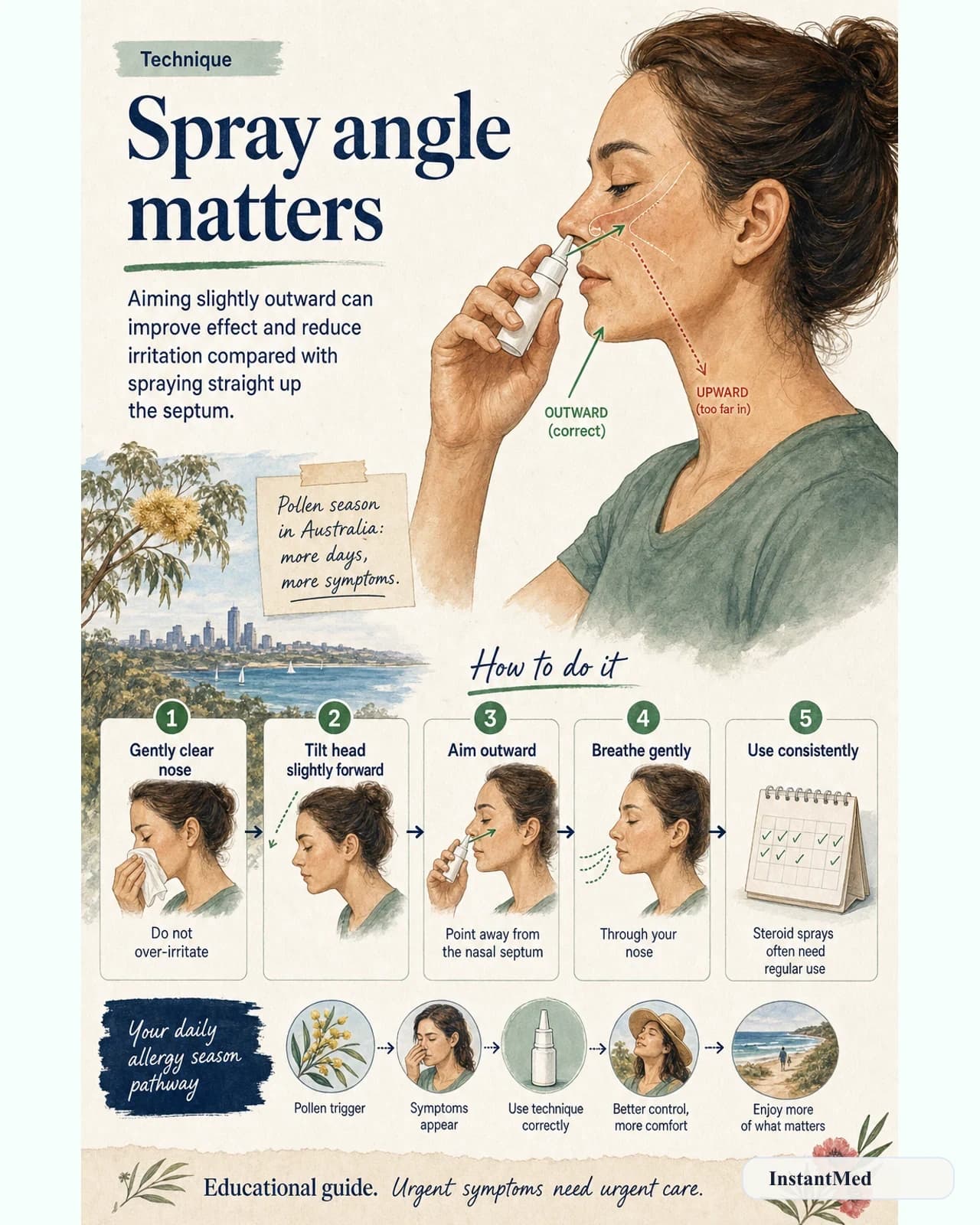
Control stack
Exposure reduction, correct spray use, and allergy medicines each solve a different part of the problem.
- Non-drowsy oral antihistamines: block the H1 receptor and reduce sneezing and itch. They are best suited to mild-to-moderate symptoms and on-demand use, with effect often within 30-60 minutes.
- Saline nasal rinses: mechanically remove pollen and mucus. They are safe for daily use and can be used before other sprays.
- Intranasal corticosteroid sprays: reduce nasal mucosal inflammation and are especially useful for moderate-to-severe symptoms with nasal congestion. They often take 3-7 days for full effect.
- Antihistamine nasal sprays: provide local antihistamine effect and may work faster than steroid sprays for nasal symptoms where tablets are insufficient.
- Antihistamine eye drops: target itchy, watery eyes directly and often have rapid onset.
- Intranasal combination sprays: combine antihistamine and steroid effects for moderate-to-severe rhinitis needing both actions.
Intranasal Corticosteroid Sprays
Intranasal corticosteroid sprays, including fluticasone propionate, mometasone, and budesonide, are a key treatment class for moderate-to-severe symptoms, particularly nasal blockage. Healthdirect and ASCIA note that these sprays work best when used consistently, not only after symptoms have become severe.
Oral Antihistamines
ASCIA and RACGP recommend second-generation antihistamines such as cetirizine, loratadine, and fexofenadine over first-generation antihistamines such as promethazine because of the superior safety profile and lower risk of significant sedation.
The Hay Fever-Asthma Connection
ASCIA, healthdirect, and asthma guidance identify allergic rhinitis as a risk factor for asthma symptoms and asthma exacerbations. This is often described as the "united airway" concept - the upper and lower airways share related inflammatory pathways. In practical terms, uncontrolled hay fever can worsen asthma symptoms, and asthma symptoms during pollen season should not be dismissed as "just allergies".
For people with both conditions, treating hay fever well is part of asthma management. ASCIA recommends that all patients with asthma be assessed for allergic rhinitis, and vice versa.
Important Warning
Warning: Pollen exposure during high-pollen events (thunderstorm asthma) can trigger life-threatening bronchospasm, even in people with no prior asthma diagnosis. If you experience wheezing, chest tightness, or difficulty breathing during hay fever season, seek medical assessment immediately.
Allergen Immunotherapy
For patients with confirmed allergen sensitisation whose symptoms are not adequately controlled with medications, ASCIA recommends consideration of allergen immunotherapy (AIT). AIT works by gradually desensitising the immune response through repeated, escalating doses of the allergen.
Two forms are available in Australia:
- Subcutaneous immunotherapy (SCIT): weekly injections administered at a clinic over 3-5 years, followed by a maintenance phase
- Sublingual immunotherapy (SLIT): daily drops or tablets placed under the tongue, taken at home
Both have strong evidence for reducing both rhinitis and asthma symptoms, and for preventing progression of rhinitis to asthma. The TGA has approved several SLIT products for grass pollen, the most common allergen trigger in Australia. AIT requires specialist assessment (allergist or immunologist) and is not appropriate for all patients.
When to See a Doctor
Seek medical review if:
- Over-the-counter treatments are not providing adequate control after 2-4 weeks
- Symptoms are significantly disrupting sleep or daytime function
- You have asthma and hay fever is making it worse
- You are considering allergen immunotherapy (requires specialist referral)
- You need treatment options beyond pharmacy medicines or a written management plan
Red flags
Wheeze, chest tightness, shortness of breath, or persistent cough during pollen season need an asthma safety plan.
Seek urgent care if you experience:
- Difficulty breathing or wheezing
- Severe facial pain (which may indicate sinusitis requiring antibiotic assessment)
- Vision changes
Managing the Pollen Season
Practical measures based on ASCIA guidance:
- Monitor AusPollen forecasts (auspollen.com.au) and restrict outdoor exposure on high days
- Stay indoors between 10am and 3pm on high-pollen days when concentrations peak
- Keep car and home windows closed on high-pollen days
- Shower and change clothes after spending time outdoors
- Wear wraparound sunglasses to reduce eye exposure
- Dry laundry indoors on high-pollen days
These measures complement medication but rarely eliminate symptoms alone in moderately sensitive individuals.
Sources
- AIHW: Allergic rhinitis (hay fever)
- healthdirect: Hay fever
- ASCIA: Allergic Rhinitis Frequently Asked Questions
- ASCIA: Allergic Rhinitis Treatment Plan
- RACGP AJGP: Approach to allergic rhinitis in the primary care setting
- National Asthma Council Australia: Thunderstorm asthma
- healthdirect: Thunderstorm asthma
Frequently Asked Questions
What is the best treatment for hay fever in Australia?
For moderate to severe hay fever, an intranasal corticosteroid spray (such as fluticasone or mometasone) used daily during the allergy season is the most effective single treatment. It is now available without prescription in Australia. For milder symptoms, a non-drowsy antihistamine (cetirizine, loratadine, or fexofenadine) provides quick relief.
When should hay fever treatment be reviewed?
Treatment should be reviewed when symptoms keep disrupting sleep, work, study, exercise, or asthma control despite correct use of pharmacy options. Review is also useful when the trigger is unclear, symptoms are year-round, one side of the nose is persistently blocked, or allergen immunotherapy is being considered.
Is hay fever worse in certain parts of Australia?
Yes. Pollen seasons vary by region and climate. Southeast Australia - particularly Melbourne, Canberra, and regional Victoria - has high grass pollen burdens from September to January. Melbourne is also known for thunderstorm asthma events during the grass pollen season, which can affect people with hay fever even if they have no prior asthma history.
Can hay fever cause asthma?
Hay fever is a significant risk factor for developing asthma and can trigger asthma flares in people who already have it. The upper and lower airways share the same mucosal lining and inflammatory mechanisms - treating hay fever well is therefore part of managing asthma. If you have both conditions, discuss a combined management plan with your doctor.
What is allergen immunotherapy and is it available in Australia?
Allergen immunotherapy gradually desensitises your immune response to specific allergens through repeated low-dose exposure. It is available in Australia as injections (clinic-administered) or sublingual drops and tablets (taken at home). It requires specialist referral and is most suitable for patients whose symptoms are not controlled by medication. It can provide lasting benefit beyond the treatment period.
InstantMed Medical Team
Related Articles
8 min read
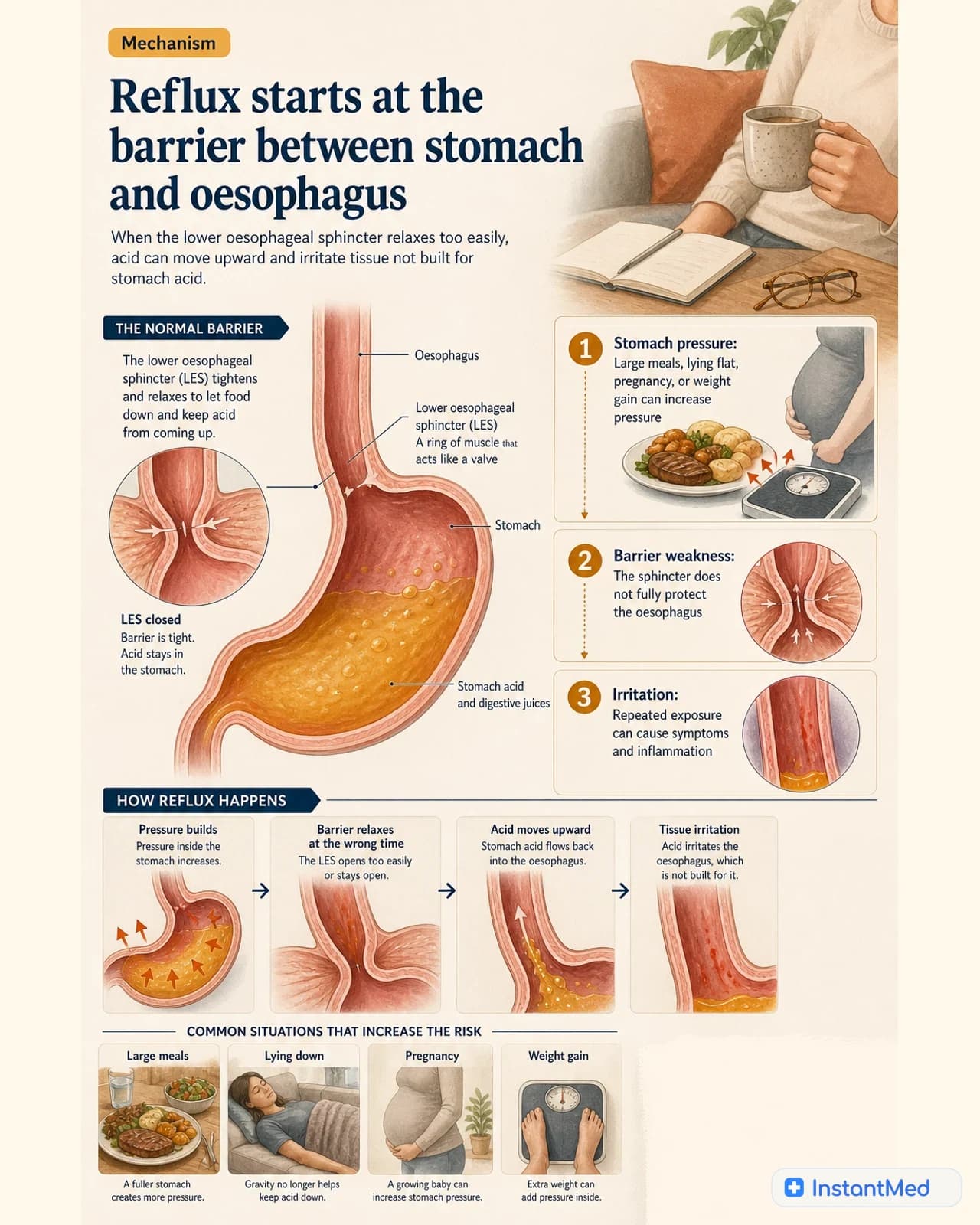
Acid Reflux and GORD: Symptoms, Red Flags, and Treatment
Occasional reflux is common, but frequent heartburn, regurgitation, swallowing symptoms, chest pain, bleeding signs, or persistent vomiting need a more careful plan.
InstantMed Medical Team

8 min read
Burnout vs Stress: How to Tell the Difference
Stress and burnout overlap, but they are not the same. Learn the practical differences, common warning signs, workplace drivers, recovery steps, and when to seek professional support.
InstantMed Medical Team
8 min read
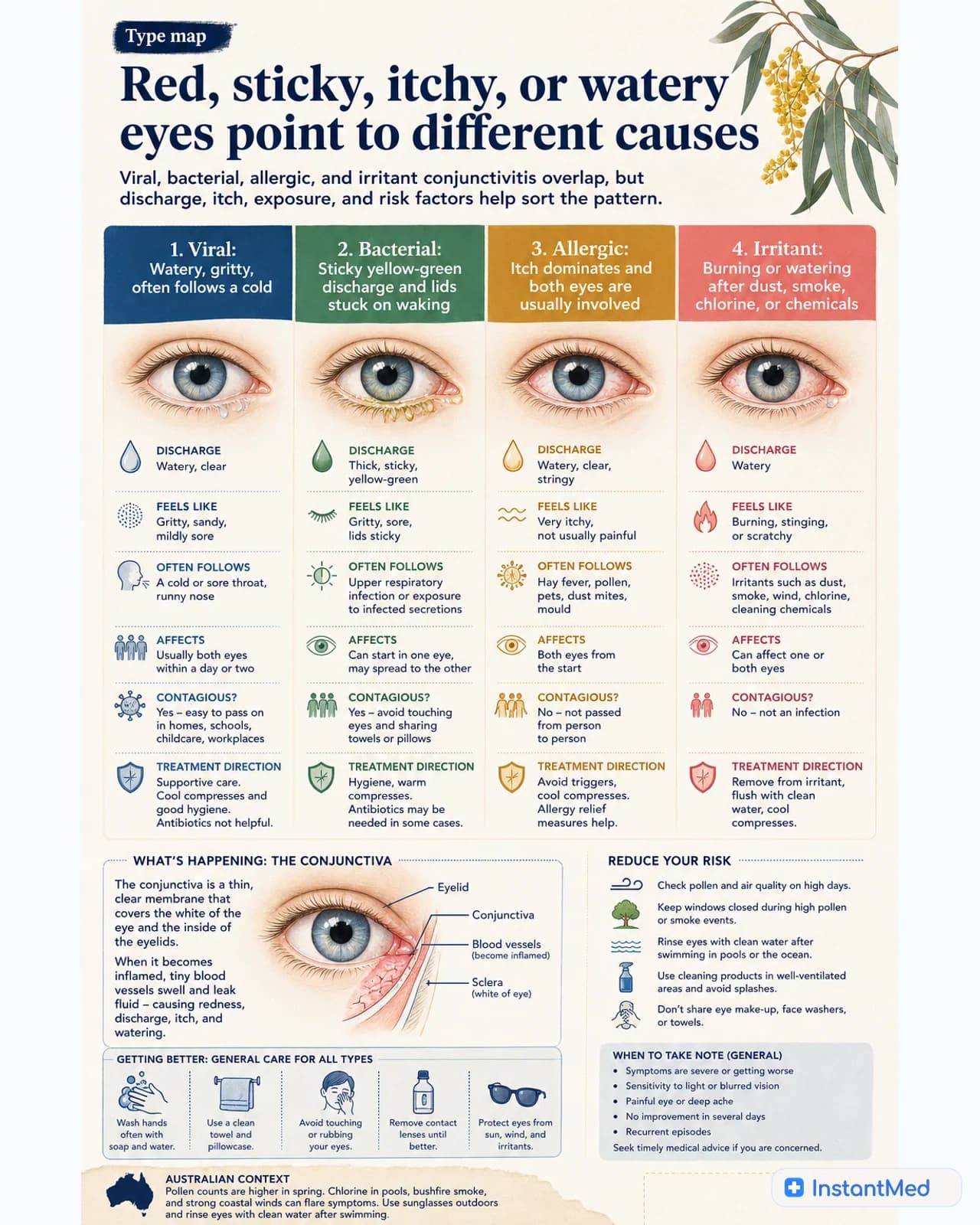
Conjunctivitis (Pink Eye): Types, Treatment, and When to Seek Care
Conjunctivitis is common, but not every red eye is routine pink eye. Discharge, itch, contact lens use, pain, light sensitivity, and vision change determine the safest next step.
InstantMed Medical Team