Loading article
Back to Health Guides
Mental Health Certificate Online: Taking a Mental Health Day
How to get a medical certificate for a mental health day through telehealth in Australia.
7 min read
·Updated 10 May 2026
·Doctor Reviewed
AHPRA Verified
In this article
- 1Can You Get a Medical Certificate for Mental Health?
- 2Getting a Mental Health Certificate Online
- 3What Counts as a Mental Health Reason for Sick Leave?
- 4Your Rights Regarding Mental Health Sick Leave
- 5When One Day Is Not Enough
Medical information only. This article is for general information and does not constitute medical advice. Treatment decisions are made by an AHPRA-registered doctor after reviewing your circumstances.
Review
InstantMed Clinical Team
Clinical governance review for guide content
Updated
10 May 2026
General information only, not personal medical advice.
Jump to section
1Can You Get a Medical Certificate for Mental Health?2Getting a Mental Health Certificate Online3What Counts as a Mental Health Reason for Sick Leave?4Your Rights Regarding Mental Health Sick Leave5When One Day Is Not Enough6Reducing Stigma Around Mental Health Days7How Telehealth Supports Mental Health8Creating a Mental Health Action Plan9How To Use This Guide Safely10What To Check Before You Act11Sources Used In This Guide
Mental health is health. In Australia, you can take sick leave for mental health reasons just as you would for a physical illness. If you are experiencing anxiety, stress, burnout, depression, or other mental health difficulties that make you unfit for work, you may be entitled to a medical certificate. Telehealth services make it possible to obtain one without the added burden of travelling to a clinic.
Can You Get a Medical Certificate for Mental Health?
Yes. Under Australian employment law, mental health conditions are treated the same as physical conditions when it comes to sick leave entitlements. The Fair Work Act does not distinguish between physical and mental illness. If a medical practitioner determines that your mental health condition makes you unfit for work, they can issue a medical certificate.
Your employer cannot ask for more detail than "medical condition" on the certificate. You are not required to disclose that your absence is specifically related to mental health. Your privacy is protected, and the certificate will simply state that you are unfit for work.
Getting a Mental Health Certificate Online
The process of getting a medical certificate online for mental health follows the same steps as any other telehealth medical certificate. However, given the nature of mental health concerns, some aspects deserve special attention.
- Select a telehealth service that offers medical certificates and has experience with mental health presentations
- Complete the health questionnaire, describing how you are feeling and how it affects your ability to work
- Be honest about your symptoms. You do not need to provide a formal diagnosis, just describe your experience
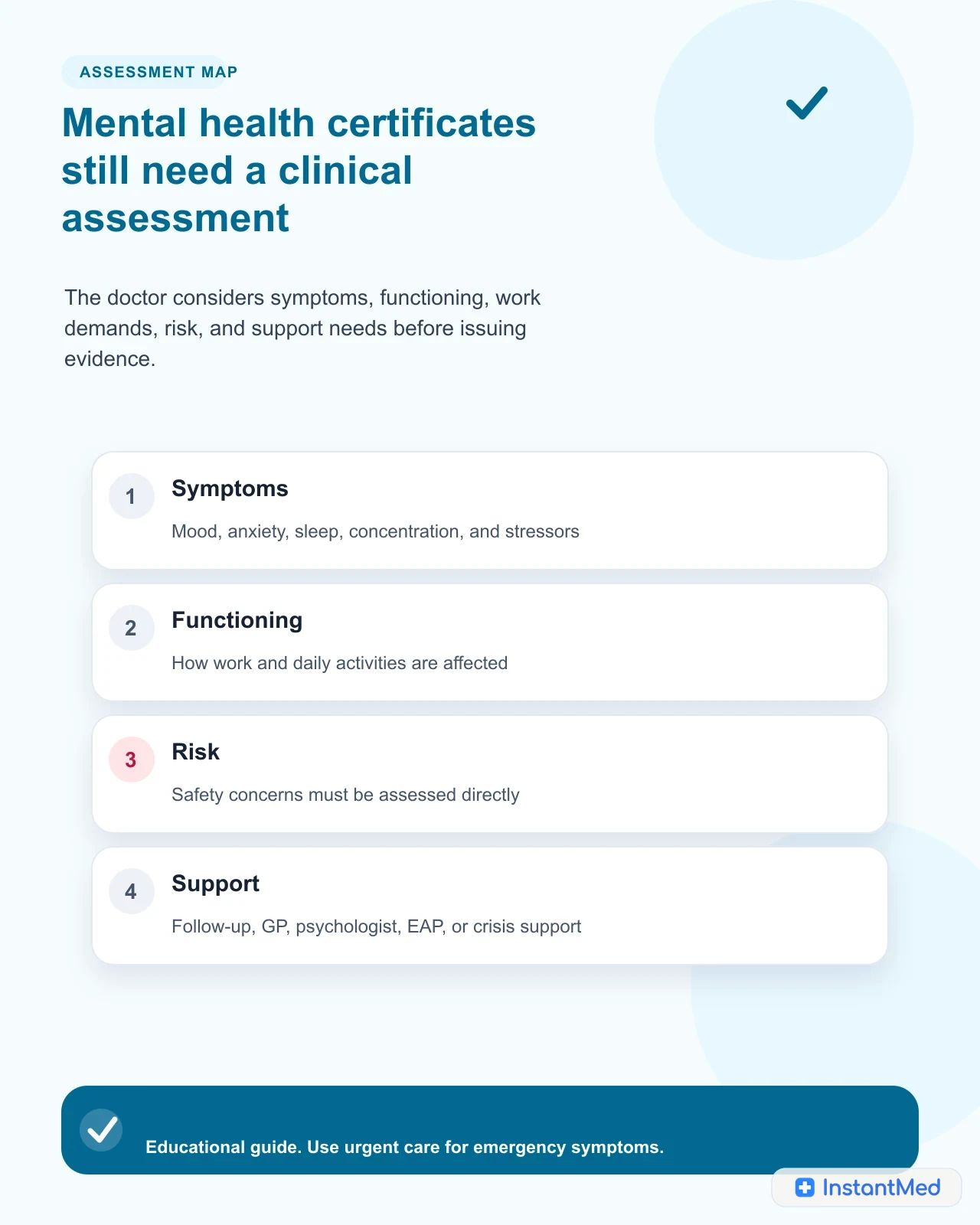
- The doctor assesses whether your current mental state makes you unfit for work
- If appropriate, the doctor issues a certificate covering the recommended period
- You receive your certificate via email, confirming the approved absence period without including a diagnosis or symptom details
Key Information
You do not need to have a diagnosed mental health condition to get a certificate. Acute stress, burnout, grief, and emotional distress can all be valid reasons for a medical certificate if they impair your ability to work.
What Counts as a Mental Health Reason for Sick Leave?
Mental health encompasses a broad range of conditions and experiences. There is no formal list of qualifying conditions because the assessment is based on your functional capacity, not a specific label.
- Anxiety that makes it difficult to concentrate, communicate, or function at work
- Depression that causes fatigue, withdrawal, or inability to perform tasks
- Burnout from prolonged workplace stress, leading to exhaustion and reduced capacity
- Acute stress from a significant life event such as bereavement, relationship breakdown, or financial crisis
- Panic attacks that are frequent or severe enough to impair daily functioning
- Insomnia or sleep disturbance that significantly affects your ability to work safely
- Post-traumatic stress that is exacerbated by work environments or triggers
Your Rights Regarding Mental Health Sick Leave
Understanding your rights helps you feel confident about taking time off for mental health. Australian employment law provides clear protections.
- Mental health sick leave uses the same personal leave entitlement as physical sick leave
- Full-time employees receive 10 days of paid personal leave per year, which accumulates
- Your employer cannot discriminate against you for taking mental health leave
- You are not required to disclose your specific mental health condition to your employer
- Your employer cannot contact your doctor without your written consent
- If you need extended time off, you may be eligible for additional support through workers' compensation if the condition is work-related
When One Day Is Not Enough
A single mental health day can be valuable for rest and reset. However, if you are experiencing ongoing mental health difficulties, one day off may not address the underlying issue. Consider these options for additional support.
- Speak with your GP about a Mental Health Treatment Plan, which provides Medicare-subsidised sessions with a psychologist
- Access your employer's Employee Assistance Program (EAP), which typically offers free confidential counselling sessions
- Contact Beyond Blue on 1300 22 4636 or Lifeline on 13 11 14 for immediate support
- Consider whether workplace adjustments, such as flexible hours or reduced workload, might help
- Explore ongoing telehealth mental health support for regular check-ins with a GP or psychologist
Emergency Information
If you are in crisis or having thoughts of self-harm, please call Lifeline on 13 11 14, Beyond Blue on 1300 22 4636, or 000 for emergencies. These services are free and available around the clock.
Reducing Stigma Around Mental Health Days
Despite growing awareness, some people feel uncomfortable taking time off for mental health. It is important to recognise that looking after your mental health is not a luxury or a sign of weakness. Just as you would rest when you have the flu, taking time to recover from mental exhaustion, anxiety, or emotional distress is responsible self-care.
Many Australian workplaces are actively working to reduce mental health stigma. If your workplace has a supportive culture, you may feel comfortable discussing your needs with your manager. However, you are under no obligation to share details. The certificate is your documentation, and it is private.
How Telehealth Supports Mental Health
Telehealth is particularly well suited for mental health consultations. Speaking with a doctor from the comfort and privacy of your own home can feel less intimidating than attending a clinic. There is no waiting room, no travel stress, and no need to present yourself publicly when you are struggling.
- Consult from a comfortable, private environment
- No need to travel when you are feeling overwhelmed or anxious
- Reduced anxiety compared to visiting a clinic, especially for those with social anxiety
- Access to care in regional and remote areas where mental health services may be limited
- Ability to book appointments outside standard hours when evening or weekend support is needed
Urgent support
Self-harm thoughts, crisis, psychosis, severe agitation, or inability to stay safe need urgent support.
Creating a Mental Health Action Plan
Rather than waiting until you reach a breaking point, consider developing a personal mental health action plan. This can include recognising your early warning signs, identifying your support network, knowing which services to contact, and having a trusted telehealth provider bookmarked for when you need help.
Helpful Tip
Keep a note of support services and trusted contacts in your phone. When you are in a difficult moment, having this information readily available removes one barrier to seeking help.
How To Use This Guide Safely
Use this guide to understand the usual evidence pathway, not as workplace legal advice. The Fair Work Ombudsman sets the national baseline for sick and carer's leave evidence, but awards, enterprise agreements, university policies, government-agency procedures, and employer policies can add practical submission steps such as deadlines, forms, portals, or manager notification rules.
A medical certificate should match the actual period affected and should not be backdated beyond what the reviewing doctor can responsibly support. If your illness involves injury at work, workers compensation, court, fitness-for-driving, high-risk machinery, firearms, aviation, or other safety-sensitive duties, a short online certificate may be the wrong tool and an in-person assessment or formal treating-doctor report may be needed.
What To Check Before You Act
Check the date range you need covered, whether your workplace or institution asks for a specific form, and whether you need evidence for your own illness or for caring responsibilities. Keep the certificate private unless the recipient has a legitimate need to see it. If a manager asks for diagnosis details or wants to contact the doctor directly, pause and check the policy because medical privacy still matters.
Sources Used In This Guide
- PBS: fees, patient contributions and Safety Net thresholds
- Services Australia: PBS Safety Net thresholds
- Healthdirect: medicines information
- Medical Board of Australia: telehealth consultations with patients
- AHPRA: Register of practitioners
- TGA: advertising a health service
Frequently Asked Questions
Can I get a medical certificate for a mental health day online?
Yes. Telehealth doctors can issue medical certificates for mental health reasons. The process is the same as for physical illness. You describe how you are feeling, the doctor assesses your fitness for work, and if appropriate, issues a certificate.
Does my employer need to know it is a mental health day?
No. InstantMed's standard certificate confirms the approved absence period and does not include a diagnosis or symptom details.
How many mental health days can I take?
Mental health sick leave uses the same personal leave entitlement as physical sick leave. Full-time employees receive 10 days per year that accumulates. There is no separate category for mental health days.
Will taking a mental health day affect my employment?
Taking legitimate sick leave for mental health cannot be used as grounds for discrimination or adverse action. Australian employment law protects employees who take personal leave, regardless of whether the reason is physical or mental.
InstantMed Medical Team
Related Articles
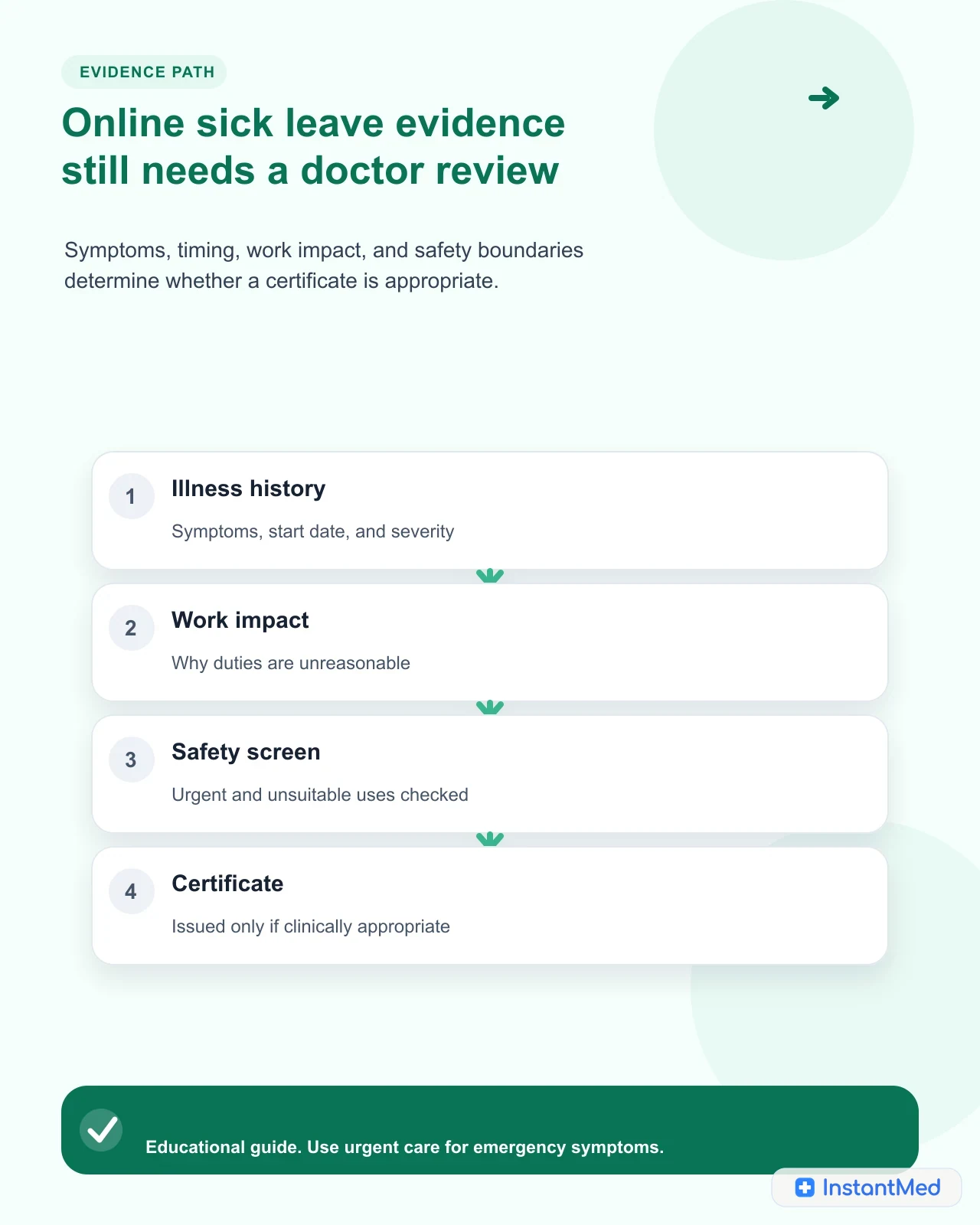
7 min read
How to Get a Sick Leave Certificate Online in Australia
Need a sick leave certificate but too unwell to visit a clinic? Learn how Australian telehealth services let you get a valid, employer-accepted sick certificate online in under an hour.
InstantMed Medical Team
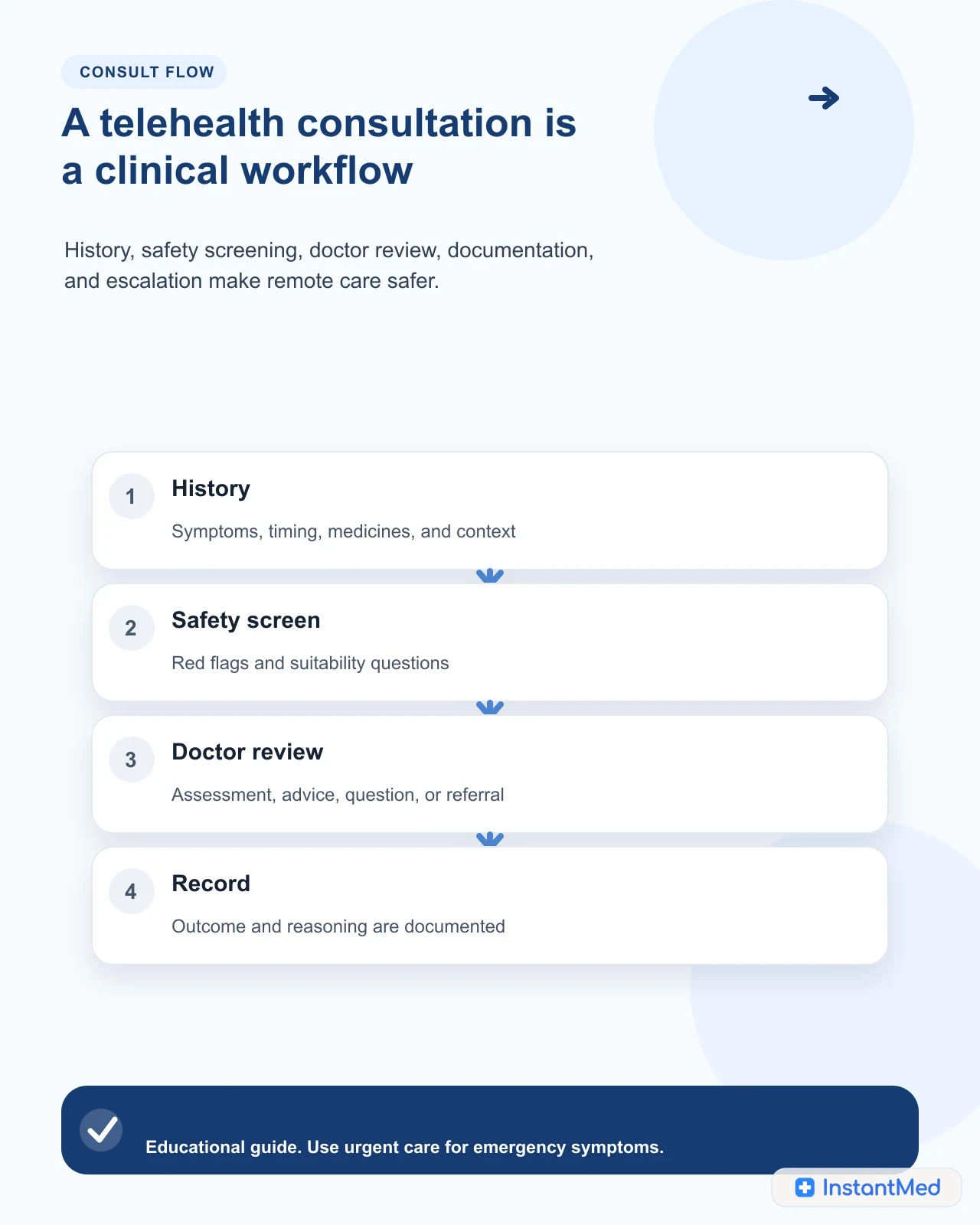
11 min read
Telehealth Consultation in Australia: What to Expect
A telehealth consultation is a real clinical review delivered by phone, video, secure message, or structured online form. Learn what happens, what to prepare, and when remote care is not enough.
InstantMed Medical Team
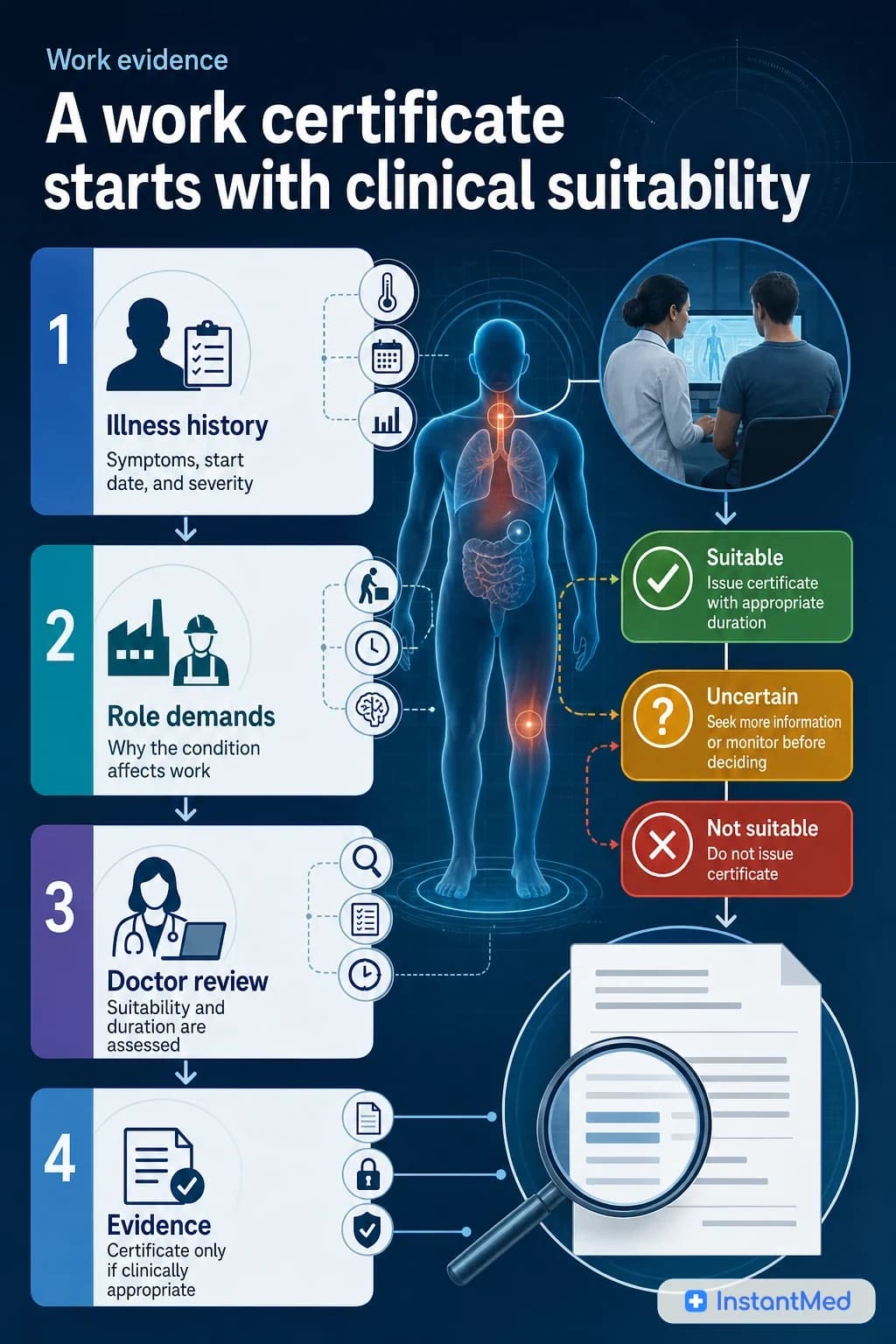
10 min read
Online Doctor Certificate for Work: What Counts as Evidence
Need a doctor certificate for work but cannot visit a clinic? Learn when online certificates can be used, what details matter, and where the limits sit.
InstantMed Medical Team