Loading article
Back to Health Guides
Generic vs Brand Name Medications in Australia
What bioequivalence means, why prices differ, when substitution is reasonable, and when brand consistency matters.
9 min read
·Updated 11 June 2026
·Doctor Reviewed
AHPRA Verified

In this article
- 1What A Generic Medicine Is
- 2What Bioequivalence Means
- 3What Is Usually The Same
- 4What Can Differ
- 5Pharmacy Brand Substitution
Medical information only. This article is for general information and does not constitute medical advice. Treatment decisions are made by an AHPRA-registered doctor after reviewing your circumstances.
Review
InstantMed Clinical Team
Clinical governance review for guide content
Updated
11 June 2026
General information only, not personal medical advice.
Key Information
For most medicines, a TGA-approved generic is a sensible equivalent option. The important exception is not "brand is better"; it is "some medicine types need consistency, monitoring, or device-specific counselling."
Generic medicines can feel suspiciously cheap if you have never had bioequivalence explained. The cheaper price does not mean the active ingredient is weaker. It usually means the product entered the market after the original medicine's development costs and patent period.
The practical question is not whether brands are always better or generics are always identical. It is whether the available brands are substitutable for the medicine, dose form, person, and clinical situation.
What A Generic Medicine Is
The Therapeutic Goods Administration describes a generic prescription medicine as another brand of an existing medicine. It contains the same active ingredient, which is the chemical that makes the medicine work.
For a generic prescription medicine to be supplied in Australia, the TGA must be satisfied that it meets required standards for quality, safety, and efficacy. For many generic medicines, that includes evidence of bioequivalence to the original or reference medicine.
Generic medicines may use:
- The active ingredient name
- A company or pharmacy brand name
- Different packaging from the original brand
- Different inactive ingredients
- Different shape, colour, or coating
Those visible differences are why people often worry. The regulatory question is whether the active medicine reaches the body in a comparable way.
What Bioequivalence Means
Bioequivalence compares how much of the active ingredient reaches the bloodstream and how quickly it gets there.
In a typical bioavailability study, volunteers receive the original medicine on one occasion and the generic medicine on another. Blood samples are taken over time, and the rate and extent of absorption are compared.
Plain English version:
- Same active ingredient
- Same strength
- Same dose form for the intended substitution
- Comparable absorption over time
- Quality standards met for Australian supply
Bioequivalence does not mean every tablet looks the same. It does not mean inactive ingredients are identical. It also does not mean a person will never notice a difference in taste, size, swallowing, packaging, or side effects from excipients.
What Is Usually The Same
For an approved generic equivalent, these should usually match the reference product:
| Feature | What it means |
|---|---|
| Active ingredient | The medicine molecule that produces the effect |
| Strength | The labelled dose, such as 20 mg or 500 mg |
| Intended route | Tablet, capsule, liquid, topical, injection, inhaled product, or another form |
| Therapeutic purpose | Same approved active ingredient use context |
| Quality standard | Must meet Australian regulatory requirements |
| Bioequivalence where required | Comparable absorption rate and extent |
This is why a generic blood pressure tablet, statin, antidepressant, reflux medicine, or antibiotic is often clinically reasonable when it is properly substitutable.
What Can Differ
The differences are usually outside the active ingredient:
- Colour
- Shape
- Tablet size
- Coating
- Fillers and binders
- Preservatives
- Flavouring
- Lactose or other excipients
- Blister pack or bottle style
- Brand name on packaging
- Price
These differences can still matter for real-world use. A larger tablet may be harder to swallow. A different blister pack may confuse someone who uses a Webster-pak or dose administration aid. A dye, lactose, preservative, or flavouring may matter for a person with a specific intolerance.
Generic does not mean careless. It means equivalent in the active ingredient and regulatory sense, with practical differences that may still need attention.
Pharmacy Brand Substitution
In Australia, prescriptions for many PBS medicines use active ingredient prescribing. That means the prescription often lists the medicine by active ingredient rather than only by a brand name.
At the pharmacy, a pharmacist may offer a different brand when substitution is permitted and clinically appropriate. The prescriber can indicate that brand substitution is not permitted, and the patient can ask questions before accepting a change.
Substitution check
Active ingredient, strength, substitutability, prescriber instruction, excipients, and patient preference all matter at the pharmacy counter.
Brand substitution is usually reasonable when:
- The medicine is listed as substitutable.
- The dose and form match.
- The prescriber has not blocked substitution.
- The patient understands the appearance may change.
- There is no known allergy or intolerance to an excipient.
- The medicine is not one where consistency has been specifically requested.
It is reasonable to ask the pharmacist: "Is this the same active ingredient and strength, and is there any reason I should stay with my current brand?"
PBS Brand Premiums And Cost
The Pharmaceutical Benefits Scheme subsidises many medicines. In some cases, one brand may attract an extra brand premium if cheaper substitutable brands are available.
That means two products can contain the same active ingredient and strength, but one may cost more because of the brand chosen. The PBS subsidises up to the relevant base price; the patient may pay the premium if they choose a higher-priced brand.
Cost can also differ on private prescriptions, where PBS pricing does not control the final price in the same way.
Practical pharmacy questions:
- Is there a brand premium on this medicine?
- Is the lower-cost brand substitutable?
- Is the active ingredient and strength the same?
- Has the prescriber marked brand substitution not permitted?
- Would switching brands affect monitoring or device technique?
When Brand Consistency Matters
Some medicines have a narrow therapeutic index, meaning small changes in blood concentration can affect benefit or toxicity. Others depend on device technique, release mechanism, or careful monitoring.
Extra caution is sensible with:
| Medicine or product type | Why consistency may matter |
|---|---|
| Warfarin | INR control can be sensitive to changes |
| Lithium | Blood levels are monitored and toxicity risk matters |
| Phenytoin and some anti-epileptic medicines | Small level changes may affect seizure control or side effects |
| Tacrolimus, ciclosporin, and transplant medicines | Blood levels and transplant stability matter |
| Levothyroxine | Thyroid levels may be monitored after changes |
| Modified-release products | Release design can be clinically important |
| Inhalers | Device technique can change the delivered dose |
| Patches | Adhesive, release rate, and skin tolerability can vary |
| Biologics and biosimilars | Similar concept, different regulatory and clinical conversation |
The point is not panic. The point is consistency. If a clinician, specialist clinic, or pharmacist has told you to stay with a specific brand, do not switch casually.
When A Switch May Feel Different
Some people report feeling different after switching brands even when products are bioequivalent.
Possible explanations include:
Consistency boundary
Narrow therapeutic index medicines, modified-release products, inhalers, patches, and biologics can make switching more complex.
- Different inactive ingredient causing irritation or intolerance
- Tablet size affecting swallowing or timing
- Different colour or packaging causing confusion
- Different expectations after being told it is "not the brand"
- Natural symptom variation unrelated to the switch
- A medicine type that genuinely needs closer monitoring
Do not dismiss symptoms automatically. Record what changed, the dates, the brand names, batch details if relevant, and the symptoms. Then ask the pharmacist or prescriber whether the switch should be reversed, monitored, or investigated.
How To Check A Medicine
Useful checks:
- 1
Compare active ingredient and strength.
- 2
Check whether the dose form is the same.
- 3
Ask whether the product is brand-substitutable.
- 4
Read the Consumer Medicine Information for inactive ingredients.
- 5
Check the TGA Australian Register of Therapeutic Goods if you need registration details.
- 6
Ask whether any monitoring is needed after switching.
- 7
Keep the packaging until you are confident the change is correct.
This is especially important for older patients, people taking many medicines, people using dose administration aids, and anyone with allergy or intolerance history.
The Bottom Line
Generic medicines are not second-class medicines. In Australia, approved generics must meet TGA standards, and for many prescription medicines that includes bioequivalence evidence.
For most common medicines, choosing a generic is a reasonable way to reduce cost without reducing treatment quality. The exceptions are practical and clinical: narrow therapeutic index medicines, device-based medicines, modified-release products, biologics, excipient intolerance, and situations where a clinician has requested brand consistency.
Sources Used In This Guide
- TGA: Generic medicines and biosimilar medicines
- TGA: Consumer Medicines Information (CMI)
- Department of Health and Aged Care: Active ingredient prescribing
- PBS: Brand premiums and therapeutic group premiums
- Australian Prescriber: generic medicines and bioequivalence
- Healthdirect: Generic medicines
Frequently Asked Questions
Are generic medicines as effective as brand-name medicines?
For most medicines, yes. The TGA says a generic prescription medicine must contain the same active ingredient as the existing medicine and must be bioequivalent, meaning the body absorbs the active ingredient at a comparable rate and extent. Some medicine types still need consistency or monitoring.
What can be different between a brand and a generic?
The active ingredient and strength should match. Packaging, tablet shape, colour, size, inactive ingredients, coating, flavour, device design, and price may differ. Those differences are usually minor, but they can matter for allergies, swallowing, adherence, modified-release products, inhalers, patches, and some narrow therapeutic index medicines.
Can a pharmacist offer a different brand?
Yes, brand substitution can be offered when the brands are considered substitutable and the prescriber has not marked brand substitution as not permitted. The patient can ask questions and choose whether to accept a substituted brand, though cost may differ.
Why are generics cheaper?
Generic manufacturers do not repeat the full original medicine-development program. Once patent and market protections allow competition, other manufacturers can seek approval for bioequivalent products. Competition can lower private prices and PBS costs.
When should I avoid switching brands?
Be cautious with medicines where small concentration changes can matter, such as warfarin, lithium, some anti-epileptic medicines, some transplant medicines, and some thyroid medicines. Also be careful with inhalers, patches, modified-release products, biologics, allergies to excipients, and any medicine where a clinician has requested brand consistency.
How can I check what is in a medicine?
Consumer Medicine Information lists active and inactive ingredients for many prescription and some non-prescription medicines. The TGA's Australian Register of Therapeutic Goods can also be used to check whether a medicine is registered in Australia.
InstantMed Medical Team
Related Articles
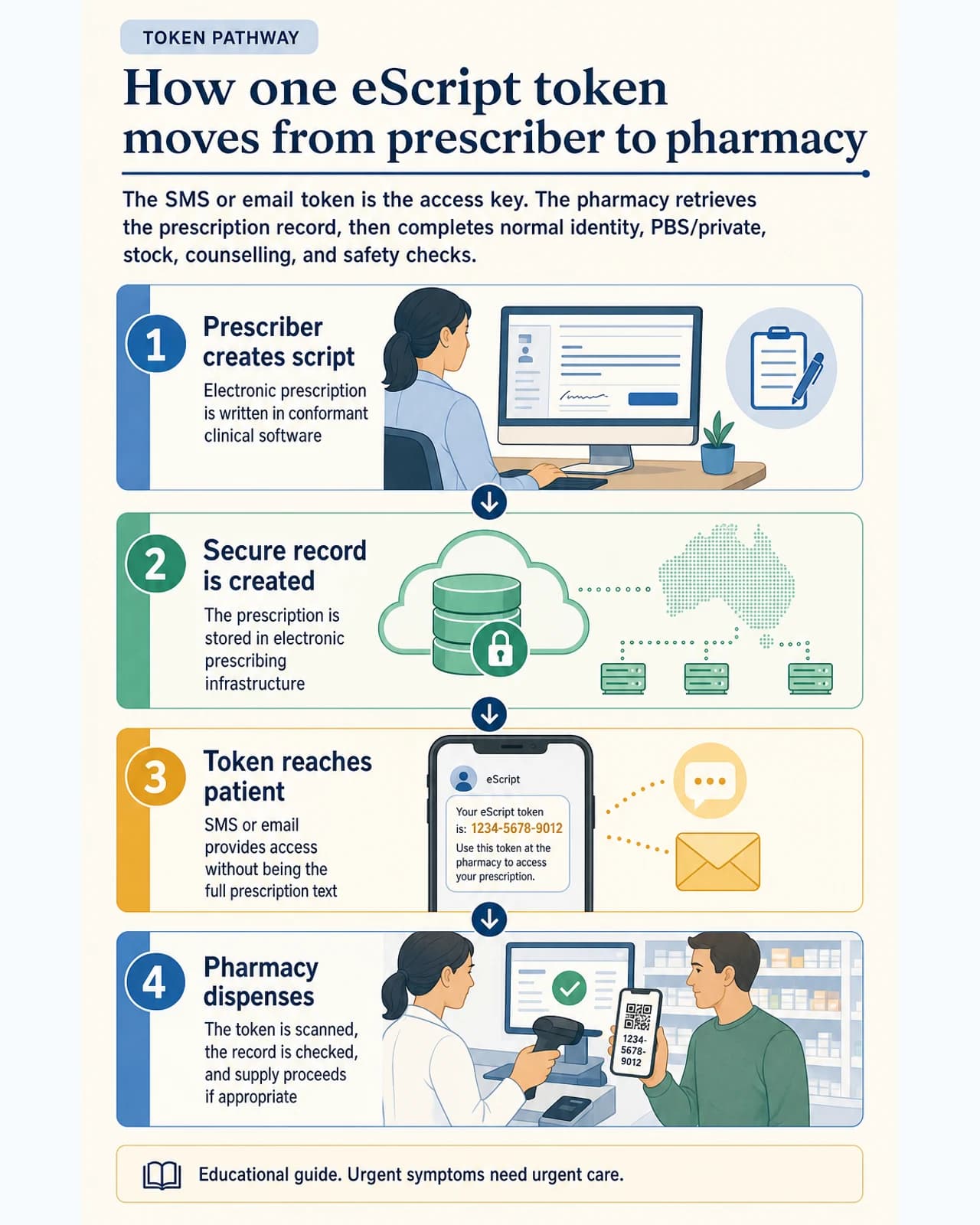
10 min read
How eScripts Work in Australia: Electronic Prescriptions Explained
Australian eScripts can be delivered as SMS or email tokens or managed through an Active Script List. Learn what the pharmacy sees, how repeats work, when paper still matters, and what to do if a token is lost.
InstantMed Medical Team
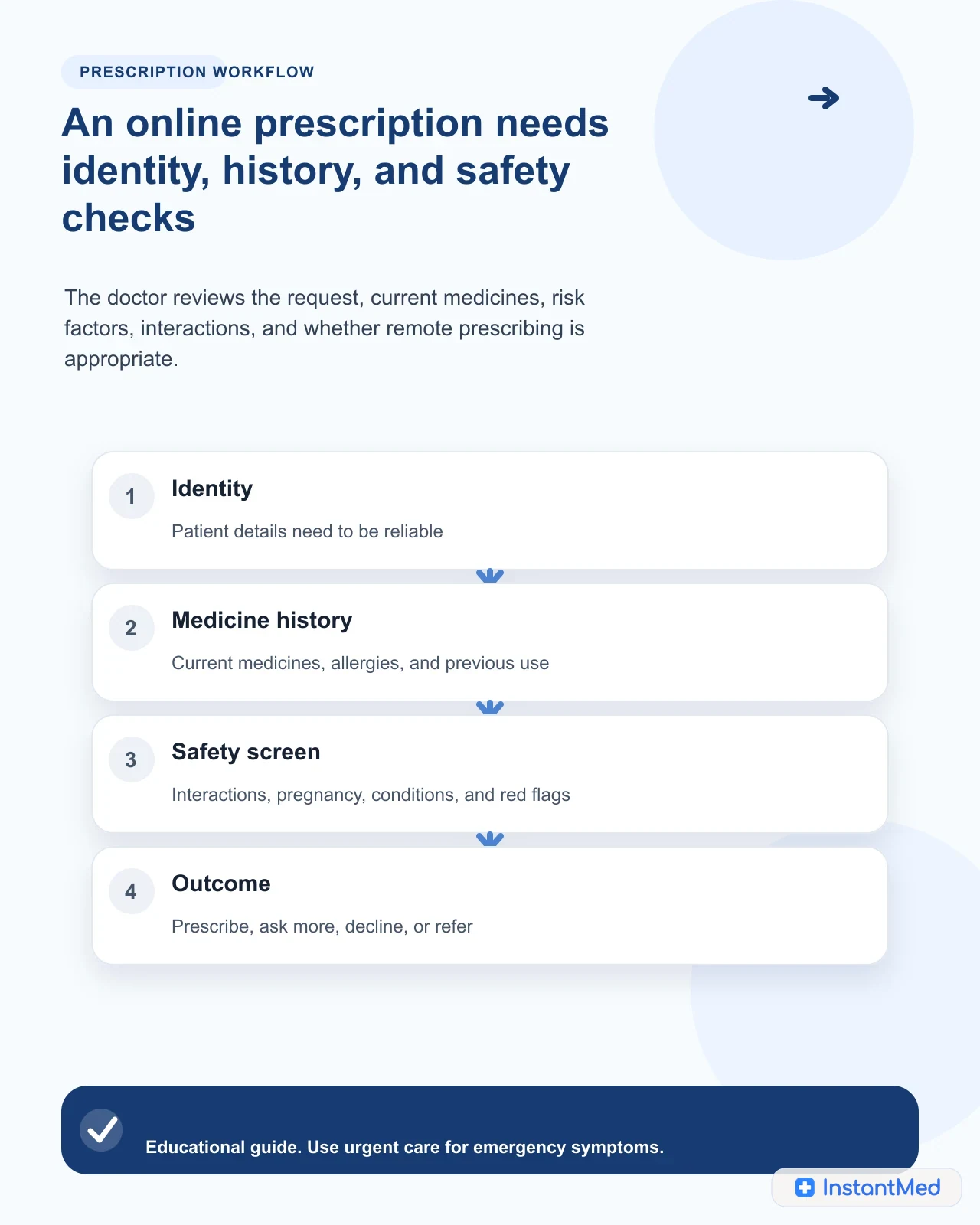
8 min read
How to Get a Prescription Online in Australia
Online prescriptions are legal and safe when issued by AHPRA-registered doctors following Australian prescribing standards. This guide covers the full process, from submitting your request to filling your eScript at any pharmacy.
InstantMed Medical Team
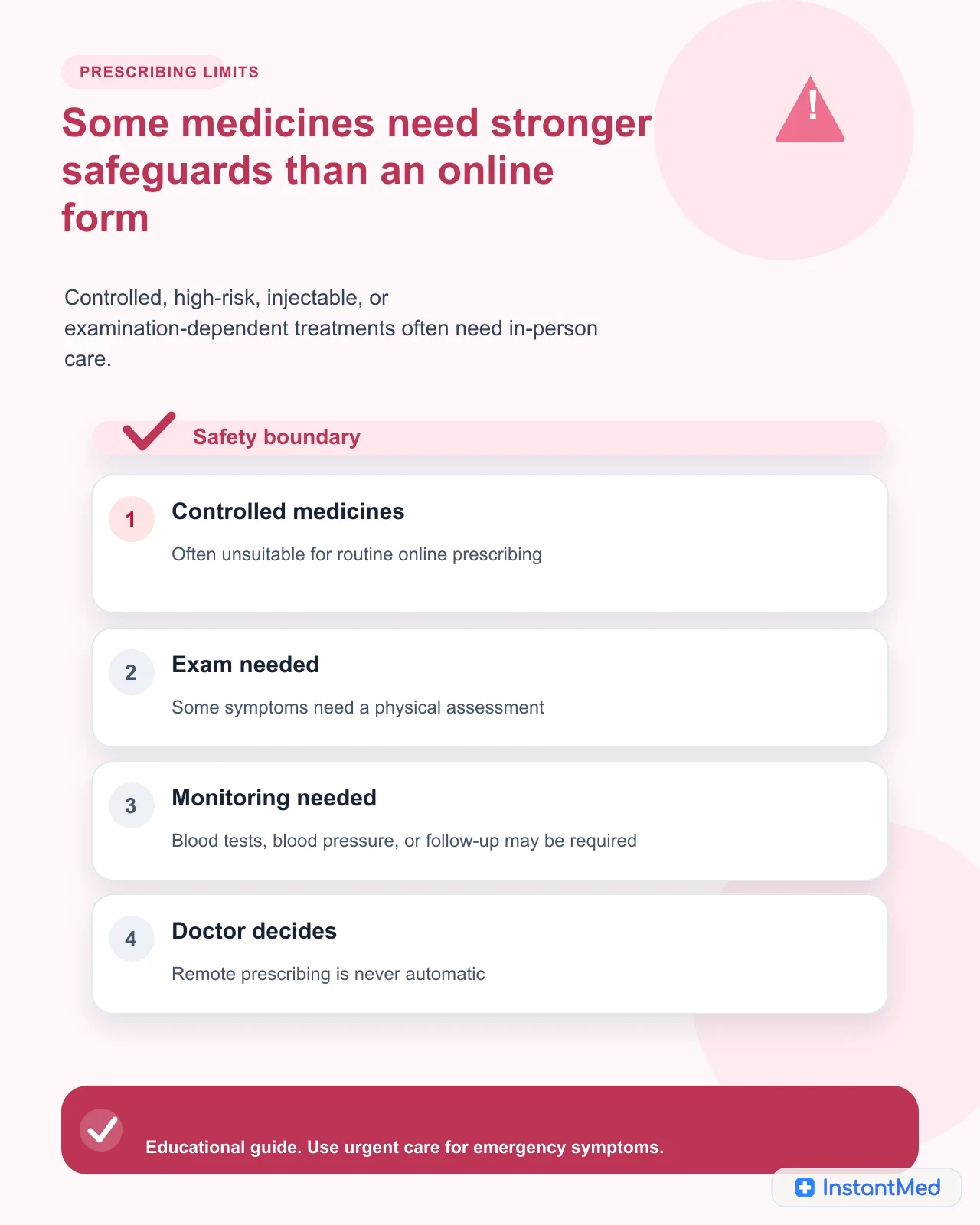
8 min read
Medications That Cannot Be Prescribed Online
Telehealth can prescribe most common medications for established patients. Schedule 8 controlled drugs, new medications requiring examination, and several other categories require in-person assessment. Here is the complete picture.
InstantMed Medical Team