Loading article
Back to Health Guides
Sinusitis: Causes, Symptoms, and When Antibiotics Help
Most sinusitis is viral and resolves without antibiotics. Here is how to tell the difference, what works, and when to see a doctor.
8 min read
·Updated 10 May 2026
·Doctor Reviewed
AHPRA Verified
In this article
- 1Anatomy and Mechanism
- 2Acute vs Chronic Sinusitis
- 3Symptoms
- 4Does Discharge Colour Indicate Bacterial Infection?
- 5When Antibiotics ARE Appropriate
Medical information only. This article is for general information and does not constitute medical advice. Treatment decisions are made by an AHPRA-registered doctor after reviewing your circumstances.
Review
InstantMed Clinical Team
Clinical governance review for guide content
Updated
10 May 2026
General information only, not personal medical advice.
Jump to section
1Anatomy and Mechanism2Acute vs Chronic Sinusitis3Symptoms4Does Discharge Colour Indicate Bacterial Infection?5When Antibiotics ARE Appropriate6Home Management: What Works7Steps for Home Management8When to See a Doctor9Chronic and Recurrent Sinusitis10Remote Assessment and Documentation11Medical Certificates for Sinusitis12Sources
Sinusitis - inflammation of the paranasal sinuses - is among the most common conditions presenting to Australian general practice. The AIHW National Health Survey identifies rhinitis and sinusitis as affecting millions of Australians annually. In most cases, the underlying cause is viral, and antibiotics provide no benefit. Understanding the natural history of sinusitis, what genuinely helps, and the specific signs that suggest bacterial infection is important for appropriate management.
Anatomy and Mechanism
The paranasal sinuses are air-filled cavities within the bones of the face and skull. There are four pairs: maxillary (cheeks), frontal (forehead), ethmoid (between the eyes), and sphenoid (behind the nose). All drain into the nasal cavity via small openings called ostia.
When the nasal mucosa swells - as it does with a viral upper respiratory infection - the ostia narrow or block. Mucus accumulates in the sinuses, creating pressure and an environment where bacteria can secondarily infect. This is why sinusitis so commonly follows a cold: it is usually a complication of viral rhinitis, not a primary bacterial infection.
Acute vs Chronic Sinusitis
Acute sinusitis: Symptoms lasting less than 4 weeks. Approximately 90-98% of acute sinusitis cases are viral in origin (Therapeutic Guidelines: Antibiotic, Australian context). Spontaneous resolution without antibiotics is the rule.
Subacute sinusitis: Symptoms lasting 4-12 weeks. Bacterial causes become more likely in this timeframe.
Chronic sinusitis: Symptoms persisting beyond 12 weeks. A distinct condition often driven by structural factors, allergy, or polyps rather than acute infection. Requires specialist assessment (ENT) if unresponsive to medical treatment.
Symptoms
Sinusitis symptoms vary depending on which sinuses are involved:
- Facial pain or pressure: cheeks (maxillary), forehead (frontal), or between/behind the eyes (ethmoid)
- Blocked or congested nose
- Thick nasal discharge, often discoloured (yellow or green)
- Reduced or absent sense of smell
- Post-nasal drip causing cough or throat irritation
- Headache that worsens when bending forward
- Dental pain in the upper teeth (from maxillary sinus involvement)
- Fatigue
Key Information
Info: Facial pain that worsens when you bend forward or lean down is a characteristic feature of maxillary or frontal sinusitis and helps distinguish it from tension headache.
Does Discharge Colour Indicate Bacterial Infection?
This is a common misconception. Yellow or green nasal discharge occurs with viral infections as well as bacterial ones. Discharge colour alone does not reliably distinguish viral from bacterial sinusitis and should not determine whether antibiotics are prescribed. This is consistent with Therapeutic Guidelines (eTG): Antibiotic guidance and RACGP position on antibiotic prescribing for upper respiratory infections.
When Antibiotics ARE Appropriate
eTG guidance identifies specific features that suggest bacterial sinusitis and support antibiotic use:
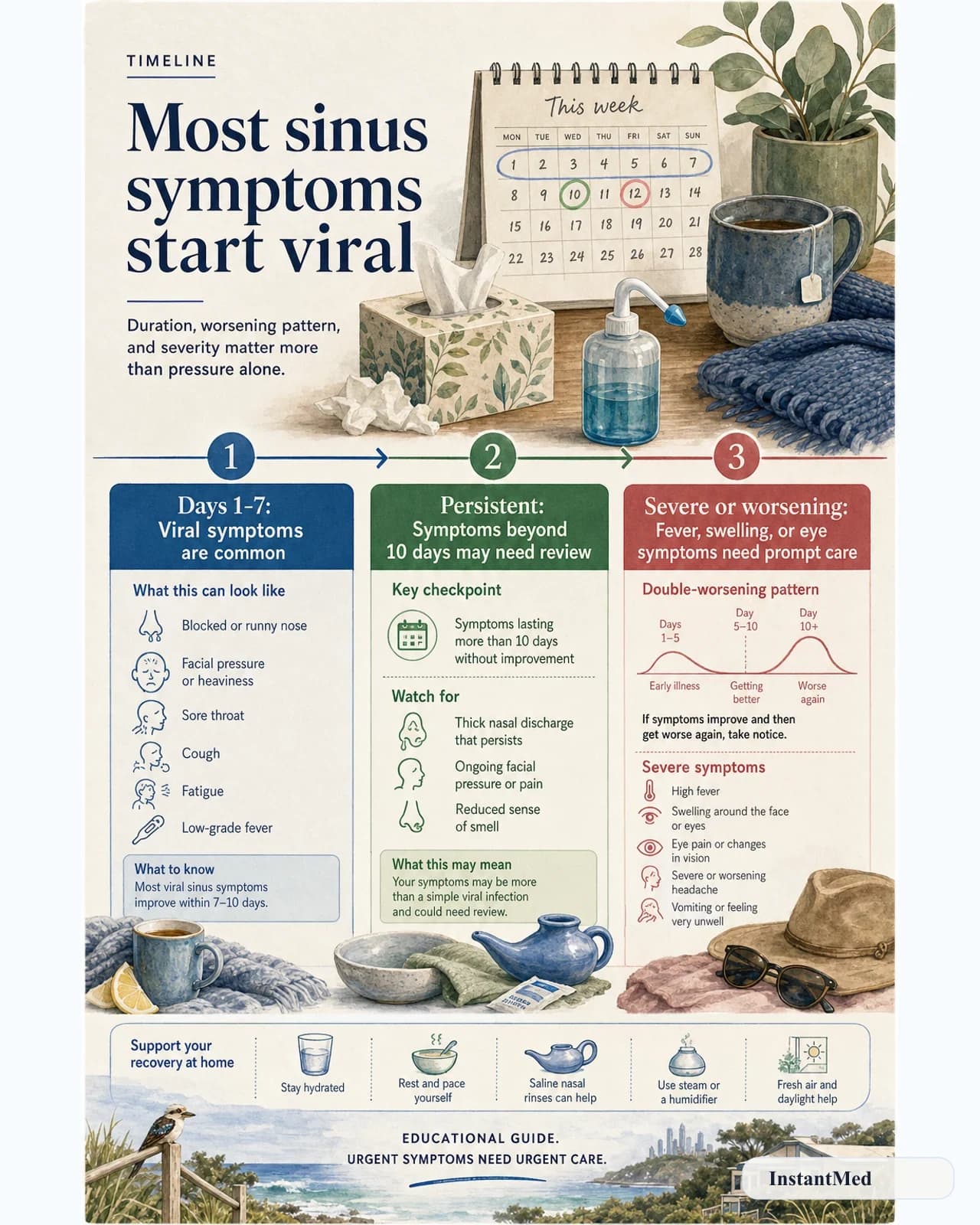
- Duration over 10 days without improvement: Most viral URTIs and associated sinusitis improve by days 7-10. Persistence beyond this suggests possible secondary bacterial infection.
- Severe symptoms: High fever (above 38.5C), significant facial pain or swelling, and systemic unwellness at the start of the illness (rather than after initial improvement) suggest bacterial cause.
- "Double worsening": Initial improvement followed by clinical deterioration is characteristic of secondary bacterial infection complicating an initial viral illness.
- Periorbital or orbital symptoms: Swelling or redness around the eye requires urgent assessment - orbital cellulitis is a serious complication of ethmoid sinusitis.
Anatomy
Swollen nasal lining narrows drainage openings, trapping mucus and creating pressure around the cheeks, forehead, and eyes.
In the absence of these features, watchful waiting with symptomatic treatment is the appropriate first-line approach for acute sinusitis.
Home Management: What Works
Nasal Saline Irrigation
High-volume saline nasal irrigation (using a neti pot, squeeze bottle, or nasal rinse device) has the strongest evidence among non-prescription treatments. Cochrane review evidence supports its use for symptom reduction in both acute and chronic sinusitis. It works by mechanically removing mucus and inflammatory mediators, and by improving mucociliary function.
Use isotonic or hypertonic saline, prepared with non-iodised salt and cooled boiled or distilled water. Commercial saline rinse sachets are convenient and reduce the risk of preparing saline incorrectly.
Steam Inhalation
Steam inhalation (bowl of hot water with towel draped over head, or a long warm shower) provides temporary symptomatic relief by loosening mucus and reducing congestion. Evidence for long-term benefit is limited, but most patients find it comfortable.
Nasal Decongestants
Oxymetazoline nasal spray (available without prescription in Australia) provides rapid congestion relief. Important: Do not use for more than 3 consecutive days. Longer use causes rhinitis medicamentosa - rebound congestion that can be worse than the original symptoms and difficult to resolve.
Oral pseudoephedrine is available Schedule 3 (pharmacist-only) in Australia and is effective for congestion. It is not appropriate for people with uncontrolled hypertension, cardiac arrhythmia, hyperthyroidism, or those taking MAOIs.
Intranasal Corticosteroid Sprays
RACGP guidelines support intranasal corticosteroid sprays (fluticasone, mometasone, budesonide) as an adjunct to symptomatic treatment in acute sinusitis, particularly in patients with concurrent allergic rhinitis. They reduce mucosal oedema and help restore sinus drainage.
Analgesia
Paracetamol or ibuprofen provide pain and fever relief. Ibuprofen has the additional benefit of anti-inflammatory action that may reduce mucosal swelling. Use paracetamol as the safer first choice in patients with renal disease, peptic ulcer disease, or asthma with NSAID sensitivity.
Hydration
Adequate hydration (2+ litres per day) helps thin mucus secretions, supporting clearance. Avoid alcohol and caffeine, both of which promote dehydration.
Steps for Home Management
- 1
Begin saline nasal rinses as soon as symptoms start - use twice daily, morning and evening.
- 2
Take regular paracetamol or ibuprofen for pain and facial pressure.
- 3
Use a short course of decongestant nasal spray if congestion is severe, for a maximum of 3 days.
- 4
Stay well hydrated and rest adequately.
- 5
Apply a warm compress over the affected sinus areas for 5-10 minutes several times daily.
- 6
Sleep with your head slightly elevated to improve sinus drainage overnight.
When to See a Doctor
Most acute sinusitis resolves within 2-4 weeks without antibiotics. See a doctor if:
- Symptoms are not improving after 10 days
- Symptoms improve and then worsen again
- You have a high fever (above 38.5C)
- You have significant swelling or redness around one or both eyes
- You have severe or worsening headache
- Your vision is affected
- You have had recurrent sinusitis (3 or more episodes per year)
- You have a weakened immune system
Seek urgent care or present to an emergency department for:
- Swelling around the eye with eye movement restriction or vision change
- Severe headache with neck stiffness (meningism)
- High fever with confusion or altered consciousness
Chronic and Recurrent Sinusitis
If you have sinusitis that recurs frequently or persists beyond 12 weeks despite treatment, assessment by an ENT (otorhinolaryngologist) is appropriate. Possible contributing factors include:
- Nasal polyps obstructing sinus drainage
- Deviated nasal septum
- Underlying allergic rhinitis
- Structural abnormalities of the sinus ostia
Red flags
Swelling around the eye, vision changes, severe headache, confusion, or neck stiffness are not routine sinusitis.
CT scanning of the sinuses is the imaging modality of choice for chronic sinusitis evaluation. Functional endoscopic sinus surgery (FESS) is effective for patients with structural obstruction not responding to medical management.
Remote Assessment and Documentation
Many uncomplicated sinus symptoms can be assessed remotely because the key decision points are history-based: duration, severity, worsening pattern, fever, facial pain, eye symptoms, prior episodes, immune risk, and what has already been tried. That does not mean every case belongs online. Sinus symptoms can occasionally reflect orbital, neurological, dental, allergic, or structural problems that need examination.
Remote assessment may be reasonable for:
- Assessing whether your symptoms warrant antibiotics based on duration and severity
- Reviewing safe home management and what to watch for
- Discussing whether nasal corticosteroid sprays, decongestants, or pain relief are appropriate for your situation
- Documenting work or study absence when symptoms make you unfit for normal duties
- Planning follow-up if symptoms are persistent, recurrent, or worsening
Useful information to prepare:
- 1
Know when your symptoms started and how they have changed over time
- 2
Note your temperature if you have measured it
- 3
Describe where you feel the pressure or pain (cheeks, forehead, behind the eyes)
- 4
List any medications you have already tried
- 5
Mention any relevant history - recurrent sinusitis, nasal polyps, immune conditions
Remote assessment is not appropriate for:
- Any swelling or redness around the eye - this needs same-day in-person or emergency assessment
- Vision changes
- Severe headache with neck stiffness or confusion
- You have been on antibiotics already and are getting worse
For these situations, use same-day in-person care or emergency care depending on severity.
Medical Certificates for Sinusitis
Sinusitis can be genuinely debilitating. Facial pain, sinus pressure, fever, and sleep disruption from post-nasal drip all impair work performance - particularly for roles requiring concentration, screen work, communication, or being presentable to clients.
If sinusitis is preventing you from working or attending study, a medical certificate may be appropriate.
A useful certificate focuses on:
- The assessment date
- The period you are unfit for work or study
- Whether you are fit for normal duties or need a short absence
- The clinician's details and registration information
It usually does not need to name sinusitis, list symptoms, or describe discharge colour. If your symptoms suggest bacterial sinusitis, complication risk, or another diagnosis, the priority is medical assessment rather than paperwork.
Helpful Tip
If sinusitis is keeping you home from work, the useful documentation question is whether your symptoms make you unfit for your normal duties and for how long. If symptoms suggest bacterial sinusitis, complication risk, or another diagnosis, the priority is medical assessment rather than paperwork.
Sources
- healthdirect: Sinusitis
- RACGP: Sinusitis
- RACGP: Clinical assessment, diagnosis and management of nasal obstruction
- Royal Children's Hospital Melbourne: Rhinitis and rhinosinusitis clinical guideline
- Australian Commission on Safety and Quality in Health Care: Sinusitis, should I take antibiotics?
- Australian Commission on Safety and Quality in Health Care: Do I really need antibiotics?
Frequently Asked Questions
When is a medical certificate appropriate for sinusitis?
A certificate may be appropriate when facial pain, fever, fatigue, poor sleep, or concentration problems make you unfit for your usual duties. The certificate should usually document fitness for work and dates, not unnecessary private symptom details.
Can sinusitis be assessed by telehealth?
Often, if symptoms are uncomplicated and can be assessed through history, duration, severity, and red-flag screening. Telehealth is not appropriate for eye swelling, vision change, severe headache with neck stiffness, confusion, or deterioration despite treatment.
Do I need antibiotics for a sinus infection?
Most likely not. Around 90-98% of acute sinusitis cases in Australia are viral, and antibiotics have no effect on viral infections. Australian guidelines recommend waiting at least 10 days before considering antibiotics, unless you have a high fever, severe symptoms, or worsening after initial improvement. Saline rinses, decongestants, and pain relief are the right first-line approach.
How long does sinusitis usually last?
Acute viral sinusitis typically resolves within 2-4 weeks. Symptoms that persist beyond 4 weeks suggest subacute sinusitis, and beyond 12 weeks is classified as chronic sinusitis. Chronic or frequently recurring sinusitis warrants specialist (ENT) assessment.
Does the colour of my snot tell me if I need antibiotics?
No. Yellow or green nasal discharge occurs with both viral and bacterial infections and does not reliably indicate which is present. Discharge colour should not be the basis for antibiotic prescribing decisions - this is a common misconception. Duration of symptoms and severity of illness are more useful indicators.
What helps sinus congestion at home?
High-volume saline nasal rinses (using a neti pot or squeeze bottle) have the best evidence for symptom relief. Decongestant nasal spray (oxymetazoline) can be used for up to 3 days - no longer, or rebound congestion develops. Paracetamol or ibuprofen help with pain, warm compresses ease facial pressure, and staying well hydrated helps thin mucus.
InstantMed Medical Team
Related Articles
8 min read
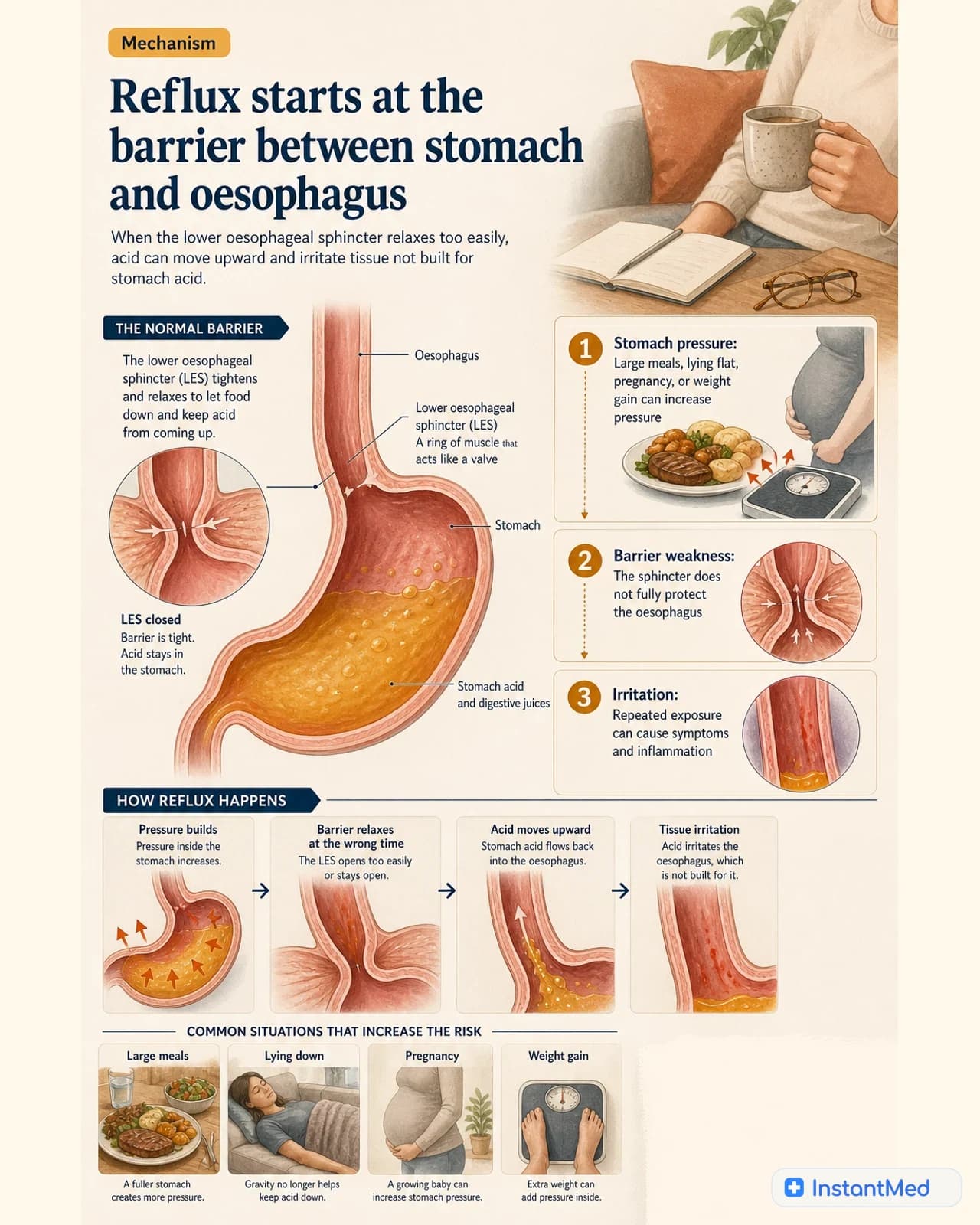
Acid Reflux and GORD: Symptoms, Red Flags, and Treatment
Occasional reflux is common, but frequent heartburn, regurgitation, swallowing symptoms, chest pain, bleeding signs, or persistent vomiting need a more careful plan.
InstantMed Medical Team

8 min read
Burnout vs Stress: How to Tell the Difference
Stress and burnout overlap, but they are not the same. Learn the practical differences, common warning signs, workplace drivers, recovery steps, and when to seek professional support.
InstantMed Medical Team
8 min read
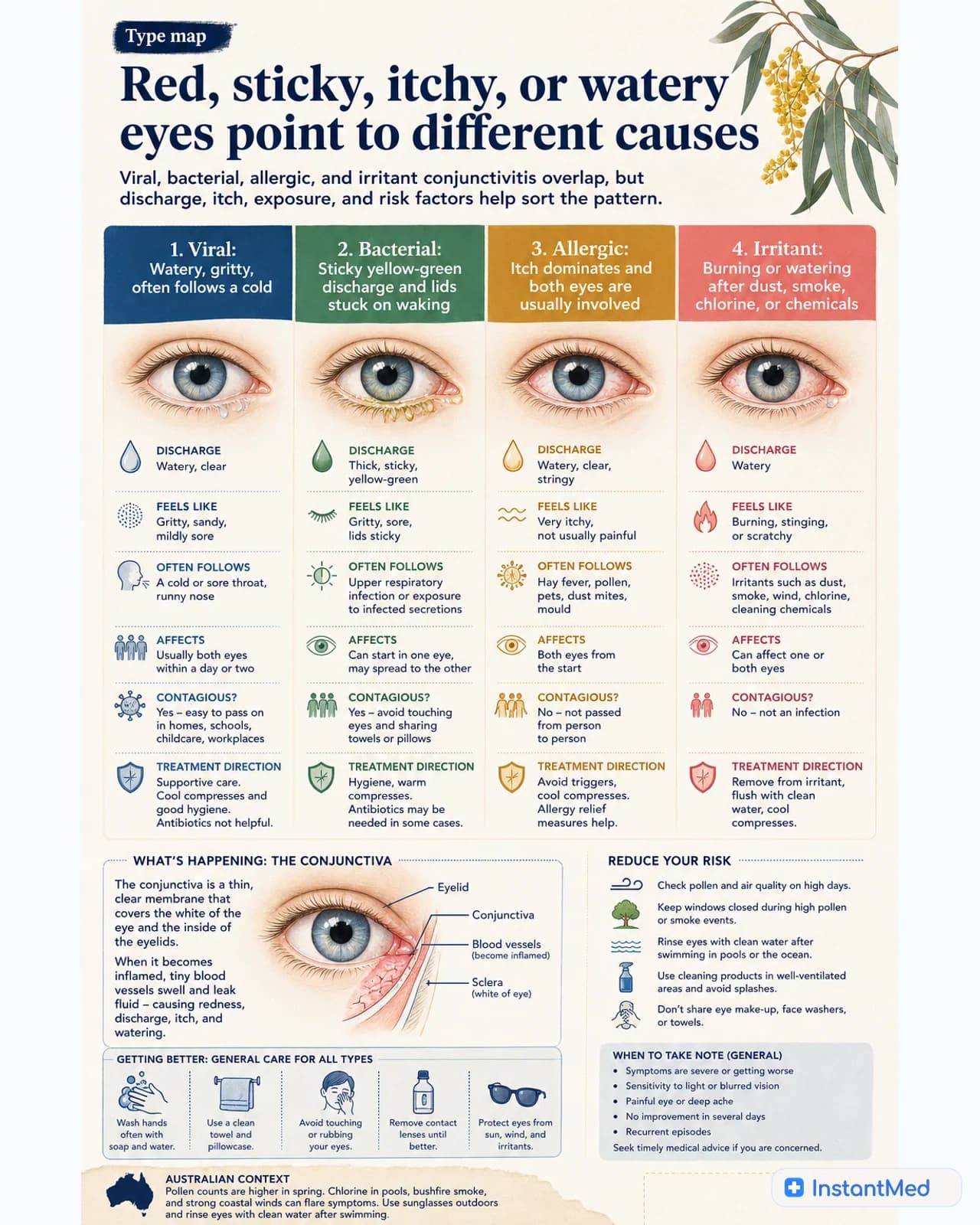
Conjunctivitis (Pink Eye): Types, Treatment, and When to Seek Care
Conjunctivitis is common, but not every red eye is routine pink eye. Discharge, itch, contact lens use, pain, light sensitivity, and vision change determine the safest next step.
InstantMed Medical Team