Loading article
Back to Health Guides
Omeprazole vs Pantoprazole: Comparing PPIs in Australia
How the two most common proton pump inhibitors compare for reflux and stomach acid.
7 min read
·Updated 11 June 2026
·Doctor Reviewed
AHPRA Verified
In this article
- 1How PPIs Work
- 2Omeprazole
- 3Pantoprazole
- 4Effectiveness: Are They Equally Good?
- 5The Clopidogrel Question
Medical information only. This article is for general information and does not constitute medical advice. Treatment decisions are made by an AHPRA-registered doctor after reviewing your circumstances.
Review
InstantMed Clinical Team
Clinical governance review for guide content
Updated
11 June 2026
General information only, not personal medical advice.
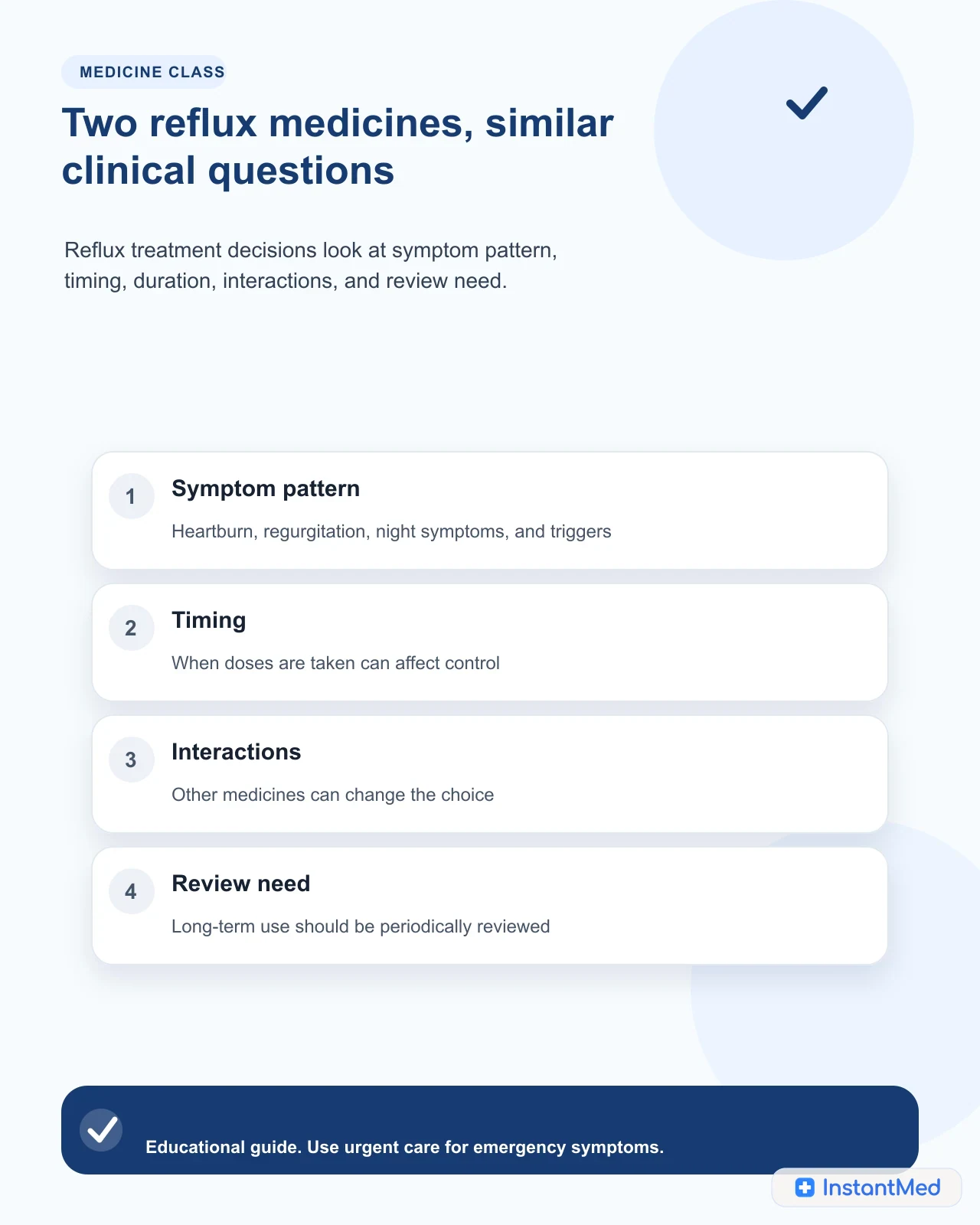
Proton pump inhibitors (PPIs) are among the most widely prescribed medications in Australia. According to PBS dispensing data, PPI prescriptions consistently rank among the top 10 most dispensed medication classes nationally. Omeprazole and pantoprazole are the two most common, and GPs are frequently asked which is "better." The short answer: they are very similar in effectiveness, but differ in drug interactions, formulation, and a clinically important scenario involving antiplatelet therapy.
How PPIs Work
PPIs irreversibly block the hydrogen-potassium ATPase enzyme (the proton pump) in the stomach lining's parietal cells. This is the final common pathway of acid secretion. By blocking this pump, PPIs reduce stomach acid production by approximately 90% at full therapeutic doses. All PPIs work by the same mechanism -- the differences are pharmacokinetic (how the body processes them), not pharmacodynamic (what they do to the proton pump).
Both omeprazole and pantoprazole are prodrugs that require acid activation in the canalicular space of parietal cells before they can bind irreversibly to the proton pump. This is why they are most effective when taken before a meal.
Omeprazole
Omeprazole was the first PPI to receive TGA registration in Australia (1988). It remains one of the most prescribed medications in the country.
| Feature | Detail |
|---|---|
| Available doses | 10mg, 20mg, 40mg capsules |
| Standard dose (GORD) | 20mg once daily, 30-60 min before breakfast |
| Liver metabolism | CYP2C19 (primary), CYP3A4 (secondary) |
| Clopidogrel interaction | Clinically significant -- reduces clopidogrel efficacy |
| PBS listed | Yes -- for GORD, peptic ulcer, H. pylori eradication |
| Over-the-counter | Yes -- 10mg and 20mg available as Schedule 3 |
The clopidogrel interaction is the most important clinical concern with omeprazole (see section below).
Pantoprazole
Pantoprazole gained clinical prominence partly because of its cleaner interaction profile with other medications.
| Feature | Detail |
|---|---|
| Available doses | 20mg, 40mg tablets |
| Standard dose (GORD) | 40mg once daily, 30-60 min before breakfast |
| Liver metabolism | CYP2C19 (lower competitive inhibition than omeprazole) |
| Clopidogrel interaction | Minimal -- preferred PPI for patients on antiplatelet therapy |
| PBS listed | Yes -- for GORD, peptic ulcer, H. pylori eradication |
| Over-the-counter | Yes -- 20mg available as Schedule 3 |
The key pharmacological distinction is that pantoprazole has weaker competitive inhibition of CYP2C19, meaning it is less likely to interfere with medications that depend on this enzyme for activation.
Effectiveness: Are They Equally Good?
For the most common indications -- gastro-oesophageal reflux disease (GORD), peptic ulcer disease, and H. pylori eradication (combined with antibiotics) -- multiple meta-analyses show no clinically significant difference in effectiveness between omeprazole and pantoprazole at equivalent doses. Oesophagitis healing rates and symptom relief for reflux are essentially identical.
Key Information
Equivalent dose note: Omeprazole 20mg is roughly equivalent to pantoprazole 40mg for acid suppression. The Australian Therapeutic Guidelines (eTG) note this difference when guiding dose selection during a switch between agents. Replacing omeprazole 20mg with pantoprazole 20mg (rather than 40mg) may result in reduced effectiveness.
The Clopidogrel Question
This is the most clinically important difference between the two PPIs in current Australian practice.
Clopidogrel (a common antiplatelet medication used after myocardial infarction, coronary stent placement, and ischaemic stroke) is a prodrug requiring activation by the CYP2C19 enzyme -- the same enzyme that metabolises omeprazole. Concurrent omeprazole use can meaningfully reduce clopidogrel's antiplatelet effect by competing for CYP2C19, potentially increasing cardiovascular risk in patients who depend on antiplatelet therapy.
The Australian Therapeutic Guidelines (eTG Complete, Gastrointestinal section) specifically recommend pantoprazole or rabeprazole over omeprazole for patients taking concurrent antiplatelet therapy, particularly clopidogrel. This recommendation is also reflected in cardiology prescribing guidance from the National Heart Foundation.
Important Warning
Warning: If you are taking clopidogrel (Plavix, Iscover) for coronary artery disease, a stent, or after a stroke, tell your doctor or pharmacist. Pantoprazole should be prescribed instead of omeprazole.
Side Effects
Side-effect profiles are very similar between the two PPIs. Most are class effects (shared by all PPIs) rather than drug-specific.
Common side effects (1-10% of patients):
Red flags
Trouble swallowing, bleeding, weight loss, persistent vomiting, chest pain, or anaemia need medical assessment.
- Headache
- Nausea, diarrhoea, constipation, or abdominal discomfort
- Flatulence
Long-term use considerations (beyond 6-12 months):
- Vitamin B12 deficiency: reduced gastric acid impairs B12 absorption from food. Australian guidelines recommend B12 monitoring after 2 or more years of PPI use. Symptoms may be subtle (fatigue, peripheral neuropathy).
- Magnesium deficiency: uncommon but clinically significant with prolonged use (beyond 1 year at therapeutic doses). Symptoms include muscle cramps, tremor, and cardiac arrhythmias. Serum magnesium should be checked in at-risk patients.
- Fracture risk: observational studies have raised the possibility that long-term PPIs reduce calcium absorption and increase fracture risk, though the evidence is mixed and effect sizes are small. The eTG notes this as a consideration for patients on long-term therapy.
- Clostridioides difficile infection: reduced stomach acid may increase susceptibility to C. difficile. This risk is most relevant in hospitalised or elderly patients, or those taking antibiotics concurrently.
- Rebound acid hypersecretion: stopping PPIs abruptly after prolonged use can cause temporary worsening of reflux symptoms due to rebound acid overproduction. The eTG recommends gradual dose tapering when discontinuing long-term PPI use.
Helpful Tip
Tip: Take your PPI before eating, not after, for the best acid-suppressing effect. Do not halve omeprazole capsules -- they contain enteric-coated granules, and breaking the capsule damages the coating and reduces absorption.
PBS Status and Cost in Australia
Both omeprazole and pantoprazole are PBS-listed for the following indications: GORD (documented oesophagitis), peptic ulcer disease (including H. pylori eradication), and prevention of NSAID-associated ulcers in high-risk patients.
| Patient type | PBS co-payment (PBS, 2026) |
|---|---|
| General patient | Up to $25.00 per prescription |
| Concession card holder | Up to $7.70 per prescription |
Low-dose omeprazole and pantoprazole are also available over the counter as Pharmacy Medicines for short-term reflux. Generic omeprazole and pantoprazole are bioequivalent to the branded versions (Losec, Somac) under TGA requirements. Your pharmacist can confirm the price of the exact item dispensed.
When to Use PPIs -- and When to Stop
PPIs are highly effective but are commonly continued longer than clinically necessary. The eTG recommends using the lowest effective dose for the shortest appropriate duration, with regular clinical review. Patients with gastritis or H. pylori-associated ulcers should have a defined treatment endpoint rather than ongoing open-ended PPI use.
Long-term PPI use is appropriate for:
- Barrett's oesophagus (ongoing acid suppression is recommended to reduce adenocarcinoma risk)
- Severe erosive oesophagitis that relapses on stepping down
- Concurrent NSAID use in patients with multiple high GI bleeding risk factors
- Zollinger-Ellison syndrome
Stepping down or stopping when:
- GORD symptoms are controlled and no high-risk features are present
- The original indication has resolved (e.g., H. pylori eradicated, NSAID course completed)
- The patient can manage symptoms with lifestyle modification alone
Lifestyle modifications that reduce PPI dependence include: elevating the head of the bed (raising the bed frame, not just using extra pillows), avoiding eating within 2-3 hours of lying down, limiting caffeine, alcohol, and fatty foods if they trigger symptoms, achieving a healthy body weight (excess abdominal adiposity increases intra-abdominal pressure), and smoking cessation.
Getting a PPI Prescribed or Renewed
Low-dose omeprazole (10-20mg) and pantoprazole (20mg) are available without a prescription from pharmacies as Schedule 3 medicines. Higher doses and PBS-subsidised supply require a doctor's prescription. For ongoing repeat prescriptions of an established PPI for a stable, well-documented condition, telehealth is a convenient option -- a doctor can review your history and issue an eScript sent directly to your phone.
Sources Used In This Guide
- Healthdirect: Gastro-oesophageal reflux disease (GORD)
- Australian Prescriber: proton pump inhibitors
- Gastroenterological Society of Australia (GESA)
- Australian Commission on Safety and Quality in Health Care
- TGA: Poisons Standard and medicine scheduling
Frequently Asked Questions
Can I switch between omeprazole and pantoprazole?
Yes, with appropriate dose adjustment. Omeprazole 20mg is roughly equivalent to pantoprazole 40mg in terms of acid suppression. If your doctor switches you, they should adjust the dose accordingly. The switch is usually straightforward.
Should I take my PPI before or after food?
Before food -- ideally 30-60 minutes before breakfast. PPIs are activated by eating, so taking them before your first meal of the day produces the most effective acid suppression. Taking with food or after eating reduces their effectiveness.
Is it safe to take PPIs long-term?
For appropriate indications, yes, with periodic monitoring. The Australian Therapeutic Guidelines recommend regular clinical review to assess whether the PPI is still needed and whether the dose can be stepped down. Specific monitoring for B12, magnesium, and kidney function is recommended with prolonged use.
Can I buy PPIs without a prescription?
Yes. Low-dose omeprazole (10mg and 20mg) and pantoprazole (20mg) are available over-the-counter as Schedule 3 (pharmacist-only) medicines in Australia. The pharmacist will assess appropriateness before supply. For higher doses or PBS-subsidised supply, a prescription is required.
What is the best time to take a PPI?
Morning, 30-60 minutes before breakfast. If twice-daily dosing is needed, take the second dose 30-60 minutes before dinner. Consistency of timing improves effectiveness.
InstantMed Medical Team
Related Articles
10 min read
How eScripts Work in Australia: Electronic Prescriptions Explained
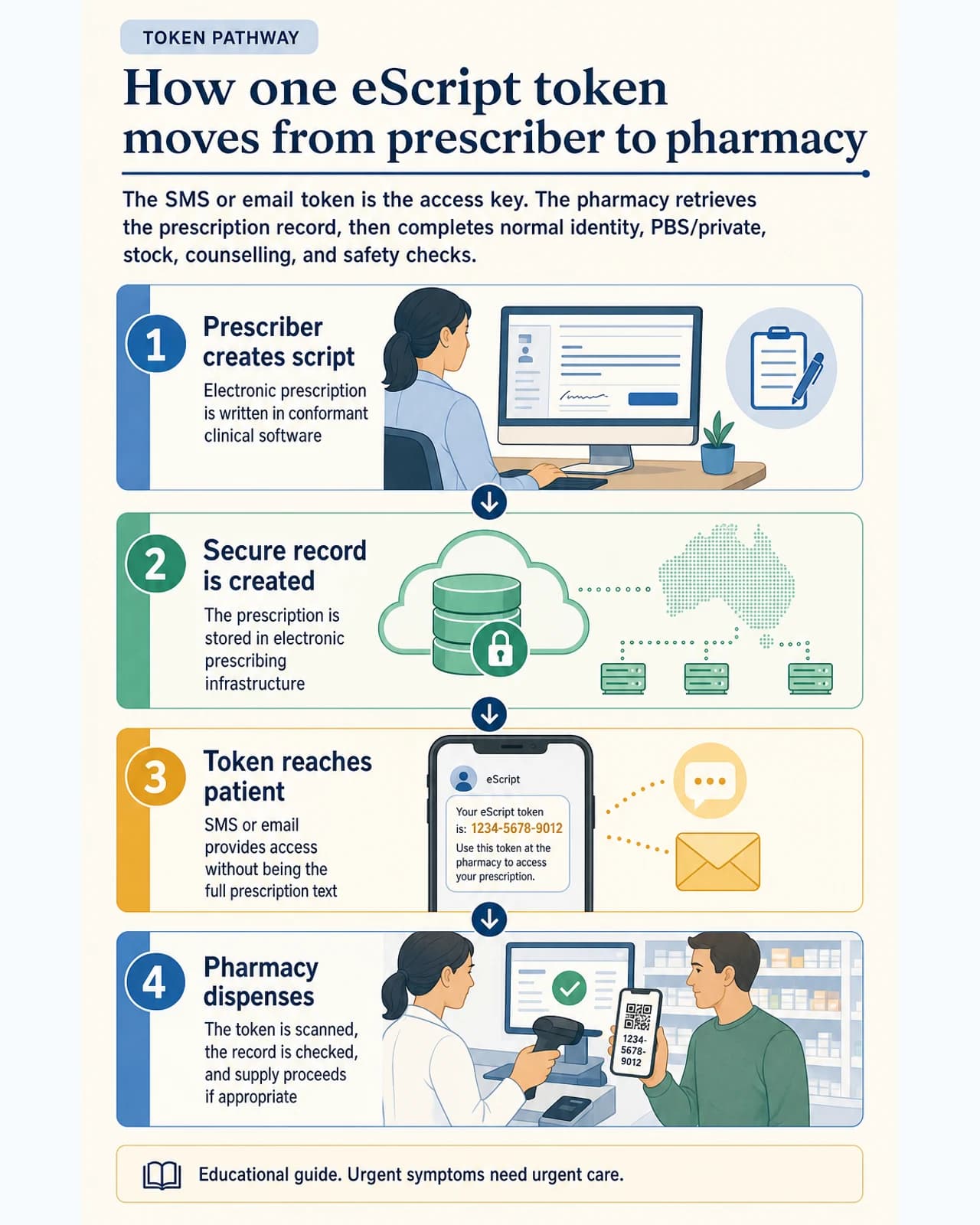
Australian eScripts can be delivered as SMS or email tokens or managed through an Active Script List. Learn what the pharmacy sees, how repeats work, when paper still matters, and what to do if a token is lost.
InstantMed Medical Team
9 min read
Generic vs Brand Name Medications in Australia
Generic medicines in Australia must meet TGA standards for active ingredient, quality, and bioequivalence. Learn what can differ between brands, how pharmacy substitution works, and which medicine types need extra caution.
InstantMed Medical Team
8 min read
Medications That Cannot Be Prescribed Online
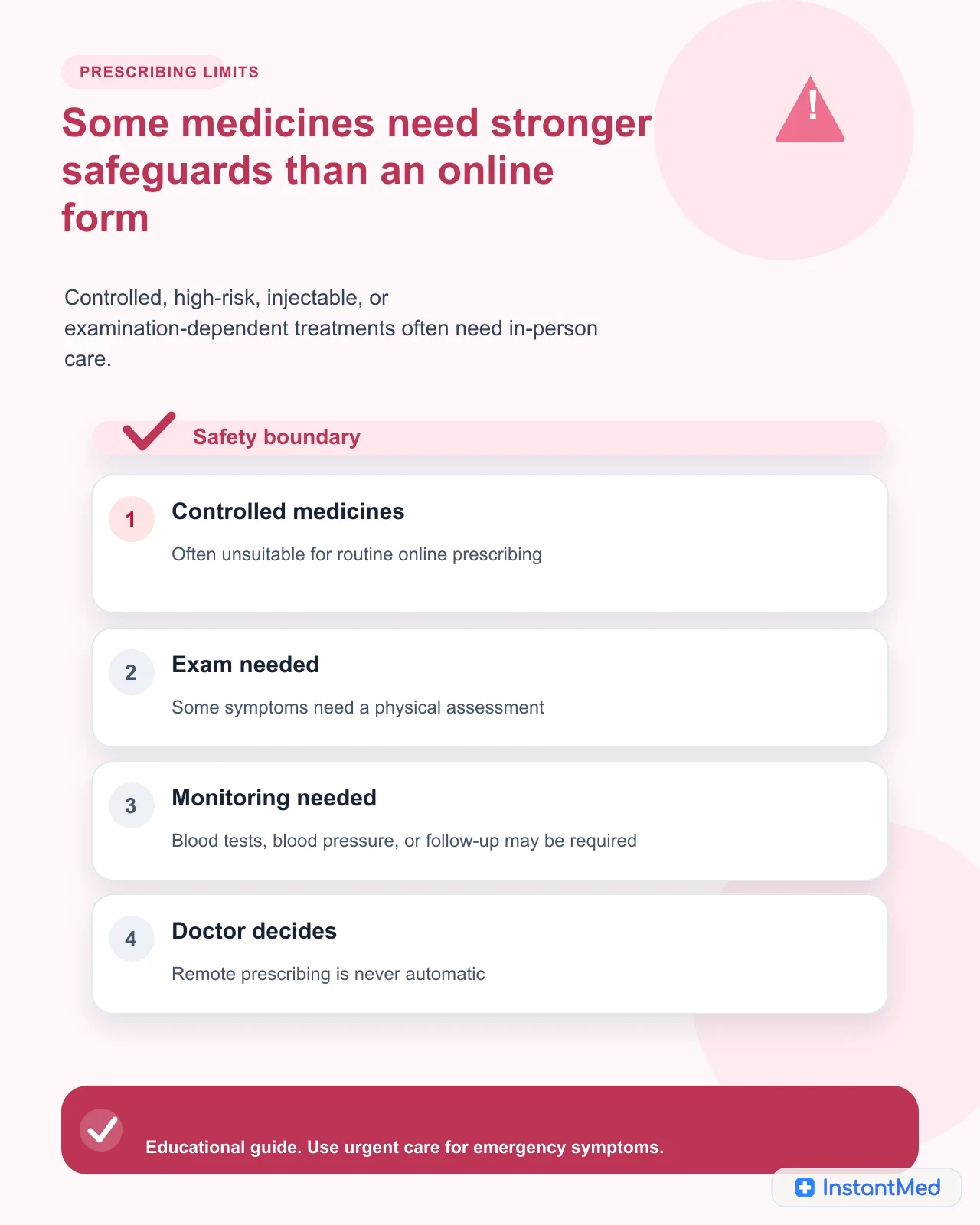
Telehealth can prescribe most common medications for established patients. Schedule 8 controlled drugs, new medications requiring examination, and several other categories require in-person assessment. Here is the complete picture.
InstantMed Medical Team