Loading article
Back to Health Guides
Metformin for Type 2 Diabetes: What Australians Need to Know
A practical guide to Australia's most prescribed diabetes medication - how it works, dosing, side effects, and when it isn't enough.
7 min read
·Updated 11 June 2026
·Doctor Reviewed
AHPRA Verified
In this article
- 1How Metformin Works
- 2Dosing and Formulations
- 3Side Effects
- 4Kidney Function and Dose Adjustment
- 5PBS Status and Cost
Medical information only. This article is for general information and does not constitute medical advice. Treatment decisions are made by an AHPRA-registered doctor after reviewing your circumstances.
Review
InstantMed Clinical Team
Clinical governance review for guide content
Updated
11 June 2026
General information only, not personal medical advice.
Metformin is the most prescribed medication for type 2 diabetes worldwide and has been a cornerstone of treatment for over 60 years. According to the Australian Institute of Health and Welfare (AIHW), approximately 1.3 million Australians were estimated to have type 2 diabetes in 2022, with the total number including undiagnosed cases estimated at approximately 1.5 million. When combined with those managing blood glucose through lifestyle only, type 2 diabetes affects a substantial proportion of the adult Australian population.
The Australian Therapeutic Guidelines (eTG Complete) and the Royal Australian College of General Practitioners (RACGP) Management of Type 2 Diabetes: A Handbook for General Practice recommend metformin as the first-line pharmacological therapy for type 2 diabetes, alongside lifestyle modification, provided kidney function is adequate.
How Metformin Works
Metformin is a biguanide that works primarily through three mechanisms, all reducing blood glucose without stimulating insulin secretion directly:
- Reduces hepatic glucose output: Metformin suppresses gluconeogenesis (glucose production) and glycogenolysis (glycogen breakdown) in the liver. This is the primary and most clinically significant mechanism.
- Improves peripheral insulin sensitivity: Enhances insulin-stimulated glucose uptake in muscle and adipose tissue.
- Modest intestinal effect: Slightly reduces glucose absorption from the gastrointestinal tract.
Because metformin does not stimulate insulin release, it carries a very low risk of hypoglycaemia when used alone. It also does not cause weight gain and typically produces modest weight reduction (approximately 1-2kg on average in clinical trials).
Dosing and Formulations
Metformin is available in two main formulations:
| Formulation | Strengths | Dosing | Notes |
|---|---|---|---|
| Immediate-release (IR) | 500mg, 850mg, 1000mg | 2-3 times daily with meals | Older formulation; higher GI side effect rate |
| Modified-release (MR/XR) | 500mg, 1000mg | Once daily (with evening meal) | Slower absorption reduces GI effects |
Standard dosing approach (per eTG):
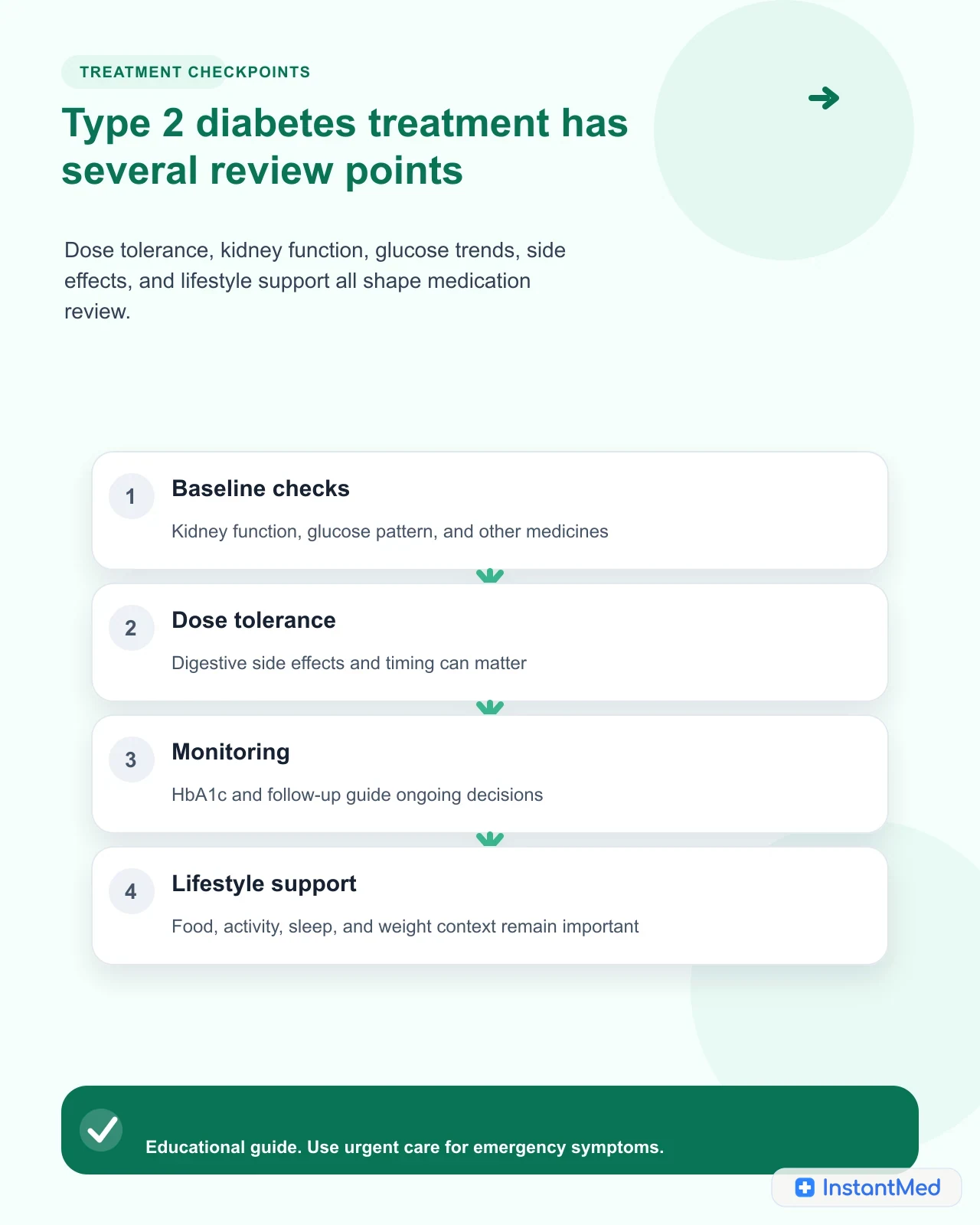
- Starting dose: 500mg once or twice daily with food
- Gradual escalation: increase by 500mg every 1-2 weeks as tolerated
- Target dose: 1500-2000mg daily (the dose range achieving maximum glucose-lowering effect)
- Maximum dose: 3000mg daily (IR) or 2000mg daily (MR)
The slow escalation is clinically important. Starting at the target dose causes more gastrointestinal side effects and reduces long-term adherence. Most patients tolerate metformin well when the dose is built up gradually.
Side Effects
Common (10-30% of patients):
- Nausea, particularly when starting or increasing the dose
- Diarrhoea or loose stools (the most frequent reason for discontinuation)
- Abdominal cramping or bloating
- Metallic taste
- Reduced appetite
Gastrointestinal side effects typically improve after 2-4 weeks as the gut microbiome adjusts. Taking metformin with food helps significantly. Switching from the immediate-release to modified-release (MR/XR) formulation often resolves persistent GI side effects -- a commonly underused strategy.
Rare but important:
- Vitamin B12 deficiency: Occurs in 5-10% of long-term users, according to published studies including a review in Diabetes Care (2013). Annual B12 monitoring is recommended after 3+ years of use. Symptoms may be subtle (fatigue, neuropathy). Supplementation with B12 is straightforward if deficiency develops.
- Lactic acidosis: Extremely rare (estimated 3-10 cases per 100,000 patient-years) but potentially fatal. Risk is meaningfully elevated by severe kidney impairment, liver disease, alcohol excess, or acute illness with dehydration. Proper dose adjustment and temporary withholding in at-risk situations makes this risk very low in practice.
Important Warning
Warning: Metformin should be temporarily withheld during acute illness with significant vomiting, diarrhoea, or dehydration; before and after surgery requiring general anaesthesia; and before procedures involving iodinated contrast agents (CT scans with contrast, coronary angiography). Your doctor or pharmacist will advise specifically on when to pause and restart.
Kidney Function and Dose Adjustment
Metformin is cleared by the kidneys unchanged. If kidney function deteriorates, metformin can accumulate and increase lactic acidosis risk. Australian dosing guidance aligns with TGA prescribing information and eTG:
| eGFR (mL/min/1.73m²) | Recommended action |
|---|---|
| > 60 | Full dose permitted (up to 2000-3000mg daily) |
| 45-60 | Use with caution; maximum 1000mg daily; review 3-6 monthly |
| 30-45 | Reduce dose significantly; seek specialist input; consider alternatives |
| < 30 | Contraindicated -- metformin must be stopped |
Annual kidney function monitoring (eGFR and serum creatinine) is part of standard type 2 diabetes management. People with rapidly declining kidney function need more frequent monitoring.
PBS Status and Cost
Metformin is PBS-listed for type 2 diabetes, making it among the most affordable glucose-lowering medications available in Australia.
| Patient type | PBS co-payment (PBS, 2026) |
|---|---|
| General patient | Up to $25.00 per prescription |
| Concession card holder | Up to $7.70 per prescription |
Metformin is one of the lowest-cost diabetes medicines, and generic versions are widely available. Your pharmacist can confirm the price of the exact item dispensed.
Generic metformin is widely available from all major Australian manufacturers and is bioequivalent to branded versions (Glucophage, Diaformin). The generic option is typically priced at or near the PBS co-payment floor.
Metformin and PCOS
Metformin is used off-label in polycystic ovary syndrome (PCOS), particularly for insulin-resistant PCOS with irregular cycles, anovulation, or difficulty conceiving. The Endocrine Society Clinical Practice Guideline on PCOS and the Australian-based Jean Hailes PCOS Clinical Practice Guidelines both note that metformin can improve menstrual regularity and fertility outcomes in women with PCOS, though it is not first-line therapy for all PCOS presentations.
In the PCOS context, metformin is prescribed at diabetes-equivalent doses, usually starting at 500mg once daily and increasing to 1000-1500mg daily depending on response and tolerance. PBS listing does not cover PCOS, so prescriptions for this indication are issued as private prescriptions.
Safety boundary
Severe dehydration, confusion, chest pain, vomiting, very high readings, or infection signs should not wait.
Lifestyle Alongside Metformin
The RACGP and eTG emphasise that metformin is an addition to, not a replacement for, lifestyle management. Diet, exercise, and weight management remain the foundation of type 2 diabetes treatment.
- Physical activity: The RACGP Handbook recommends at least 150 minutes per week of moderate-intensity aerobic activity plus muscle-strengthening exercise on 2 days per week
- Dietary management: The Diabetes Australia Healthy Eating Guidelines recommend reduced refined carbohydrates, increased dietary fibre, and Mediterranean-pattern eating
- Weight management: Even 5-10% body weight reduction produces clinically significant improvements in HbA1c and cardiovascular risk markers
- Monitoring: HbA1c every 3-6 months initially, then annually when stable; annual kidney function, B12 after 3+ years of metformin use, lipids, blood pressure
When Metformin Is Not Enough
If metformin alone does not achieve glycaemic targets -- typically HbA1c below 53 mmol/mol (7%) per RACGP guidelines -- additional medications are considered. The 2023 RACGP Handbook updated guidance prioritises agents with established cardiorenal benefits:
- SGLT2 inhibitors (empagliflozin, dapagliflozin, canagliflozin): Preferred second-line agents for patients with established cardiovascular disease or chronic kidney disease. PBS-listed for type 2 diabetes.
- GLP-1 receptor agonists (semaglutide, dulaglutide): Significant HbA1c reduction plus weight loss and cardiovascular benefit. PBS-listed for specific indications.
- DPP-4 inhibitors (sitagliptin, saxagliptin): Well-tolerated, modest HbA1c effect, weight-neutral.
- Sulfonylureas (gliclazide): Older class, effective, low cost (PBS-listed), but associated with modest weight gain and hypoglycaemia risk.
The choice of second-line agent depends on individual factors: cardiovascular risk, kidney function, weight, cost, and patient preference. This decision should be made with your GP or endocrinologist.
Getting Metformin Prescribed
Metformin is a Schedule 4 (prescription-only) medication. For initial diagnosis and treatment commencement, an in-person GP consultation is recommended -- baseline investigations include HbA1c, fasting glucose, kidney function (eGFR), liver function, and lipids.
For ongoing repeat prescriptions in stable, well-managed type 2 diabetes, telehealth is a convenient option. The key requirement is that kidney function has been checked recently and the medication is appropriate to continue at the current dose.
Sources Used In This Guide
- Healthdirect: Type 2 diabetes
- Diabetes Australia: Managing type 2 diabetes
- Australian Prescriber: type 2 diabetes management
- RACGP: Management of type 2 diabetes
- TGA: Poisons Standard and prescription (Schedule 4) medicines
Frequently Asked Questions
Can metformin help with weight loss?
Metformin typically causes modest weight loss (approximately 1-2kg on average) rather than weight gain, which distinguishes it from some other diabetes medications such as sulfonylureas and insulin. However, it is not approved or recommended as a weight-loss medication. The effect is modest and variable between individuals.
Can I drink alcohol while taking metformin?
Moderate alcohol consumption is generally acceptable, but heavy or binge drinking significantly increases the risk of lactic acidosis and can cause hypoglycaemia. Discuss your alcohol intake with your doctor. The Australian Guidelines to Reduce Health Risks from Drinking Alcohol recommend no more than 10 standard drinks per week.
Do I need to test my blood sugar on metformin alone?
If you take metformin as monotherapy (without insulin or sulfonylureas), routine home blood glucose monitoring is generally not necessary or recommended, as metformin rarely causes hypoglycaemia. Your HbA1c test every 3-6 months provides a better picture of overall glycaemic control.
Is metformin safe long-term?
Yes. Metformin has over 60 years of clinical use and is one of the most extensively studied medications in medicine. Long-term B12 monitoring (after 3+ years of use) and kidney function monitoring are recommended. The RACGP guidelines support its ongoing use in patients with adequate kidney function.
What if I miss a dose?
Take it as soon as you remember, unless it is nearly time for your next dose. Do not take a double dose. Occasional missed doses will not cause harm, but consistent adherence supports stable blood glucose control.
InstantMed Medical Team
Related Articles
10 min read
How eScripts Work in Australia: Electronic Prescriptions Explained
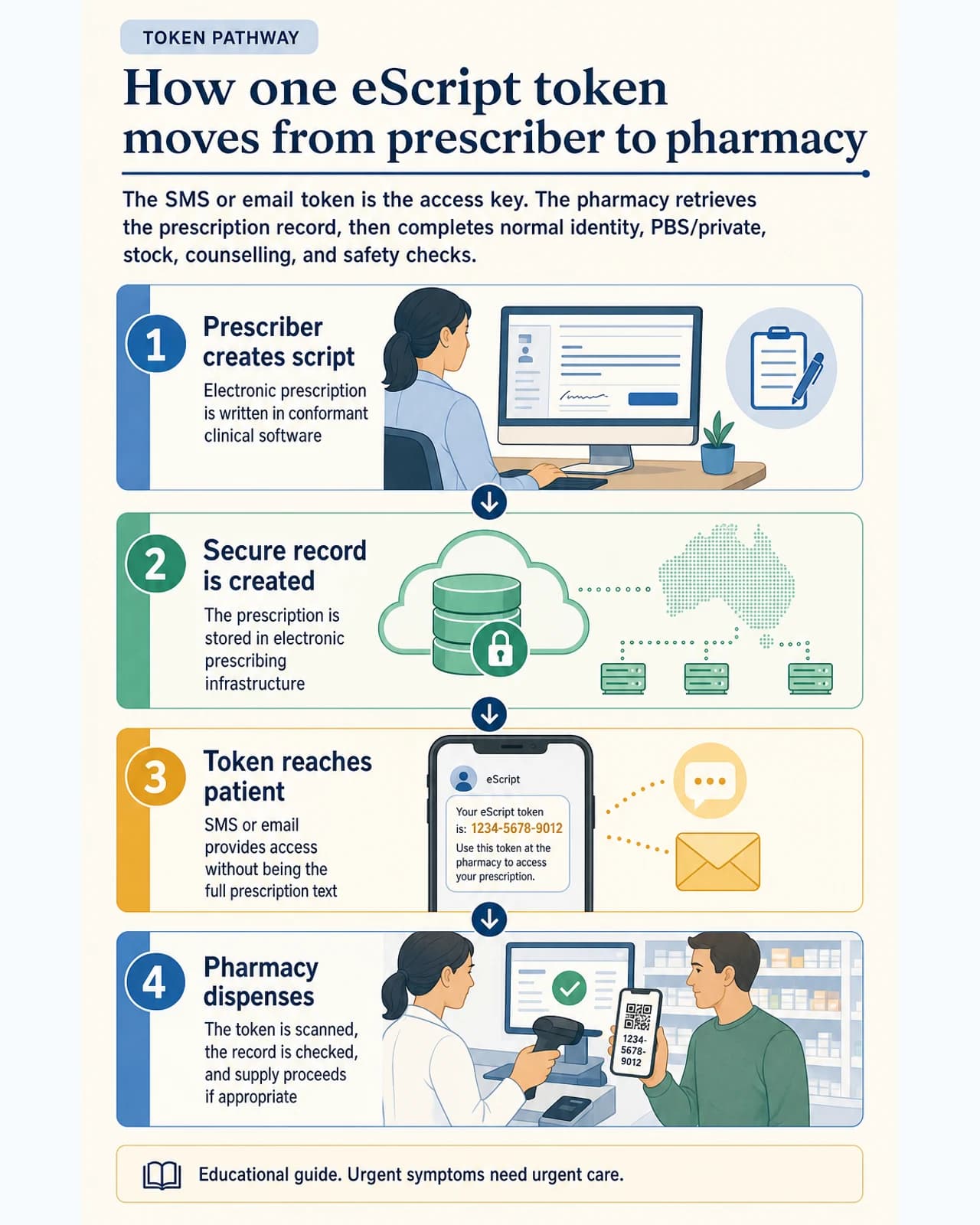
Australian eScripts can be delivered as SMS or email tokens or managed through an Active Script List. Learn what the pharmacy sees, how repeats work, when paper still matters, and what to do if a token is lost.
InstantMed Medical Team
8 min read
How to Get a Prescription Online in Australia
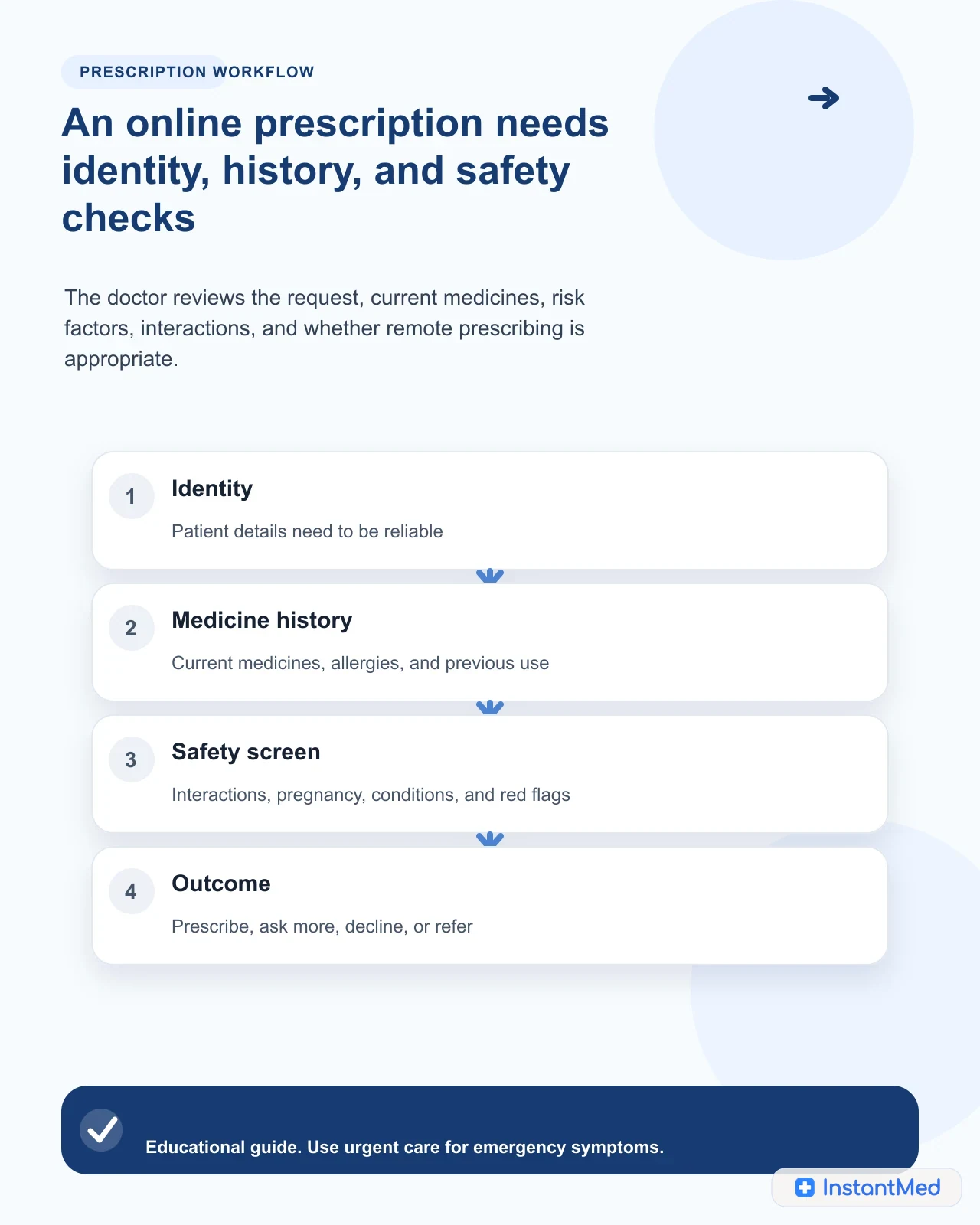
Online prescriptions are legal and safe when issued by AHPRA-registered doctors following Australian prescribing standards. This guide covers the full process, from submitting your request to filling your eScript at any pharmacy.
InstantMed Medical Team
9 min read
Generic vs Brand Name Medications in Australia
Generic medicines in Australia must meet TGA standards for active ingredient, quality, and bioequivalence. Learn what can differ between brands, how pharmacy substitution works, and which medicine types need extra caution.
InstantMed Medical Team