Loading article
Back to Health Guides
Can You Get Antibiotics Online in Australia?
Antibiotics are prescription-only in Australia. A doctor can prescribe one online only after a proper assessment, and some UTI cases may fit pharmacist care depending on eligibility and local rules.
11 min read
·Updated 5 July 2026
·Doctor Reviewed
AHPRA Verified

In this article
- 1The basic rule: antibiotics are prescription-only
- 2How online antibiotic prescribing works
- 3When a pharmacist can help with a UTI
- 4Which infection symptoms suit remote assessment
- 5Red flags that need in-person or urgent care
Medical information only. This article is for general information and does not constitute medical advice. Treatment decisions are made by an AHPRA-registered doctor after reviewing your circumstances.
Review
InstantMed Clinical Team
Clinical governance review for guide content
Updated
5 July 2026
General information only, not personal medical advice.
Jump to section
1The basic rule: antibiotics are prescription-only2How online antibiotic prescribing works3When a pharmacist can help with a UTI4Which infection symptoms suit remote assessment5Red flags that need in-person or urgent care6Why antibiotics are often not prescribed7Why questionnaire-only prescribing is a risk8What antibiotics can cost in 20269What happens if a prescription is issued10How to prepare for an online assessment11How to use antibiotics safely12How to spot an unsafe online antibiotic seller13Related Guides14Sources
Antibiotics are prescription-only medicines in Australia. You cannot legally buy the common oral antibiotics used for chest, throat, urinary, skin, sinus, dental, or ear infections over the counter.
An online doctor can prescribe an antibiotic when the assessment supports it. That decision still needs a real clinical review: symptoms, timing, risk factors, allergies, current medicines, red flags, and whether examination or testing is needed. Telehealth changes the channel. It does not turn antibiotics into a product you choose from a menu.
The basic rule: antibiotics are prescription-only
The antibiotics most people mean when they search online are tablets, capsules, liquids, or sometimes drops for a suspected bacterial infection. Those medicines generally require a valid prescription before a pharmacy can dispense them.
That rule applies whether the assessment happens in a clinic, by phone, by video, or through a telehealth service. A previous prescription, a familiar medicine name, or a similar illness last year does not authorise a new supply.
There are narrow exceptions that can cause confusion:
- Some antiseptics and wound-care products are available without a prescription, but they are not the same as oral antibiotics.
- Some pharmacist-only products may be supplied after a pharmacist checks suitability.
- Some pharmacists can provide treatment for uncomplicated UTIs, but that depends on local rules and eligibility.
How online antibiotic prescribing works
A safe online antibiotic pathway is clinical, not transactional.
- 1
You provide the symptom story: what started, when it changed, severity, fever, pain location, exposure, and what you have already tried.
- 2
The prescriber checks risk factors: allergies, pregnancy or breastfeeding, kidney or liver disease, immune suppression, diabetes, recent antibiotics, and current medicines.
- 3
The prescriber decides whether the presentation can be assessed remotely.
- 4
If an antibiotic is appropriate, the prescriber chooses the medicine, dose, and duration.
- 5
The prescription is usually issued as an electronic prescription token.
- 6
A pharmacist checks the prescription and supplies the medicine if dispensing requirements are met.
The prescriber may also decline antibiotics, ask follow-up questions, recommend testing, or send you for in-person care. That is not a failed online service. It is the safety boundary working.
When a pharmacist can help with a UTI
Healthdirect says some pharmacists can provide treatment for UTIs, depending on where you live in Australia and whether you meet the eligibility rules. This is not the same as buying antibiotics over the counter. It is a pharmacist-led assessment under state or territory rules.
Pharmacist UTI care is deliberately narrow. It is generally aimed at uncomplicated lower urinary tract symptoms in eligible adults. Healthdirect notes that men, children, and pregnant people cannot get antibiotics for a UTI without seeing a doctor.
Pharmacist care is less likely to fit when there are red flags such as fever, flank or back pain, vomiting, pregnancy, recurrent infections, recent treatment failure, kidney disease, or symptoms in a child or male patient. In those cases, doctor assessment is safer because the concern is no longer a simple bladder infection.
If you think you have a UTI, our guide on getting UTI treatment in Australia explains the uncomplicated-versus-complicated distinction in more detail.
Which infection symptoms suit remote assessment
The useful question is not simply "can I get antibiotics online?" It is "can this infection be assessed safely without an examination, and is an antibiotic likely to help?"
| Presentation | What remote review may clarify | When remote-only care is weak |
|---|---|---|
| Urinary symptoms | Burning, frequency, urgency, pregnancy status, fever check, kidney-risk screen | Flank pain, fever, vomiting, pregnancy, recurrent infection, male urinary symptoms, kidney disease |
| Sinus symptoms | Duration, double-worsening pattern, allergy pattern, facial pressure, fever severity | Eye swelling, vision change, severe headache, confusion, early cold-like symptoms |
| Skin infection | Size, spread, photos, wound history, bite history, pain, fever | Abscess, deep wound, animal bite, burn, diabetic foot concern, rapidly spreading redness |
| Throat symptoms | Fever, cough absence, swollen glands, exposure, testing need | Trouble breathing, trouble swallowing, drooling, neck swelling, dehydration, possible glandular fever |
| Chest symptoms | Cough duration, fever, sputum, wheeze, risk factors, deterioration pattern | Breathlessness, chest pain, suspected pneumonia, frailty, pregnancy, COPD, immune risk |
Decision guide
Where online antibiotic care fits
May fit telehealth
- Mild, localised symptoms with a clear history.
- No emergency symptoms or high-risk medical context.
- The doctor can ask enough follow-up questions to make a safe decision.
Needs in-person care
- Examination, swab, urine test, imaging, drainage, or wound care may change the decision.
- Symptoms are recurrent, unclear, or not improving after recent antibiotics.
- The patient is pregnant, a child, immunocompromised, frail, or medically complex.
Urgent care
- Severe illness, confusion, fainting, chest pain, breathing trouble, or rapid deterioration.
- Possible sepsis, kidney infection, pneumonia, deep infection, eye involvement, or serious wound.
- Call 000 for emergency symptoms.
Red flags that need in-person or urgent care
Telehealth is not a substitute for examination when examination is the point. Seek in-person or urgent care for:
- Severe illness, confusion, fainting, or rapidly worsening symptoms
- High fever with shaking chills, severe weakness, or concern for sepsis
- Chest pain, shortness of breath, blue lips, or severe headache
- Eye pain, vision change, facial swelling, or significant ear pain
- Deep wounds, animal bites, burns, abscesses, or rapidly spreading skin infection
- Flank pain, fever, or vomiting with urinary symptoms
- Infection symptoms during pregnancy or with a weakened immune system
- Significant infection symptoms in a young child or a frail older person
- Symptoms worsening despite recent antibiotics
If symptoms are severe or rapidly worsening, do not wait for an online antibiotic decision. Use urgent in-person care, or call 000 for emergency symptoms such as difficulty breathing, chest pain, or confusion.
Why antibiotics are often not prescribed
Antibiotics treat bacterial infections. They do not work for viral infections. Healthdirect notes that bacterial and viral infections can look similar, which is why symptom history matters.
Antibiotics are usually not helpful for:
Red flags
Severe illness, breathing symptoms, pregnancy, children, immune risk, eye symptoms, and serious wounds usually need in-person care.
- Colds and influenza
- COVID-19
- Most acute coughs
- Many sore throats
- Many early sinus symptoms
- Viral gastroenteritis
In those situations, antibiotics can add harm without treating the cause. Side effects include diarrhoea, thrush, rashes, allergy, interactions, and antibiotic-associated complications. Overuse also contributes to antimicrobial resistance.
Why questionnaire-only prescribing is a risk
The Medical Board of Australia's telehealth guidance says telehealth is not appropriate for all consultations and should not be treated as a routine substitute for in-person care. Ahpra has also highlighted concerns about prescribing that relies only on text, email, or online questionnaires instead of a face-to-face, video, or telephone consultation.
That matters for antibiotics because infection assessment often depends on how unwell someone appears, whether symptoms are localised or systemic, and whether there is enough information to separate likely bacterial infection from viral illness, inflammation, allergy, injury, or a condition that needs examination.
Structured forms and photos can support care. They should not become a rubber stamp.
What antibiotics can cost in 2026
Many commonly used antibiotics are PBS-listed when prescribed for eligible indications. From 1 January 2026:
| Cost layer | What it means |
|---|---|
| PBS general co-payment | Medicare card holders pay up to $25 for most PBS medicines before the Safety Net |
| PBS concession co-payment | Eligible concession card holders pay up to $7.70 before the Safety Net |
| PBS Safety Net | 2026 thresholds are $1,748.20 for general patients and $277.20 for concession patients |
| Private prescriptions | Non-PBS supply, brand premiums, and pharmacy pricing can change the final amount |
| Consultation fee | The assessment fee is separate from the medicine price |
PBS limits are not a promise that every antibiotic supply will cost the same amount. The final pharmacy price depends on the medicine, PBS eligibility, brand premiums, and dispensing context.
What happens if a prescription is issued
If an antibiotic is appropriate, the prescription is usually issued as an electronic prescription token. You receive the token by SMS or email and present it to an Australian pharmacy that supports eScripts. The pharmacist checks the prescription, medicine, interactions, supply rules, and counselling points before dispensing.
The token is not the assessment. It is the supply mechanism after a prescriber has already decided to issue a prescription. If repeats are issued, they may be managed electronically or through an Active Script List. For the full mechanics, see how eScripts work.
Do not share antibiotics, keep leftovers for later, or use an old antibiotic for a new illness. The right medicine depends on the infection site, likely organism, resistance patterns, allergies, pregnancy status, other medicines, and your individual risks.
How to prepare for an online assessment
A better-prepared request leads to a faster, safer decision. Before you start, gather:
- Your symptom timeline and how things have changed
- Any temperature readings
- Current medicines, including over-the-counter products and supplements
- Allergy details, especially penicillin or cephalosporin reactions and what happened
- Pregnancy or breastfeeding status
- Relevant conditions such as kidney disease, liver disease, diabetes, or immune suppression
- Names and dates of antibiotics taken in the last three months
- Clear, well-lit photos if the issue is skin-related
- Any recent urine, swab, pathology, or imaging results
Prescription pathway
A valid prescription connects clinical assessment to pharmacy supply. Websites bypassing that step are unsafe.
Be ready for one of four outcomes: an antibiotic is prescribed; more information is requested; testing or in-person assessment is recommended; or antibiotics are declined because they are unlikely to help or unsafe to issue remotely.
How to use antibiotics safely
If antibiotics are prescribed:
- Follow the directions exactly, and ask what to do if you miss a dose.
- Check whether food, alcohol, sun exposure, or other medicines matter.
- Seek help for rash, facial or throat swelling, breathing difficulty, severe diarrhoea, or worsening illness.
- Do not stop early unless your prescriber tells you to.
- Arrange review if symptoms are not improving in the expected timeframe.
If you are unsure why a particular antibiotic was chosen, ask. The answer should make sense for your infection, risk factors, and safety profile.
How to spot an unsafe online antibiotic seller
Avoid any website or seller that:
- Offers antibiotics without a prescription
- Lets you choose the antibiotic yourself
- Guarantees antibiotics before any assessment
- Ships medicines from unclear overseas sources
- Hides the prescriber's identity
- Uses fake urgency or "no doctor needed" claims
- Does not ask about allergies, pregnancy, kidney function, or current medicines
The risk is not only legal. Counterfeit, inappropriate, expired, or poorly selected antibiotics can delay proper care and increase harm.
Related Guides
- Getting UTI treatment in Australia
- When are antibiotics actually appropriate?
- Chest infections and antibiotics
- A practical guide to amoxicillin in Australia
- How eScripts work in Australia
Sources
- TGA: Scheduling basics of medicines and chemicals in Australia
- TGA: The Poisons Standard
- Healthdirect: Antibiotics
- Healthdirect: Bacterial vs viral infection
- Healthdirect: Urinary tract infection (UTI)
- RACGP newsGP: UTI pharmacy prescribing goes nationwide
- Australian Government AMR: Use antibiotics only when suitable
- Australian Commission on Safety and Quality in Health Care: Antimicrobial stewardship
- Medical Board of Australia: Telehealth consultations with patients
- Ahpra: Updated telehealth guidance
- Australian Digital Health Agency: Electronic prescriptions
- Services Australia: PBS Safety Net thresholds
- Australian Government Department of Health: PBS co-payments
---
Frequently Asked Questions
Can you buy antibiotics over the counter in Australia?
No. The common oral and systemic antibiotics used for chest, throat, urinary, skin, sinus, dental, and ear infections require a valid prescription in Australia. Some topical or pharmacist-supplied products are exceptions, but they do not make antibiotics self-selectable over the counter.
Can online doctors prescribe antibiotics in Australia?
Yes, when the prescriber is appropriately registered and decides antibiotics are clinically appropriate after assessing your history, risks, and red flags. Telehealth changes the communication channel, not the requirement for a real clinical decision. The doctor can also decline or redirect you to in-person care.
Can a pharmacist prescribe antibiotics for a UTI?
Sometimes. Healthdirect says some pharmacists can provide treatment for UTIs, depending on where you live and whether you meet the eligibility rules. Men, children, pregnant people, and anyone with red flags still need a doctor.
How much do antibiotics cost in Australia?
For PBS-listed antibiotics in 2026, Medicare card holders generally pay up to $25 and concession card holders pay up to $7.70 per item before the PBS Safety Net. The consultation fee is separate, and private prescriptions, brand premiums, and pharmacy pricing can change the final amount.
Can I choose which antibiotic I want online?
No. The prescriber selects the medicine, dose, and duration based on the likely infection, your allergies, pregnancy or breastfeeding status, other medicines, recent antibiotic use, and resistance patterns. Asking for a specific antibiotic by name does not guarantee it is the right or safe choice.
Are antibiotics useful for colds, flu, or most sore throats?
No. Antibiotics work against bacteria, not viruses. Colds, influenza, COVID-19, and many sore throats and coughs are viral, so antibiotics usually add side effects and resistance risk without treating the cause.
Can I take leftover antibiotics from last time?
No. Leftovers may be the wrong antibiotic, wrong dose, an incomplete course, expired, or unsafe with your current situation, and they skip the check of whether you need an antibiotic at all. Return unused medicines to any pharmacy for safe disposal.
Do you need a prescription for antibiotics in Australia?
Yes, for the common oral and systemic antibiotics. A valid prescription from an authorised prescriber is required before a pharmacy can dispense them, whether the assessment happens in a clinic, by phone, or by video.
InstantMed Medical Team
Related Articles
8 min read
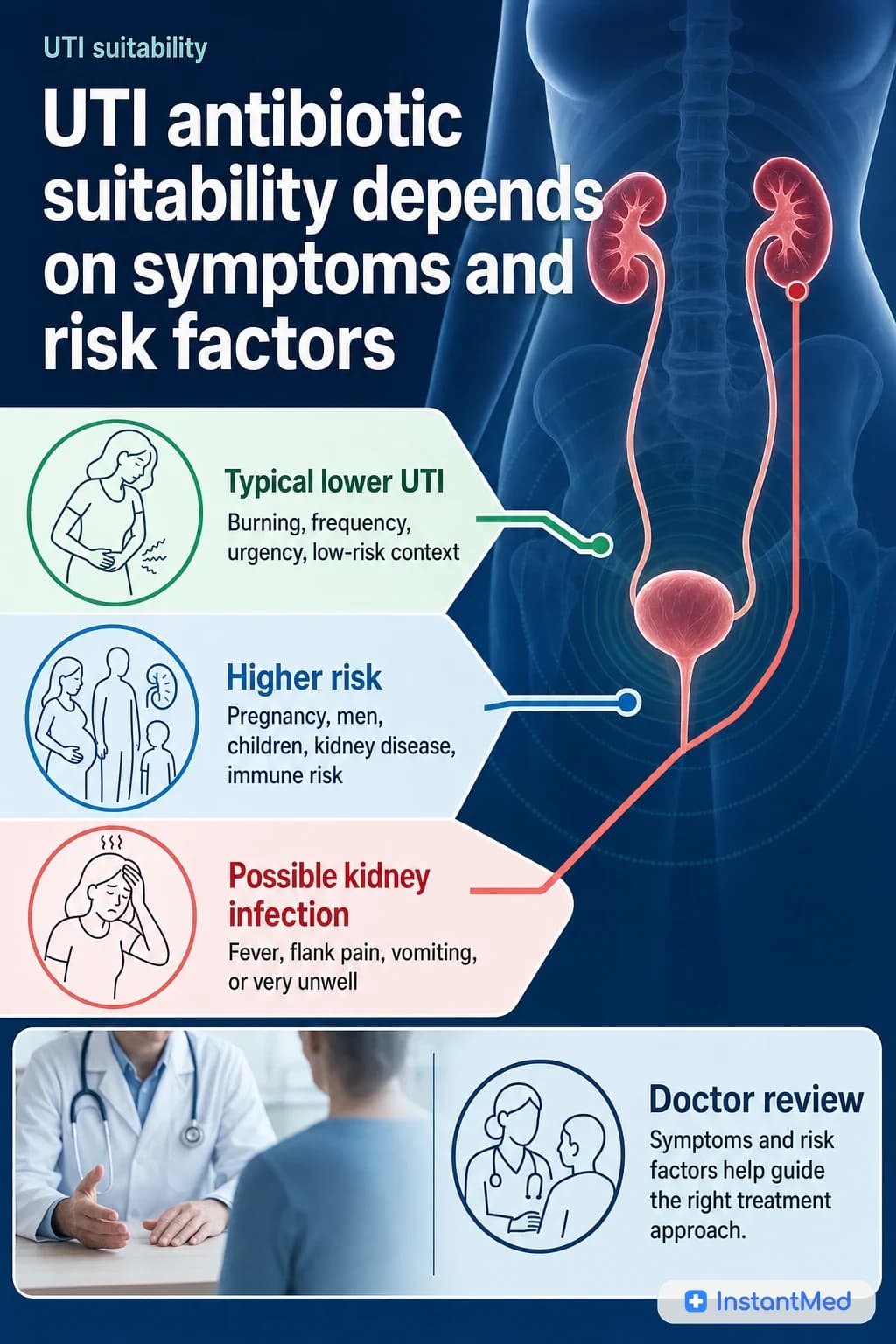
UTI Antibiotics Online Australia: Same-Day Prescription Without a Clinic Visit
Urinary tract infections are one of the most common reasons Australians seek same-day antibiotic prescriptions. Telehealth can assess and prescribe for uncomplicated UTIs in non-pregnant women - find out what qualifies and what the online assessment covers.
InstantMed Medical Team

8 min read
When Antibiotics Are Appropriate: Bacterial vs Viral Infections
Antibiotics treat bacterial infections, not viruses. This guide explains when antibiotics may be appropriate, when they are usually avoided, and what responsible use looks like.
InstantMed Medical Team
8 min read
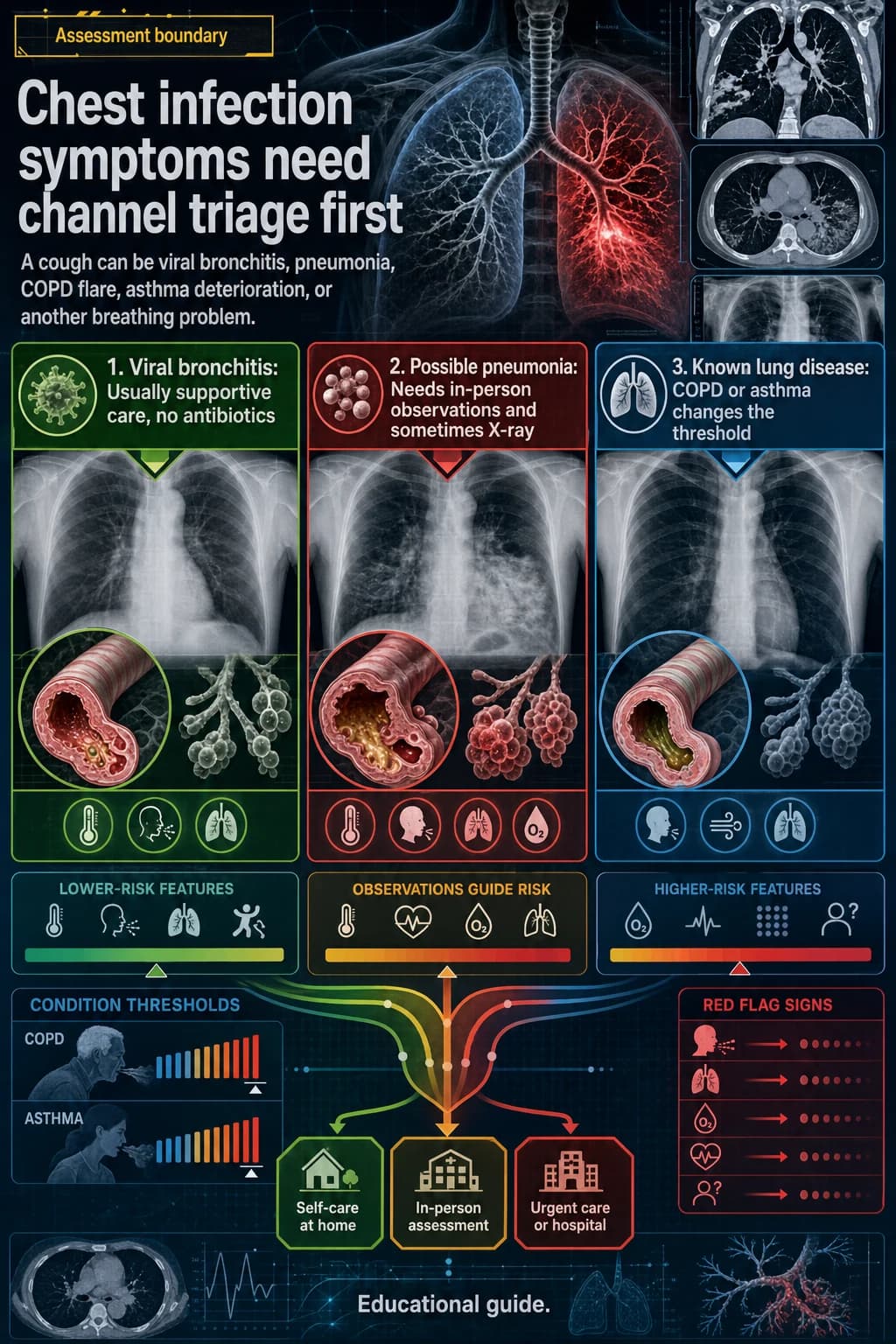
Chest Infections and Antibiotics: When Online Assessment Is Appropriate
Chest infection symptoms do not automatically mean antibiotics are needed. Learn how bronchitis, pneumonia, red flags, sputum colour, and telehealth limits shape the safest pathway.
InstantMed Medical Team