Loading article
Back to Health Guides
When Antibiotics Are Appropriate: Bacterial vs Viral Infections
How clinicians decide when antibiotics help, when they do not, and why resistance changes the threshold for prescribing.
8 min read
·Updated 10 May 2026
·Doctor Reviewed
AHPRA Verified
In this article
- 1The Core Distinction
- 2What Doctors Are Really Deciding
- 3When Antibiotics May Be Appropriate
- 4When Antibiotics Are Usually Not Appropriate
- 5Watchful Waiting Is Not Doing Nothing
Medical information only. This article is for general information and does not constitute medical advice. Treatment decisions are made by an AHPRA-registered doctor after reviewing your circumstances.
Review
InstantMed Clinical Team
Clinical governance review for guide content
Updated
10 May 2026
General information only, not personal medical advice.
Jump to section
1The Core Distinction2What Doctors Are Really Deciding3When Antibiotics May Be Appropriate4When Antibiotics Are Usually Not Appropriate5Watchful Waiting Is Not Doing Nothing6Symptoms That Need Prompt Assessment7Why Unnecessary Antibiotics Cause Harm8Antimicrobial Resistance9Taking Antibiotics Responsibly10What To Ask Your Doctor Or Pharmacist11Sources
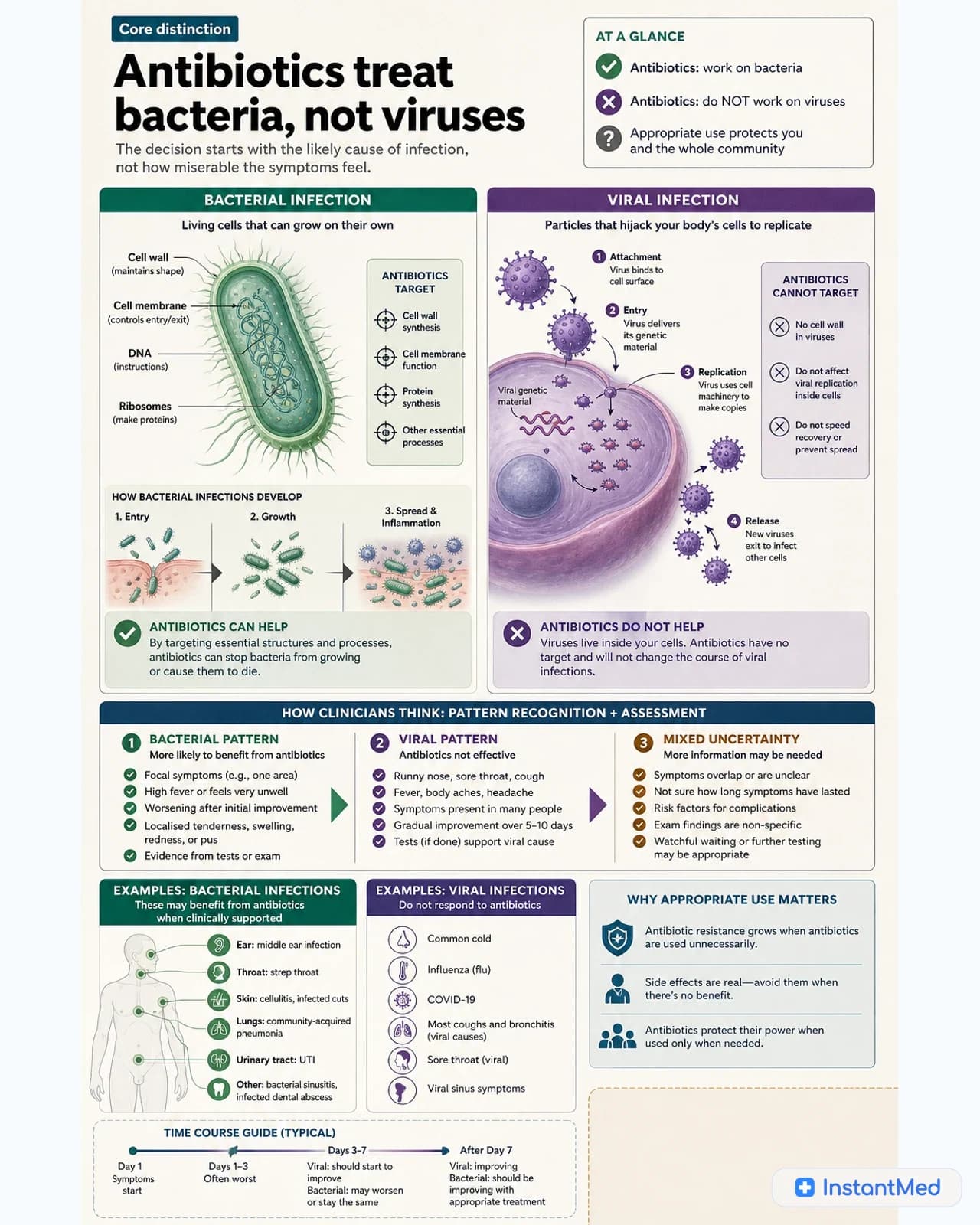
Antibiotics are powerful because they target bacteria. They are also limited because they do not target viruses.
That distinction is the centre of safe prescribing. A person can feel very unwell with a viral infection, and a person can have a bacterial infection that starts subtly. The prescribing decision is not based on misery alone. It is based on the likely cause, severity, risk factors, expected benefit, and potential harm.
The Core Distinction
Antibiotics can help when a susceptible bacterial infection is confirmed or strongly suspected.
They do not help viral infections such as:
- Colds
- Influenza
- COVID-19
- Many sore throats
- Many coughs and bronchitis episodes
- Many early sinus infections
- Glandular fever
Healthdirect and Australian Government antimicrobial resistance guidance both explain the same rule: antibiotics do not work against viruses. Taking them for a viral illness can still cause side effects and can still increase resistance pressure.
Key Information
Feeling worse does not automatically mean the illness is bacterial. A bad viral infection can cause fever, aches, coloured mucus, cough, and exhaustion.
What Doctors Are Really Deciding
The question is not simply, "Do you have an infection?"
The useful clinical questions are:
- Is the likely cause bacterial, viral, fungal, allergic, inflammatory, or something else?
- If bacterial, is an antibiotic likely to improve the outcome?
- Is there a specific antibiotic that fits this site of infection?
- Are tests, examination, imaging, or swabs needed first?
- Does the person have allergy, pregnancy, breastfeeding, kidney, liver, immune, or medicine-interaction risks?
- Is the infection mild enough for community management?
- Is there a safer narrow-spectrum option?
- What review or escalation advice is needed?
That is why two people with similar symptoms can receive different advice. Duration, pattern, age, pregnancy, immune status, medical history, and examination findings can change the decision.
When Antibiotics May Be Appropriate
Antibiotics may be appropriate when bacterial infection is likely and the expected benefit outweighs the risks.
Examples can include selected cases of:
- Lower urinary tract infection
- Bacterial pneumonia
- Streptococcal throat infection when confirmed or strongly suspected
- Cellulitis or infected wounds
- Impetigo when topical or oral treatment is indicated
- Dental infection when used alongside dental assessment and source control
- Some sexually transmitted infections
- Specific post-procedure or high-risk infection scenarios
This list is not a treatment menu. Each category has exceptions. For example, not every sore throat is strep throat, not every cough is pneumonia, and not every skin redness needs oral antibiotics.
When Antibiotics Are Usually Not Appropriate
Antibiotics are usually avoided when the pattern is more likely viral or self-limiting.
Common examples include:
- Common cold symptoms
- Flu-like illness
- COVID-19 without evidence of bacterial complication
- Acute bronchitis in otherwise healthy adults
- Early sinus symptoms without severe or persistent features
- Most sore throats in adults
- Mild ear symptoms that are improving
- Coloured mucus without other bacterial features
Green or yellow mucus is a poor shortcut. It can happen during viral infections because immune cells and inflammation change the colour and thickness of secretions.
Watchful Waiting Is Not Doing Nothing
For many respiratory infections, the safest first approach is observation plus symptom care and clear review advice.
Watchful waiting can include:
Timing
Duration, worsening pattern, fever, breathing symptoms, and risk factors matter more than mucus colour alone.
- Rest and fluids
- Pain or fever relief when suitable
- Nasal saline, honey for cough in adults and children over 12 months, or other symptom measures
- A clear timeframe for review
- A list of symptoms that should trigger urgent care
- Testing when it would change management
This is different from ignoring symptoms. It is a decision to avoid unnecessary antibiotics while keeping a safety net.
Symptoms That Need Prompt Assessment
Some symptoms change the risk profile and should not be managed as a routine antibiotic request.
Seek prompt medical care for:
- Shortness of breath, chest pain, blue lips, or trouble speaking
- Confusion, fainting, severe weakness, or drowsiness
- Fever with rigors, dehydration, or feeling seriously unwell
- Severe or rapidly worsening pain
- Rash that does not blanch, widespread skin peeling, or severe allergic symptoms
- Rapidly spreading redness, swelling, or warmth
- Neck stiffness, severe headache, or light sensitivity
- Flank pain, vomiting, or fever with urinary symptoms
- Infection symptoms during pregnancy, immune suppression, or cancer treatment
- Symptoms in a young child, older frail person, or person with major chronic disease
Important Warning
If symptoms are severe, rapidly worsening, or suggest sepsis, urgent in-person care is safer than waiting for an online prescription decision.
Why Unnecessary Antibiotics Cause Harm
Antibiotics can be necessary and lifesaving. They can also cause harm when used unnecessarily.
Potential harms include:
- Nausea, diarrhoea, stomach pain, or thrush
- Allergic reactions, from rash to anaphylaxis
- Drug interactions
- Disruption of normal gut, skin, or vaginal bacteria
- C. difficile infection in higher-risk patients
- False reassurance when the real problem needs examination or tests
- Selection pressure that helps resistant bacteria survive
The Australian Government explains that using antibiotics for viruses can cause normal body bacteria to develop resistance. The Department of Health also states that the more antibiotics are used, the more chances bacteria have to become resistant and harder to treat.
Antimicrobial Resistance
Antimicrobial resistance means germs change so medicines become less effective against them. With antibiotics, the practical problem is that bacteria survive treatment that would previously have worked.
This matters because resistant infections can mean:
Resistance
Every avoidable course gives bacteria more chances to adapt, spread, and make future infections harder to treat.
- Longer illness
- More complications
- More hospital care
- More expensive or toxic antibiotics
- Fewer treatment options for future infections
- Higher risk for surgery, cancer care, childbirth, and intensive care
The Australian Commission on Safety and Quality in Health Care monitors antimicrobial use and resistance through AURA surveillance. WHO describes antimicrobial resistance as one of the top global public health and development threats.
Taking Antibiotics Responsibly
If antibiotics are prescribed, use them exactly as directed.
Responsible use means:
- Take the dose on the label.
- Follow the prescribed timing and duration.
- Ask the pharmacist if food, alcohol, sun exposure, or interactions matter for that antibiotic.
- Do not stop early because you feel better unless a clinician tells you to.
- Do not extend the course because symptoms linger unless you are reviewed.
- Do not save leftovers.
- Do not share antibiotics.
- Return unused medicines to a pharmacy disposal program.
- Seek review if symptoms worsen, new red flags appear, or there is no expected improvement.
The older slogan "always finish every course no matter what" can be too blunt. The safer modern rule is simpler: follow the prescription and get advice before changing it.
What To Ask Your Doctor Or Pharmacist
Useful questions include:
- What infection are we treating?
- Why is this likely bacterial?
- Are tests or examination needed?
- What improvement should I expect, and when?
- What side effects should I watch for?
- What symptoms mean I need urgent care?
- Does this interact with my regular medicines?
- Is it safe with pregnancy, breastfeeding, kidney disease, or allergy history?
- What should I do if I miss a dose?
These questions make prescribing safer. A good explanation is part of the treatment.
Sources
- Healthdirect: Antibiotics
- Healthdirect: Bacterial vs viral infection
- Australian Government AMR: Use antibiotics only when suitable
- Australian Government AMR: What is AMR?
- Australian Government Department of Health: Antimicrobial Resistance
- Australian Commission on Safety and Quality in Health Care: Antimicrobial Use and Resistance in Australia
- Australian Commission on Safety and Quality in Health Care: Antimicrobial stewardship
- WHO: Antimicrobial resistance fact sheet
Frequently Asked Questions
How does a doctor decide whether antibiotics are appropriate?
The doctor weighs whether the infection is likely bacterial, whether antibiotics are expected to help, whether tests or examination are needed, and whether the patient has allergy, pregnancy, kidney, immune, or interaction risks.
Why will antibiotics not help a cold?
Colds are caused by viruses. Antibiotics work against bacteria, not viruses, so they do not cure a cold, shorten it, or stop it spreading.
Does green or yellow mucus mean I need antibiotics?
No. Mucus colour alone does not prove a bacterial infection. Duration, severity, fever, breathing symptoms, risk factors, and examination findings matter more.
What is antimicrobial resistance?
Antimicrobial resistance happens when germs change so medicines no longer work as well against them. The more antibiotics are used unnecessarily, the more chances bacteria have to become resistant.
Should I always finish the whole antibiotic course?
Take antibiotics exactly as prescribed. Do not stop early, extend treatment, save leftovers, or change the dose without medical advice.
InstantMed Medical Team
Related Articles
8 min read
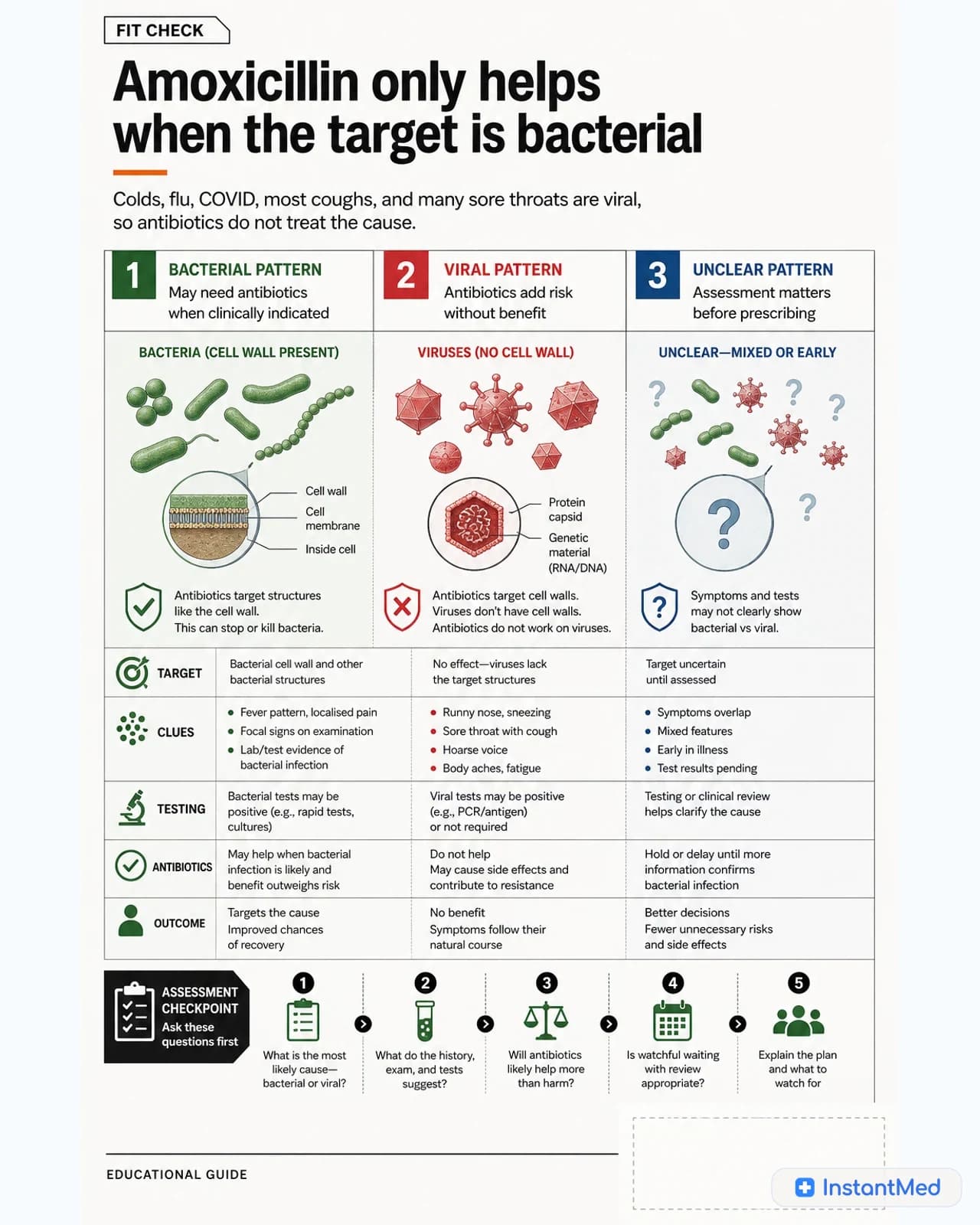
Amoxicillin in Australia: Uses, Dosing, and What to Know
Amoxicillin is a penicillin antibiotic used for selected bacterial infections. It does not treat viruses, and the right dose depends on the infection, person, and clinical context.
InstantMed Medical Team
9 min read
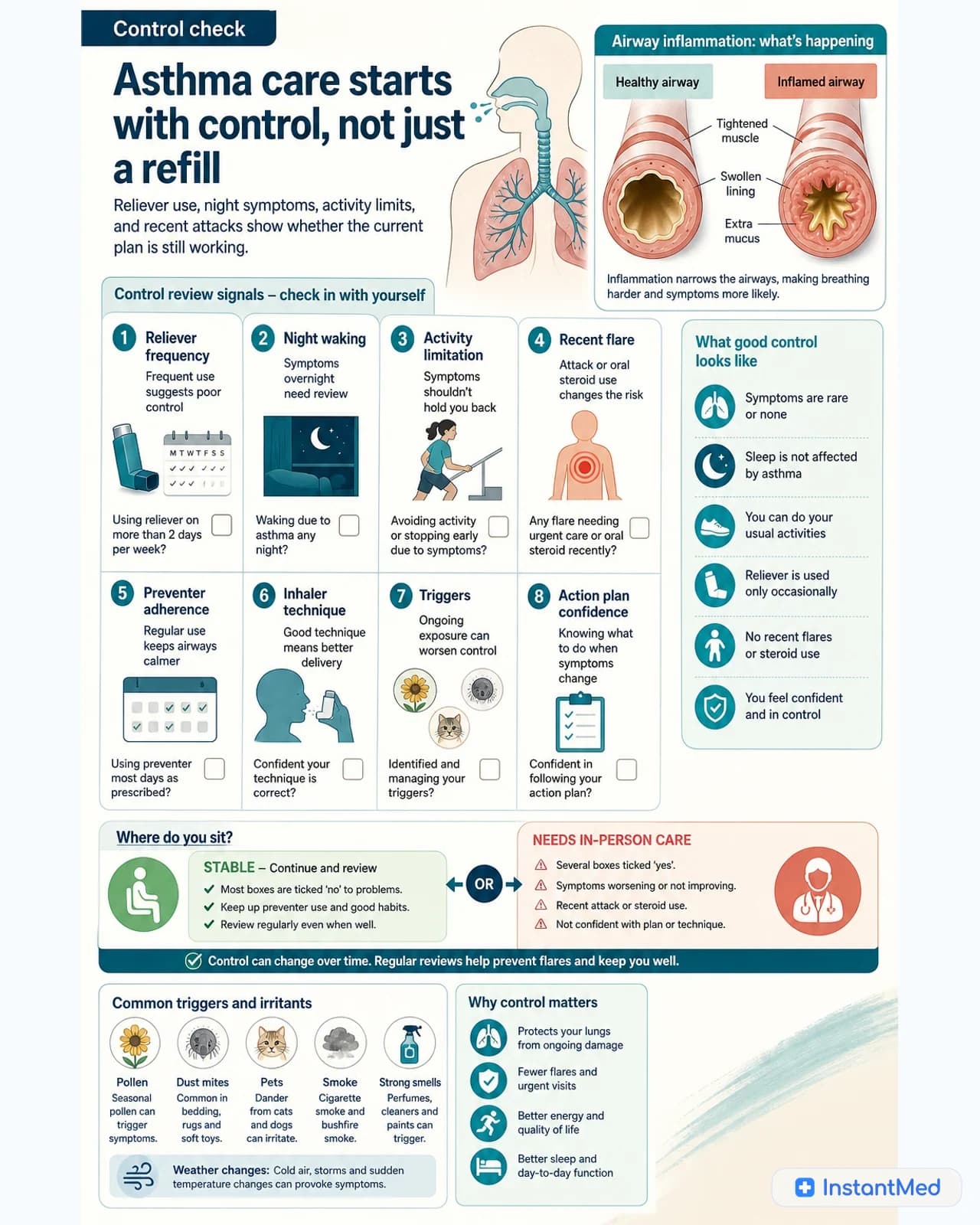
Asthma Management and Telehealth in Australia
Stable, established asthma may suit telehealth medication review, but diagnosis, worsening symptoms, children, and asthma attacks need in-person or emergency care. Learn the safety boundaries.
InstantMed Medical Team
11 min read
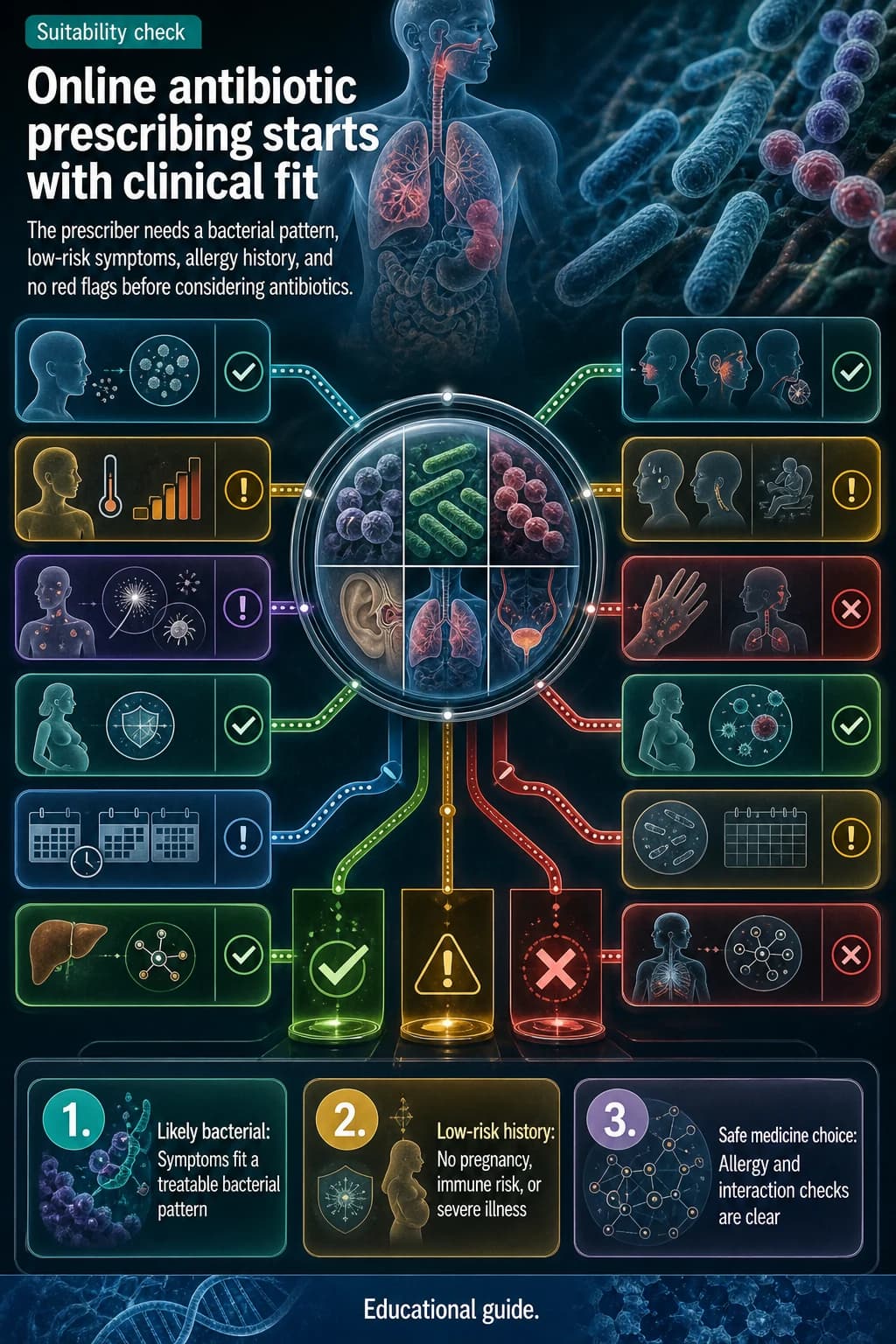
Can You Get Antibiotics Online in Australia?
Antibiotics are prescription-only in Australia. Learn how online prescribing works, when a pharmacist can help with a UTI, what PBS costs in 2026, and which symptoms need in-person care.
InstantMed Medical Team